

Crassula ovata, commonly known as Jade Plant, is probably one of the most popular succulents in the genus Crassula. Native to South Africa, it is widely grown as a houseplant worldwide. There are many attractive cultivars of this species, which differ in leaf size, shape, and color. Additionally, Crassula ovata is a popular choice for bonsai cultivation.
Taxonomy of Crassula ovata
Scientific Name
Crassula ovata (Miller) Druce
Synonym(s)
Cotyledon ovata, Crassula argentea, Crassula portulacea, Toelkenia ovata
Common Name(s)
Chinese Rubber, Dollar Plant, Dwarf Rubber, Friendship Tree, Jade Plant, Jade Tree, Japanese Rubber, Lucky Plant, Money Plant, Money Tree, Pink Joy
Scientific Classification
Family: Crassulaceae
Subfamily: Crassuloideae
Genus: Crassula
Etymology
The generic name "Crassula" (pronounced "KRASS-oo-la") means "somewhat thick" and refers to the thick, fleshy, and succulent nature of the leaves and stems that are characteristic of nearly every species in this genus.
The specific epithet "ovata" (pronounced "oh-VAY-tuh") means "ovate; egg-shaped (broader at the base)" and refers to the shape of the leaves of this species.
Cultivars of Crassula ovata
- Crassula ovata 'Crosby's Compact'
- Crassula ovata 'Didier Pocreau'
- Crassula ovata 'Gollum'
- Crassula ovata 'Gollum' (variegated)
- Crassula ovata 'Hobbit'
- Crassula ovata 'Hummel's Sunset'
- Crassula ovata 'Hummel's Sunset' (variegated)
- Crassula ovata 'Minima'
- Crassula ovata 'Obliqua'
- Crassula ovata 'Pink Beauty'
- Crassula ovata 'Skinny Fingers'
- Crassula ovata 'Tricolor'
Origin of Crassula ovata
Crassula ovata is native to South Africa. It usually grows on rocky slopes from the Swartberg Mountains in the Western Cape to KwaZulu-Natal province.
Description of Crassula ovata
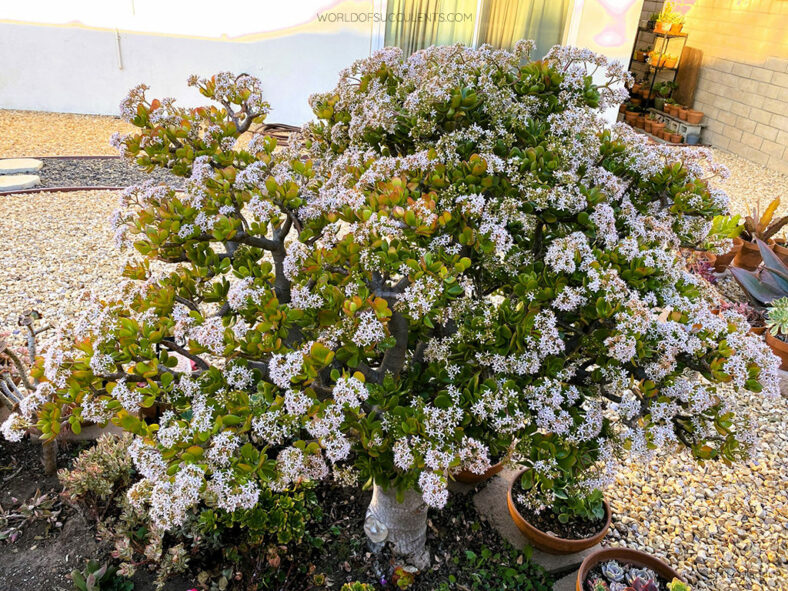
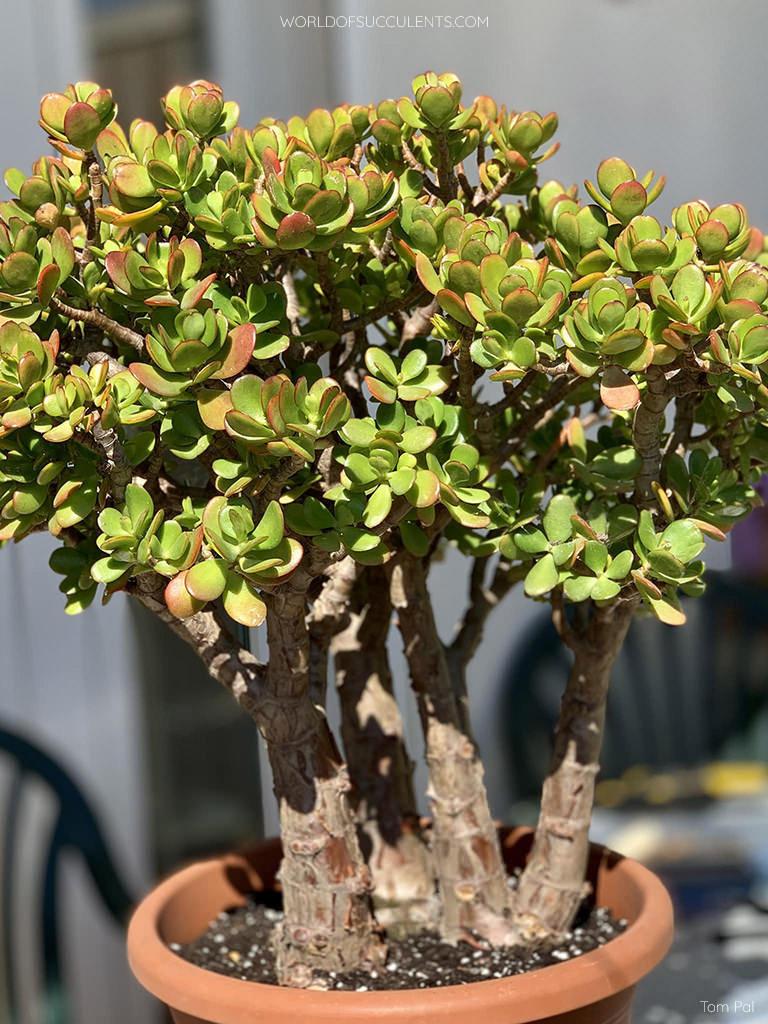
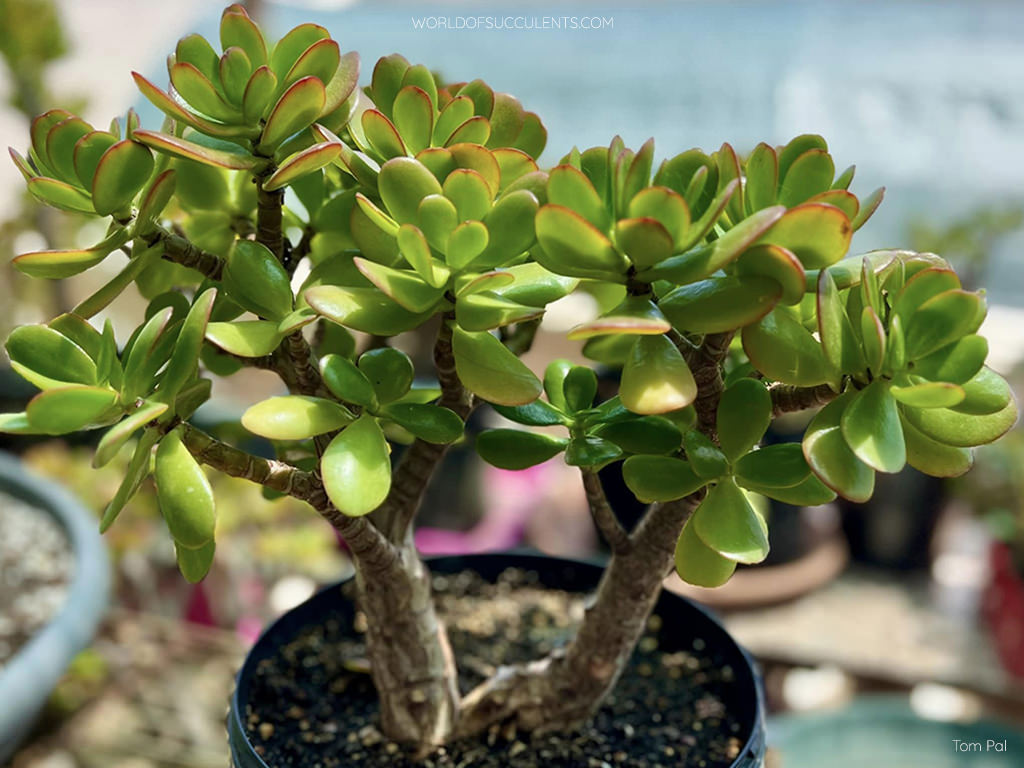
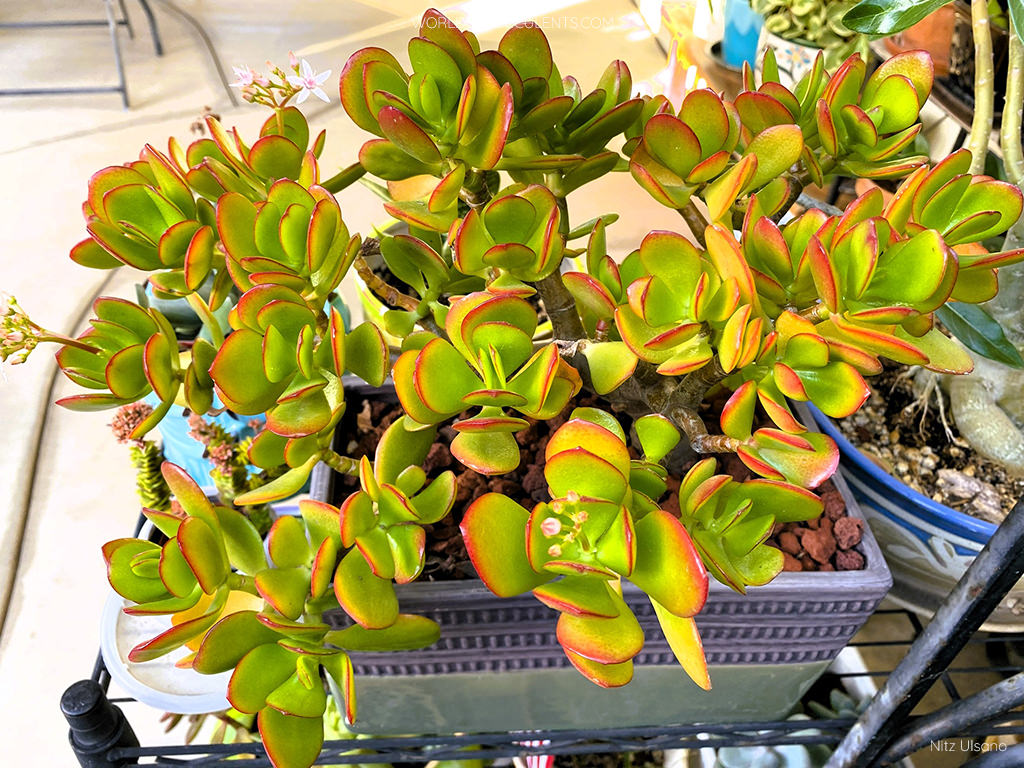
Crassula ovata is a succulent shrub with branches that bear green leaves that are often reddish at the sharply-edged margins. It can grow up to 8.2 feet (2.5 m) tall, with a single main stem or sparingly branched at the base. The branches are succulent, grey-green, and become woody as they mature, with scars from fallen leaves and older bark peeling in horizontal, brownish strips. The main stem can reach a diameter of 8 inches (20 cm). The leaves are thick and fleshy, ranging from obovate to broadly elliptical or spoon-shaped, and can measure up to 3.6 inches (9 cm) in length and 1.6 inches (4 cm) in width. They are usually stalkless and grow in opposite pairs along the branches, with old leaves deciduous.
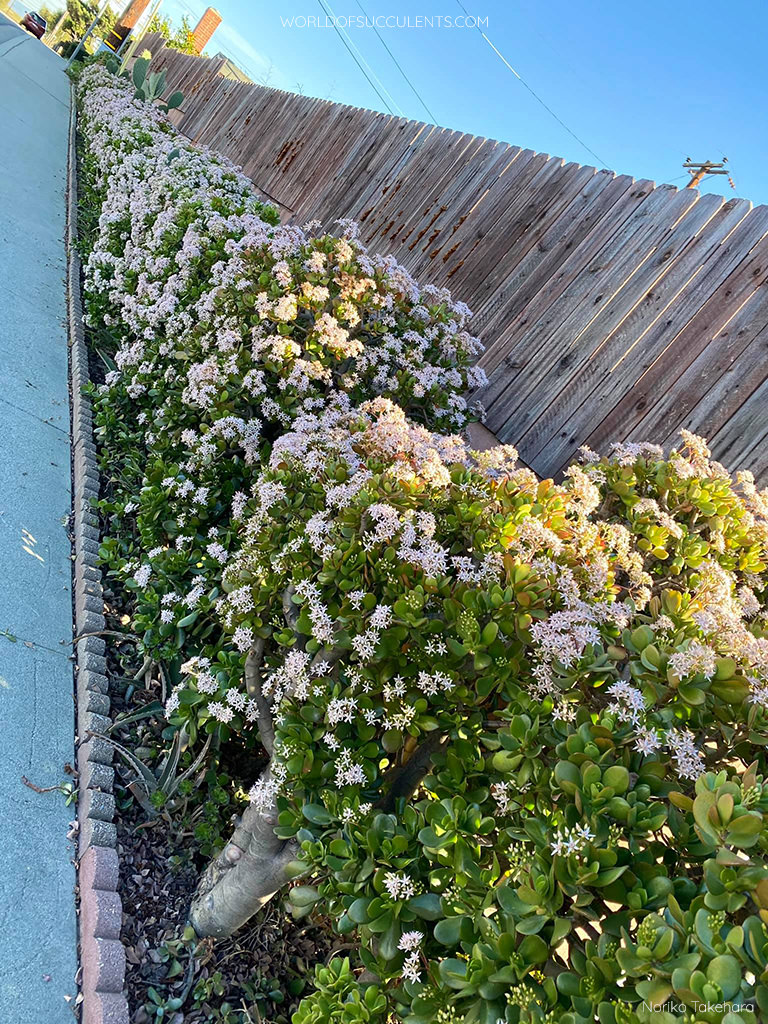
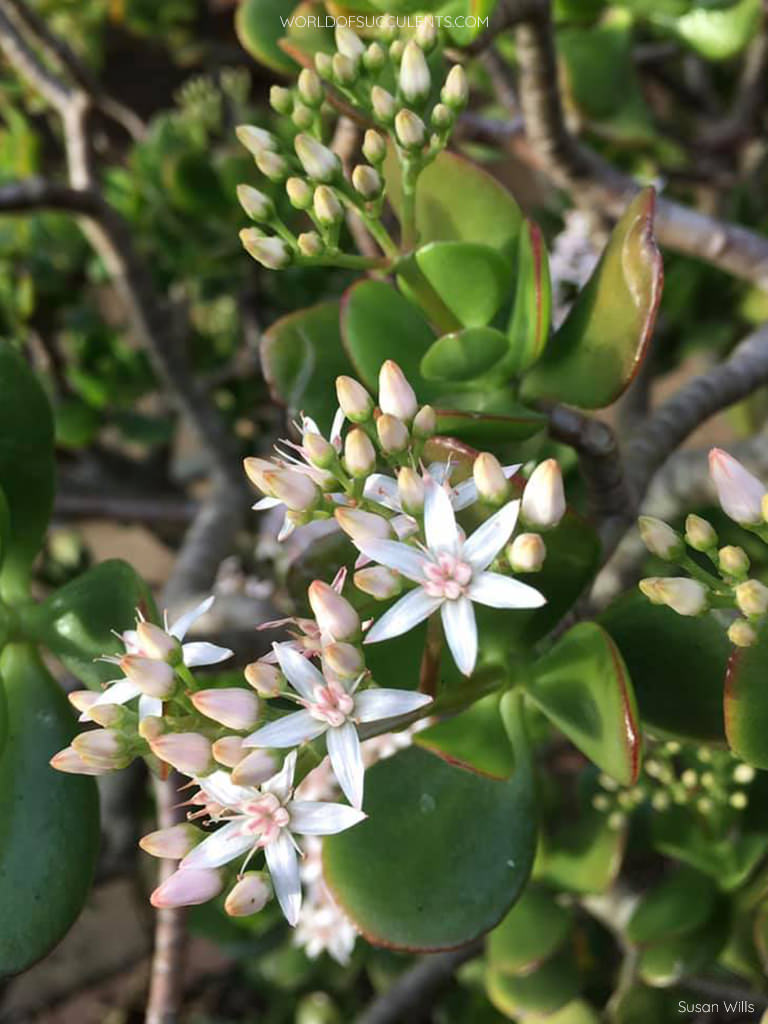
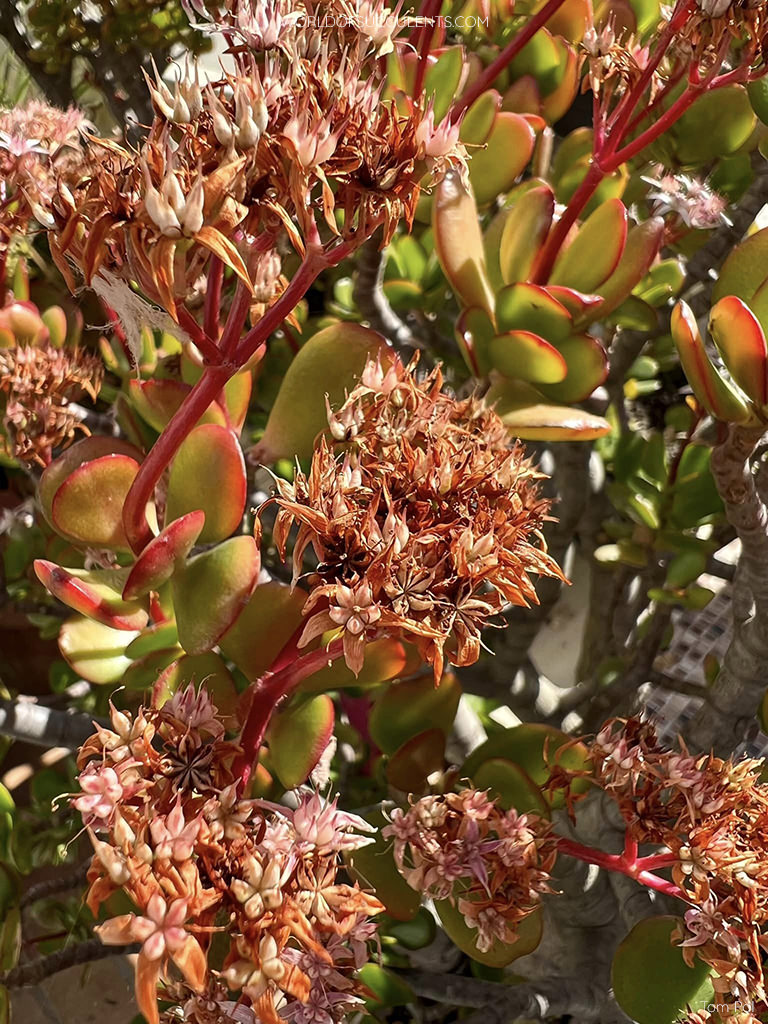
During the winter, mature plants produce star-shaped flowers in compact, round-topped terminal clusters on stalks that can grow up to 1.2 inches (3 cm) long. The flowers are 5-merous, white, often tinged pink, and can reach a diameter of 0.8 inches (2 cm). The fruits are small capsules containing tiny brown seeds.
How to Grow and Care for Crassula ovata
Light: This plant needs about 4 to 6 hours of direct sunlight daily to thrive. While it can survive in partial shade, it requires direct sunlight for flowering. If you keep it indoors, place it in a bright spot.
Soil: For optimal growth, use well-draining soil when planting Crassula ovata. You can use commercial potting soil mixes specifically designed for succulents, or make your own.
Hardiness: The plant can tolerate a wide range of temperatures and may even survive light frosts. However, prolonged cold is usually fatal. Crassula ovata grows best in USDA Plant Hardiness Zones 10a to 11b, with average minimum winter temperatures ranging from 30°F to 50°F (-1.1°C to 10°C).
Watering: Proper watering is most important for this plant. Although it does not need frequent watering, during the growing season, it requires deep watering when the soil is dry. It needs little water in the summer and even less in winter when it is semi-dormant.
Fertilizing: Crassula ovata does not require much fertilizer, as it is a slow-growing plant. However, it can benefit from a small amount of organic fertilizer in mid-spring, when it starts to grow actively.
Repotting: This plant can be left in its current pot, as it does not mind being root-bound. However, it is best to repot it every two to three years or when it becomes top-heavy. The ideal time to repot is in the spring, when new growth begins.
Propagation: Generally, Crassula ovata is propagated by stem cuttings or leaves, but can also be started from seeds. The fastest way to get a decent-sized plant is by using a stem cutting. Always take cuttings during the growing season. The best time to sow the seeds is in spring or summer.
Learn more at How to Grow and Care for Crassula.
Toxicity of Crassula ovata
Crassula ovata has been used as a medicinal plant in some regions. However, some sources suggest that it may be toxic to cats, dogs, and horses, and mildly toxic to humans if ingested or comes into contact with the skin. These claims, however, have yet to be proven.
Photo Gallery
Click on a photo to see a larger version.
Internal Links
- Explore all plants within the genus Crassula.
- Explore all plants within the family Crassulaceae.