

Haworthia cooperi, commonly known as Cooper's Haworthia, is a small, slow-growing succulent native to the Eastern Cape Province of South Africa. This species is highly variable, with several different varieties. As a result, it is frequently confused with its relatives, such as Haworthia cymbiformis, Haworthia decipiens, Haworthia marumiana, or Haworthia mucronata.
Taxonomy of Haworthia cooperi
Scientific Name
Haworthia cooperi Baker
Synonym(s)
Catevala cooperi
Common Name(s)
Bristle Haworthia, Cooper's Haworthia, Pussy Foot, Window Haworthia
Scientific Classification
Family: Asphodelaceae
Subfamily: Asphodeloideae
Tribe: Aloeae
Genus: Haworthia
Etymology
The specific epithet "cooperi" (pronounced "koo-PER-ee") honors Thomas Cooper (1815–1913), an English botanist and explorer who collected plants in South Africa from 1859 to 1862.
Origin of Haworthia cooperi
Haworthia cooperi is native to South Africa (distributed over a large area of the Eastern Cape province).
Description of Haworthia cooperi
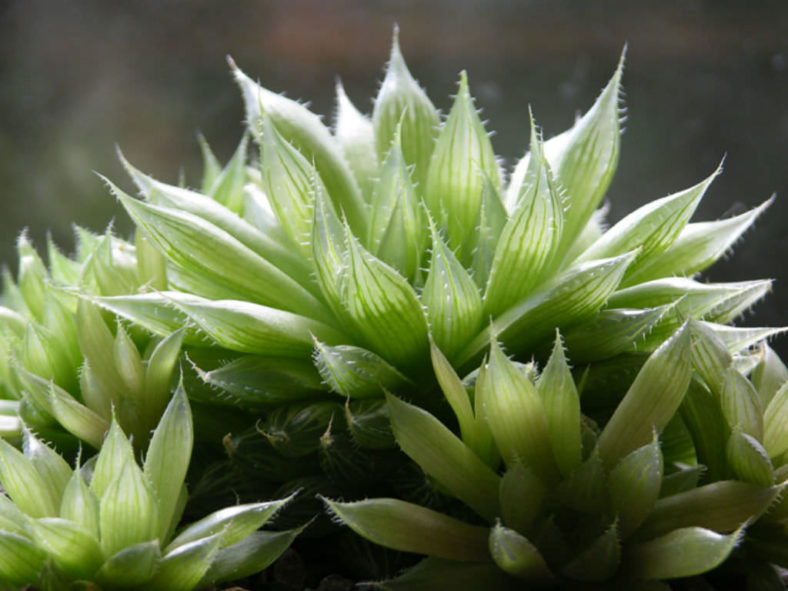
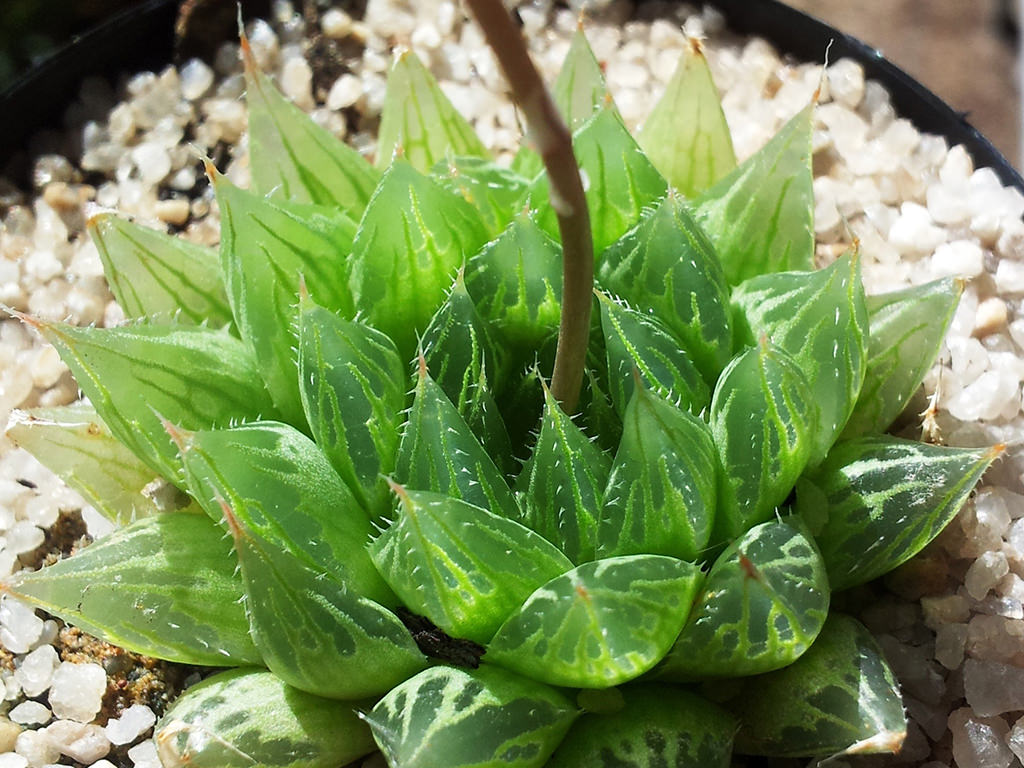
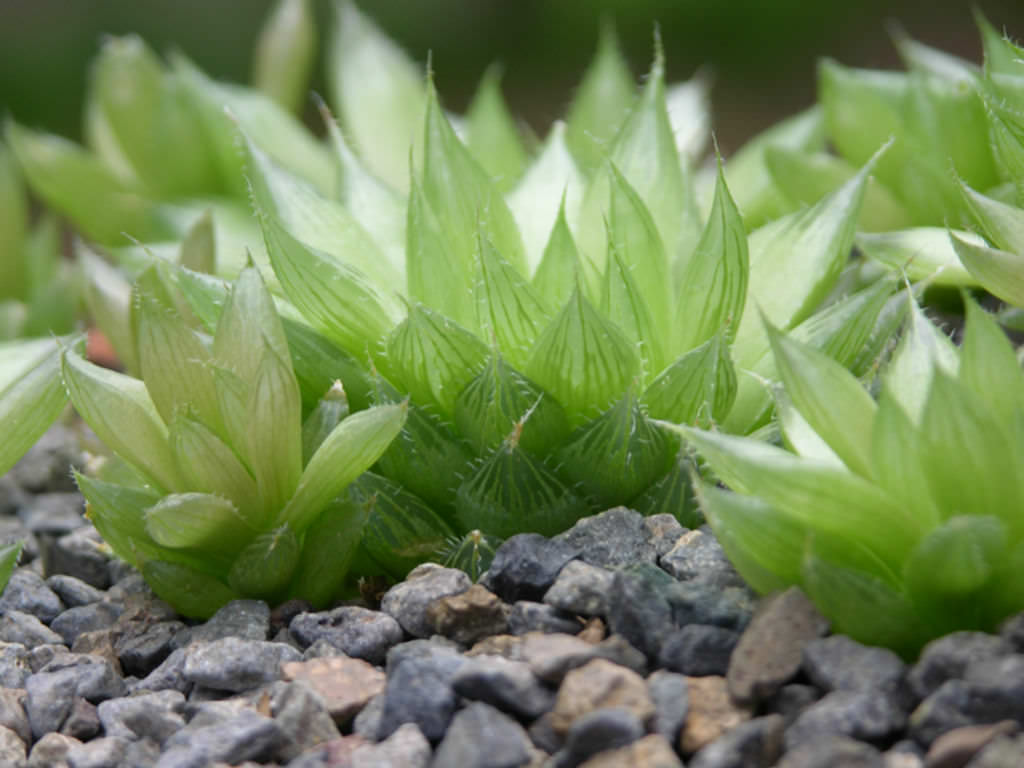
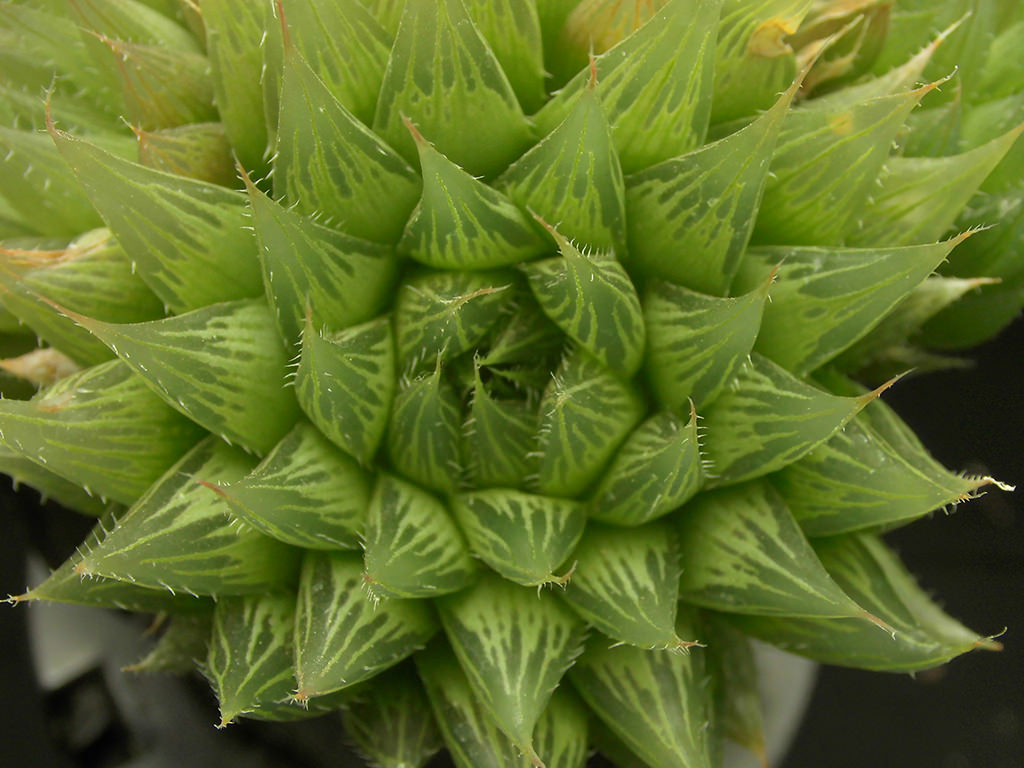
Haworthia cooperi is a slow-growing succulent that forms clumps of stemless or short-stemmed rosettes with light green leaves marked by darker longitudinal lines and transparent tips. The rosettes can reach up to 3.2 inches (8 cm) in diameter. The leaves have a flat or slightly convex upper surface, a convex lower surface keeled upwards, and margins and keel usually armed with pellucid teeth. They can measure up to 1.8 inches (4.5 cm) long and 0.5 inches (1.3 cm) wide.
The flowers are white to pinkish-white with green to brown veins and appear on stalks that can grow up to 16 inches (40 cm) long from spring to summer.
Varieties of Haworthia cooperi
- Haworthia cooperi var. cooperi
- Haworthia cooperi var. dielsiana
- Haworthia cooperi var. doldii
- Haworthia cooperi var. gordoniana
- Haworthia cooperi var. gracilis
- Haworthia cooperi var. isabellae
- Haworthia cooperi var. leightonii
- Haworthia cooperi var. picturata
- Haworthia cooperi var. pilifera
- Haworthia cooperi var. tenera
- Haworthia cooperi var. truncata
- Haworthia cooperi var. venusta
- Haworthia cooperi var. viridis
How to Grow and Care for Haworthia cooperi
Light: Place the potted plant in a bright area with some protection from the day's hottest rays. White, yellow, or red-tinged leaves usually indicate that your H. cooperi is receiving too much sunlight. Deep shade tends to weaken the plant over a prolonged period. If your plant has spent the winter indoors, gradually move it outdoors into the bright sun to prevent sunburn.
Soil: Like all Haworthias, this plant does not like its roots to remain wet for prolonged periods, so the soil should be well-drained. Use a commercial potting mix for succulents, or make your own.
Hardiness: This succulent likes warmer temperatures in the summer but cool temperatures in the winter. However, it does not like being too cold. H. cooperi can withstand temperatures as low as 30°F to 50°F (-1.1°C to 10°C), USDA hardiness zones 10a to 11b.
Watering: In spring and fall, when the growth is most active, water H. cooperi thoroughly, then wait until the top of the soil dries out before watering again. Water your plant less during the winter when its growth slows down significantly. When this plant is mostly dormant during the hottest summer months, water it just enough to keep the leaves from shriveling.
Fertilizing: H. cooperi does not require much fertilizer. However, for optimal growth, fertilizing is advisable. Feed only with a dilute fertilizer and only during the active growing season.
Repotting: This slow-growing succulent can stay in the same pot for years. However, repot H. cooperi into fresh soil every two to three years in spring or fall to keep your plant healthy and happy. Repotting time is also the time to take offsets for propagation.
Propagation: Vegetative propagation, especially by offsets, is the quickest and most common method of propagating H. cooperi. This plant can also be propagated by leaves and seeds. Remove the offsets when they have started developing their own roots. Sow seeds in spring or fall in a well-draining soil mix.
Learn more at How to Grow and Care for Haworthia.
Toxicity of Haworthia cooperi
H. cooperi is considered non-toxic to humans and animals.
Photo Gallery
Click on a photo to see a larger version.
Internal Links
- Explore all plants within the genus Haworthia.
- Explore all plants within the family Apocynaceae.