

Orbea variegata is one of the most popular Stapeliads due to its easy care and striking starfish-like flowers. It was first published in Species Plantarum (1753) by Carl Linnaeus🡕 as Stapelia variegata. In 1812, Adrian Hardy Haworth🡕 transferred it to the genus Orbea. This species received the prestigious Award of Garden Merit🡕 by the Royal Horticultural Society🡕.
Taxonomy of Orbea variegatai
Scientific Name
Orbea variegata (L.) Haw.
Synonym(s)
Ceropegia mixta, Stapelia variegata, Stisseria variegata
Common Name(s)
Carrion Cactus, Carrion Flower, Starfish Cactus, Starfish Flower, Starfish Plant, Star Flower, Toad Cactus, Toad Plant
Scientific Classification
Family: Apocynaceae
Subfamily: Asclepiadoideae
Tribe: Ceropegieae
Subtribe: Stapeliinae
Genus: Orbea
Etymology
The generic name "Orbea" (pronounced "ORB-ee-uh") refers to the conspicuous ring-shaped annulus in the flowers of this genus; thus, it can be interpreted as "the one with a ring."
The specific epithet "variegata" (pronounced "var-ee-GAY-tuh") means "variegated; having a pattern of different colors or marks" and refers to the wide variability of the flowers of this species.
Origin of Orbea variegata
Orbea variegata is native to South Africa and can be found from Lambert's Bay in the Western Cape to Humansdorp in the Eastern Cape province. It thrives at elevations ranging from sea level up to 3,280 feet (1,000 m) and generally grows on gentle, stony slopes, sometimes under bushes, but also more or less fully exposed on rock slabs or ledges.
Description of Orbea variegata
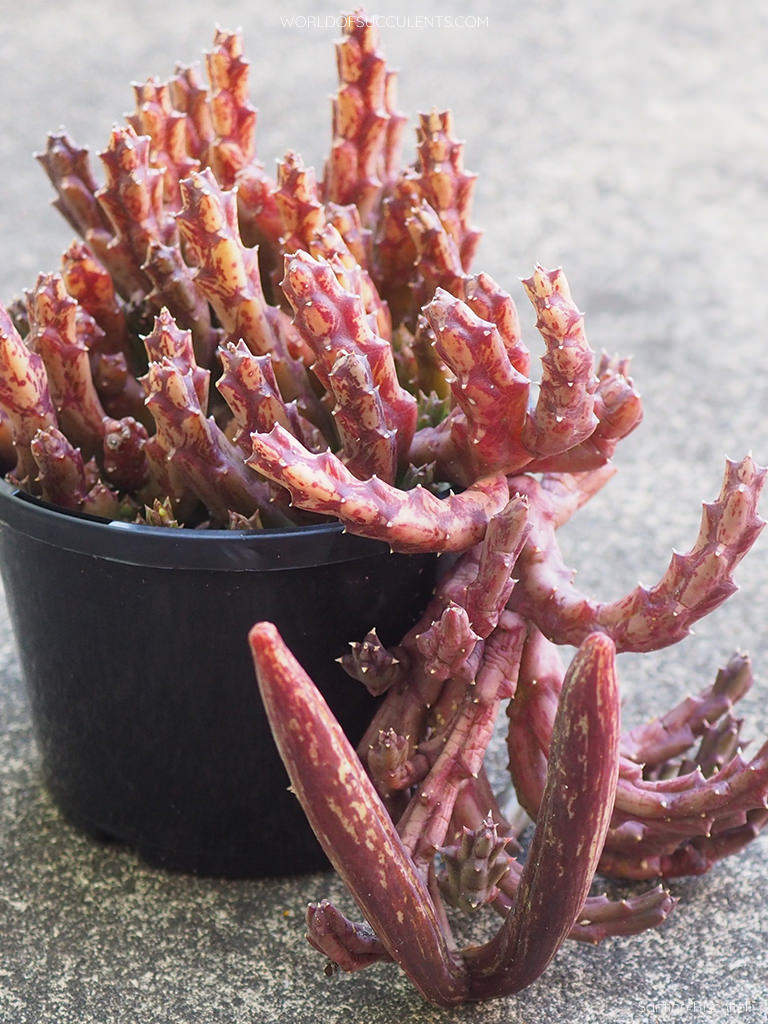
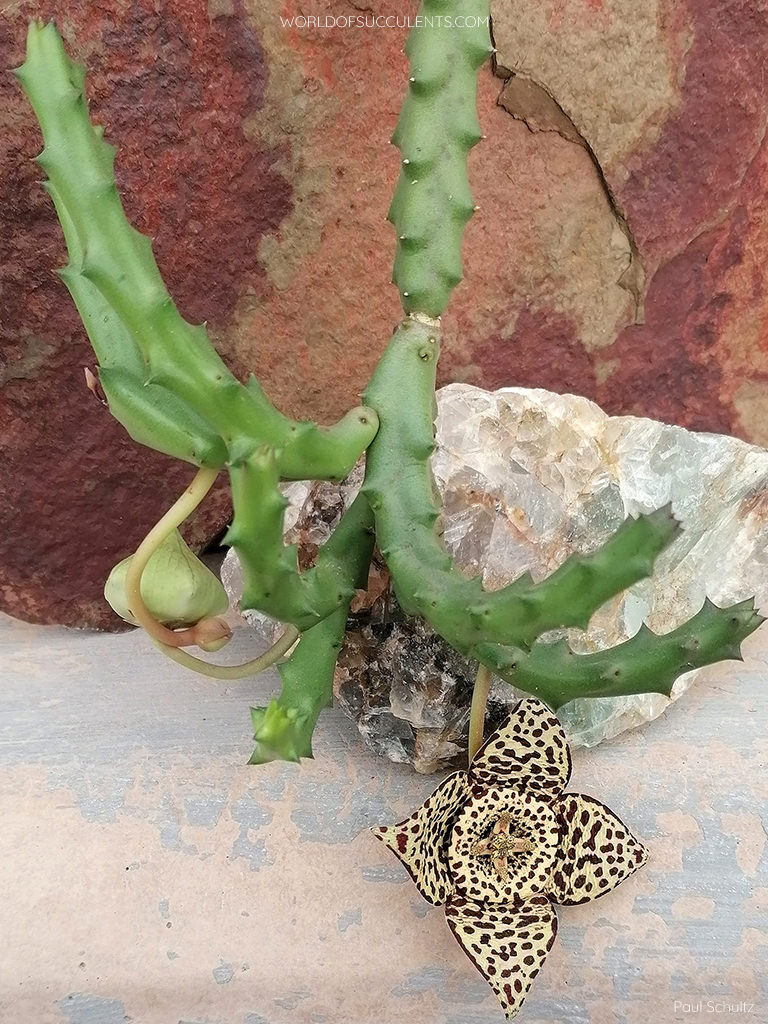
Orbea variegata, formerly known as Stapelia variegata, is a small succulent that forms clumps of green, decumbent stems mottled with purple-brown. The stems can grow up to 10 inches (25 cm) long and 4.5 inches (1.1 cm) thick, excluding the teeth. They have tubercles arranged loosely into four rows along the stem, with grooves between the rows.
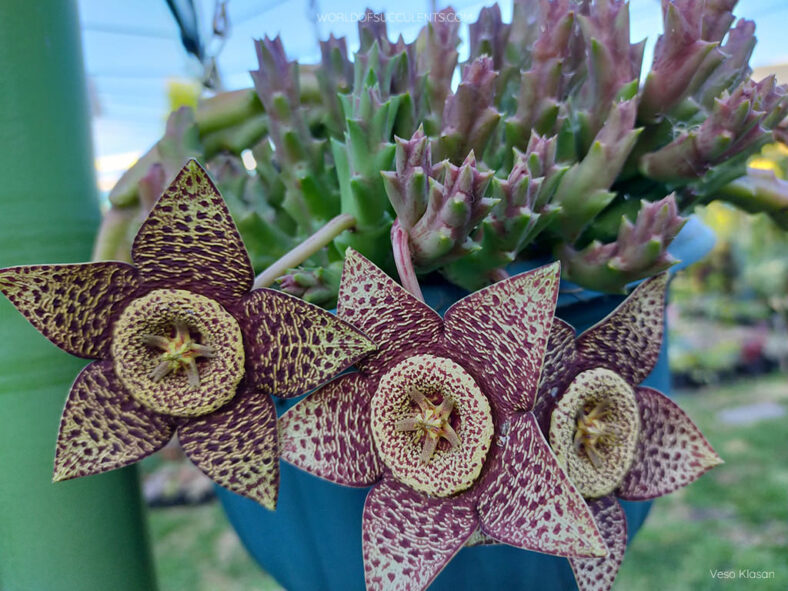
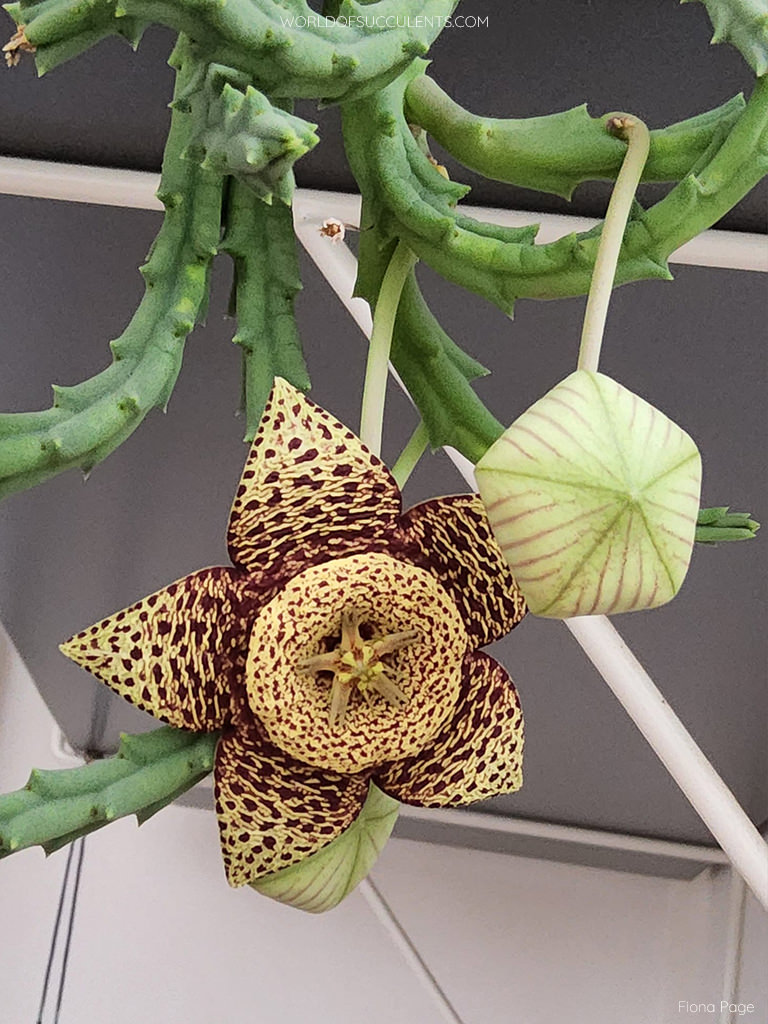
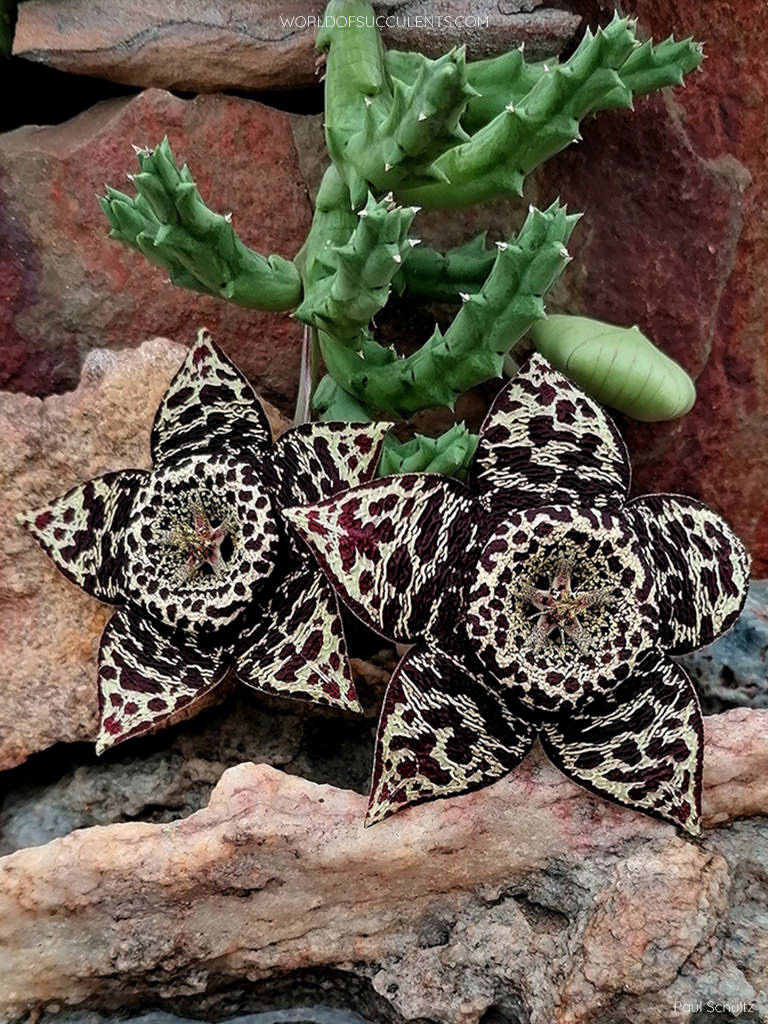
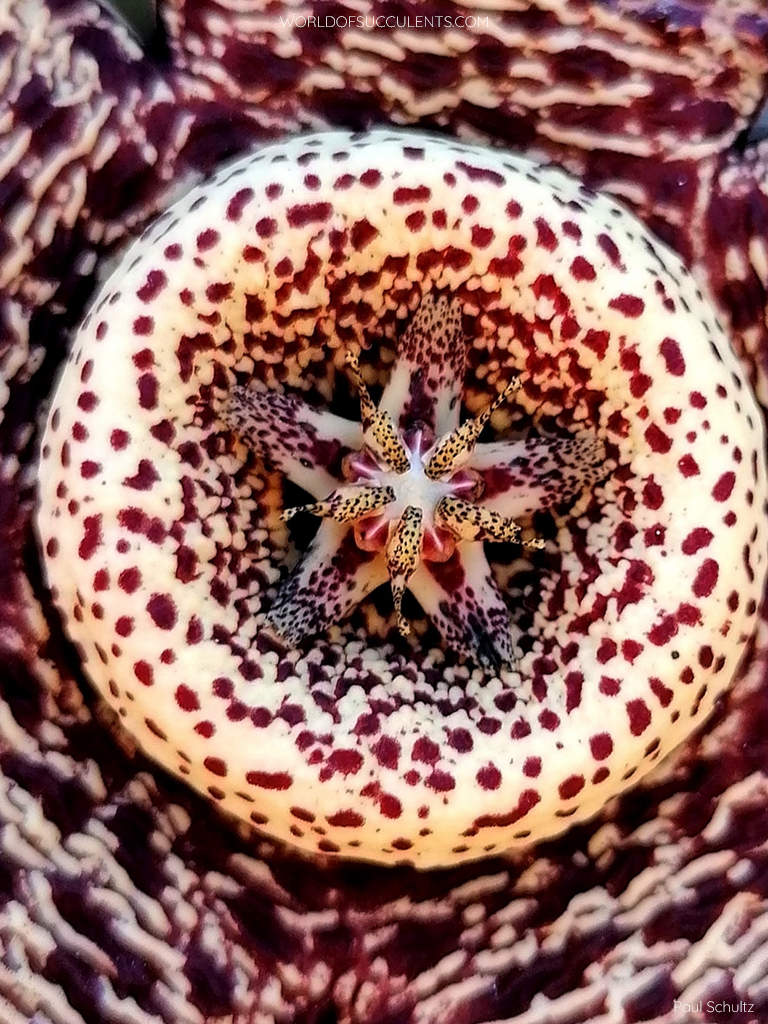
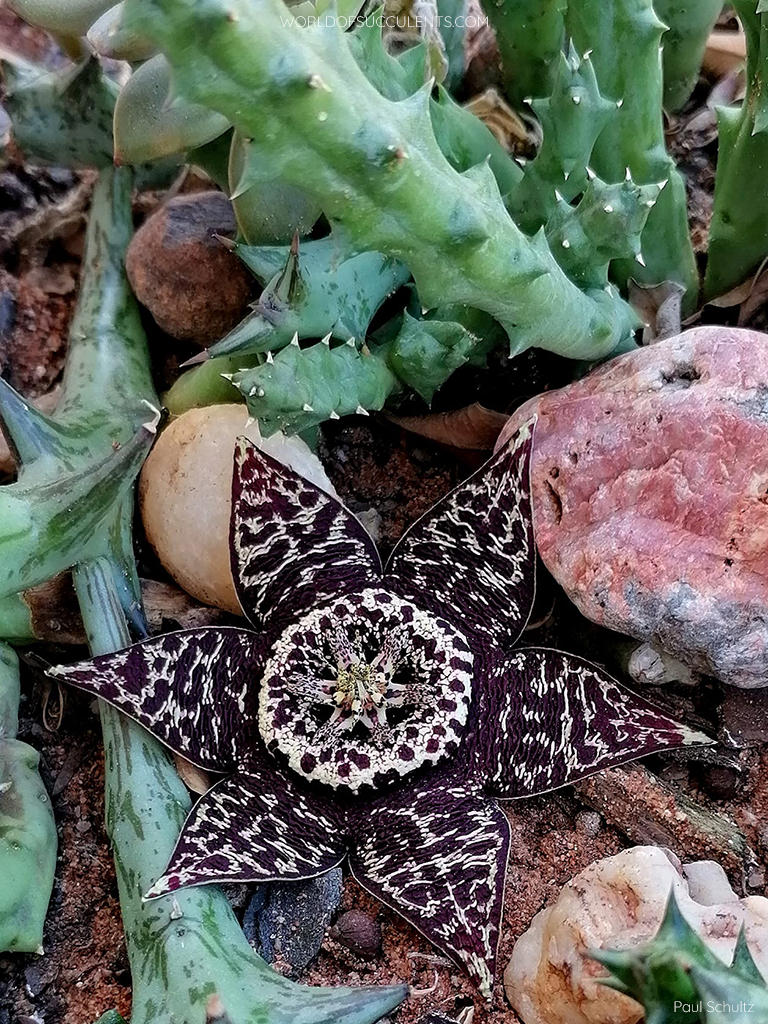
In late summer and fall, Orbea variegata produces attractive star-shaped flowers, which can appear solitary or in groups of up to three, typically near the base of the stems. The flowers display a variable pattern and can reach a diameter of 3.2 inches (8 cm). They emit a faint carrion smell to attract potential insect pollinators. The outside of the corolla is smooth and pale cream-green, becoming veined with red-purple towards the tips of the lobes. The interior of the corolla is transversely wrinkled and ranges in color from cream to pale greenish-yellow, variously adorned with purple-brown spots. The prominent annulus can measure up to 0.9 inches (2.3 cm) in diameter and has fewer and finer spots. The corona is cream-coloured with purple spots, and is raised above the base of the tube on a short cylindrical stipe. The fruits are spindle-shaped follicles arranged in pairs and can grow up to 4.8 inches (12 cm) long.
How to Grow and Care for Orbea variegata
Light: Orbea variegata thrives in full sun or partial shade during the hottest summer days. Too much sun causes the stems to develop a protective pigmentation or get sunburned, while insufficient light results in weak, thin stems and fewer flowers. Indoors, place the plant near a sunny window.
Soil: The right soil is crucial to growing a healthy plant. Use commercial soil for succulents, or prepare your own mix with 50% to 70% mineral grit, such as coarse sand, pumice, or perlite.
Temperature: This plant thrives in warm outdoor environments but dislikes winter cold and should remain moderately dry and warm during its winter dormancy. Orbea variegata is hardy in USDA Plant Hardiness Zones 9a-11b, which have average annual extreme minimum winter temperatures ranging from 20°F to 50°F (-6.7°C to 10°C).
Watering: It has typical watering needs for a succulent. During the growing season, water your plant thoroughly and allow the soil to dry before watering again. The plant goes dormant in winter and needs almost no water, about once a month.
Fertilizing: To keep it thriving, fertilize during the growing season. Feed with water-soluble fertilizer diluted to half-strength.
Repotting: Orbea variegata will benefit from fresh potting soil every 2 or 3 years. Repot it in spring, just before the growing season starts. Pick a container with drainage holes.
Propagation: The best way to propagate this succulent is by stem cuttings. It is also easy to grow from seeds. Take cuttings during the growing season to ensure good rooting, and sow the seeds in spring.
Learn more in "How to Grow and Care for Stapelia."
Toxicity of Orbea variegata
Orbea variegata has no reported toxic effects. It is safe around pets and humans.
Photo Gallery
Click on a photo to see a larger version.
Internal Links
- Explore all plants within the genus Orbea.
- Explore all plants within the family Apocynaceae.
References
- The Botanical Magazine; or, Flower-Garden Displayed, pl. 26 (1787–1789)
- Orbea variegata (L.) Haw.🡕. Plants of the World Online. Kew Science. Retrieved December 3, 2026.
- Orbea variegata (L.) Haw.🡕. The World Flora Online. Retrieved December 3, 2026.