

Mammillaria carnea is a small and easy-to-care-for cactus, making it an excellent choice for beginners. It was named by Joseph Gerhard Zuccarini🡕 and published in 1837 by Louis Pfeiffer🡕, based on specimens collected near Ixmiquilpan, Mexico.
Taxonomy of Mammillaria carnea
Scientific Name
Mammillaria carnea Zucc. ex Pfeiff.
Synonym(s)
Cactus carneus, Mammillaria villifera var. carnea, Neomammillaria carnea
Scientific Classification
Family: Cactaceae
Subfamily: Cactoideae
Tribe: Cacteae
Subtribe: Cactinae
Genus: Mammillaria
Etymology
The generic name "Mammillaria" (pronounced "mam-mil-AR-ee-uh") means "nipple-bearing" and refers to the distinctive nipple-like tubercles that cover the stems of the plants of this genus.
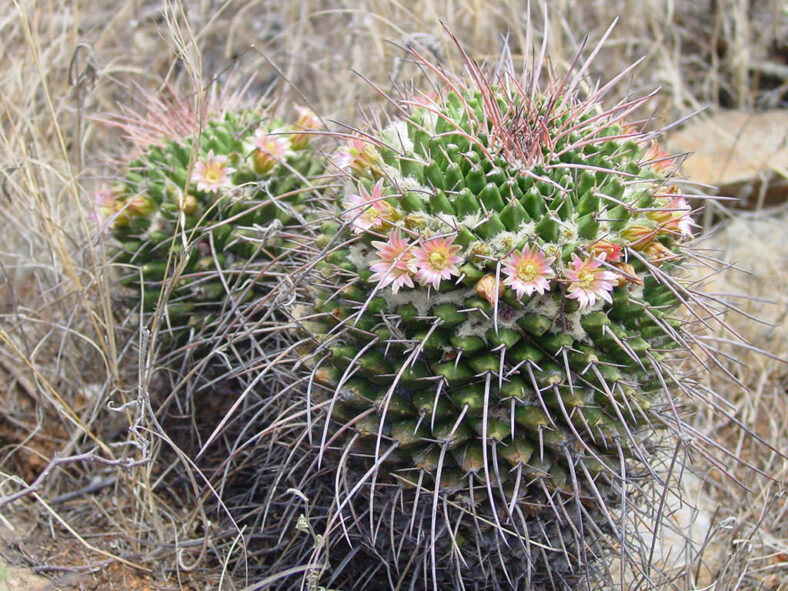
The specific epithet "carnea" (pronounced "KAR-nee-uh") means "flesh-colored" and refers to the color of the flowers of this species.
Origin of Mammillaria carnea
Mammillaria carnea is native to central and southern Mexico. It occurs in Guerrero, Puebla, and Oaxaca on plains and slopes of the deciduous forest at elevations ranging from 1,640 to 6,560 feet (500 to 2,000 m).
Description of Mammillaria carnea
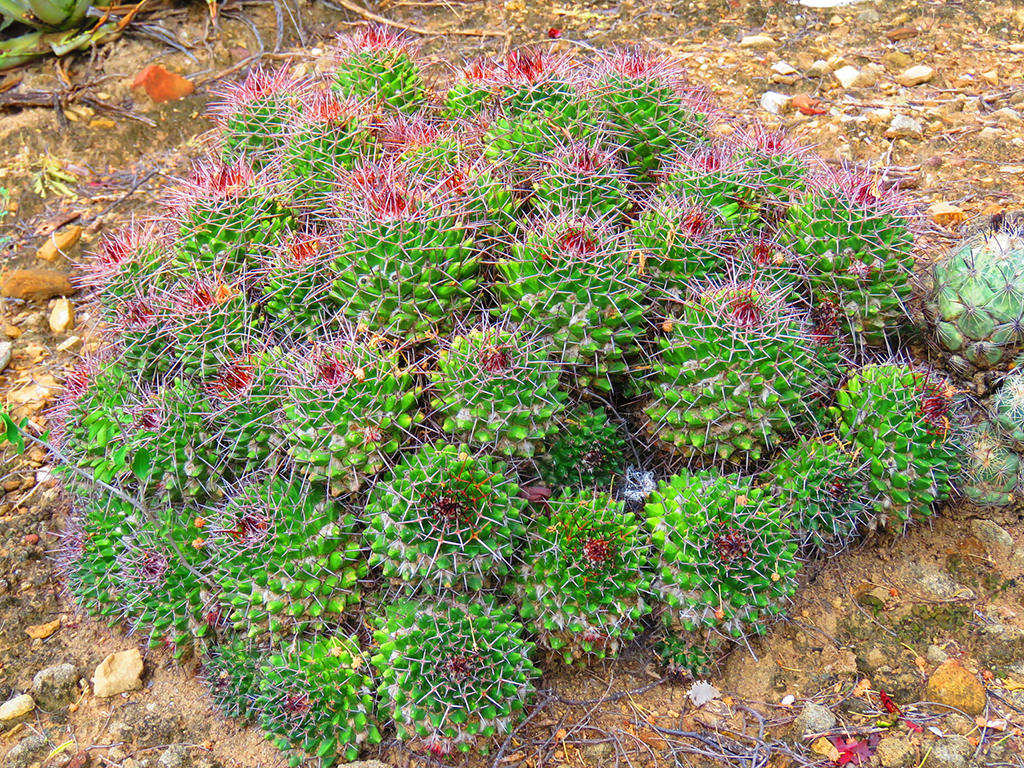
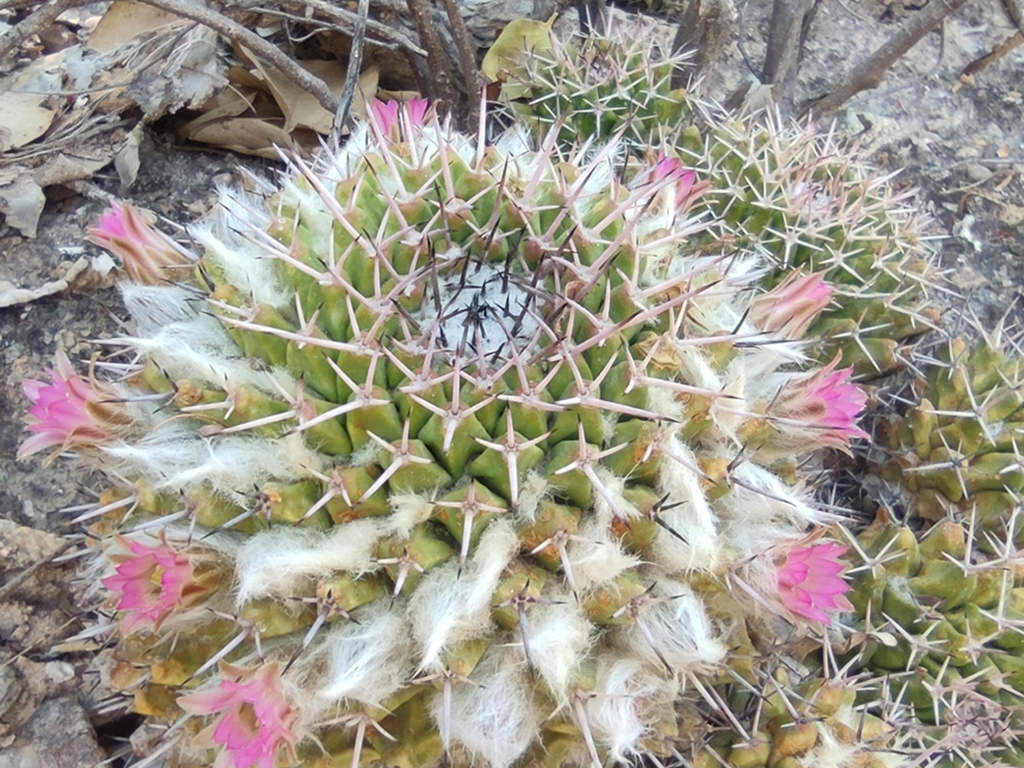
Mammillaria carnea is a small cactus with stems covered in 4-angled, pyramidal, spirally arranged tubercles with woolly axils. It is highly variable in spination and can grow either as a solitary stem or in clusters. The stems are initially spherical but become cylindrical as they age, reaching heights of up to 3.6 inches (9 cm) and occasionally as tall as 8 inches (20 cm), with a diameter of 4.8 inches (12 cm).
Each areole typically bears four stiff central spines. The lower spine can measure up to 0.8 inches (2 cm) long, which is twice the length of the other three spines. The spines can be reddish or pinkish-brown with black tips. Radial spines are either absent or reduced to bristles.
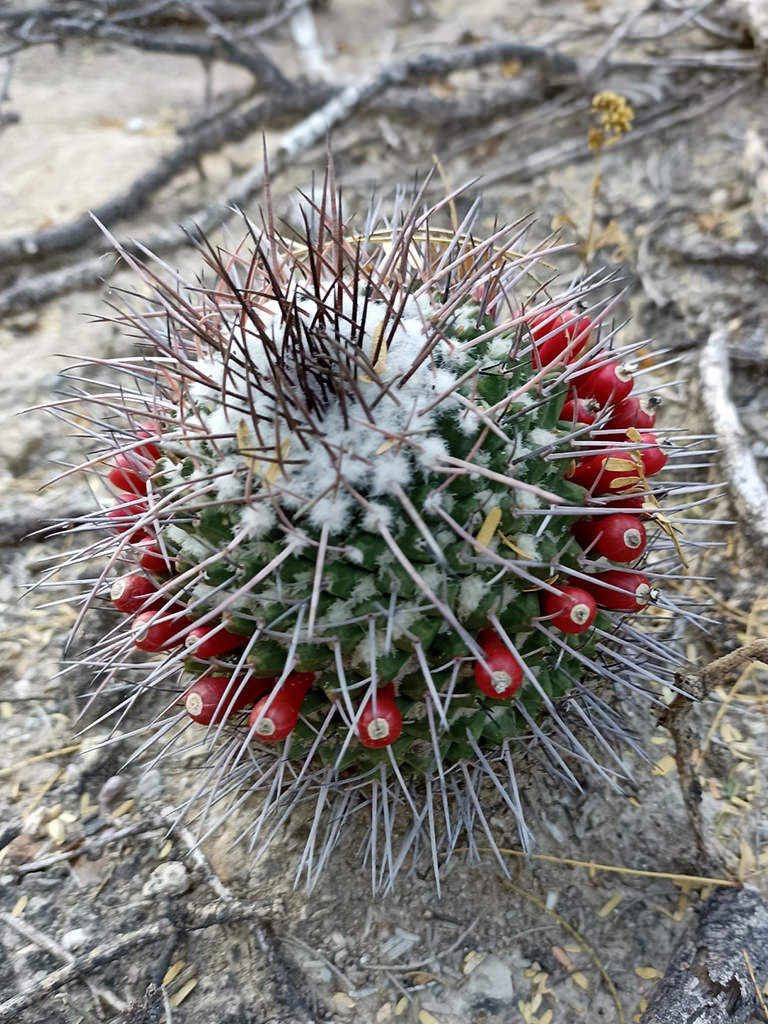
In spring, Mammillaria carnea produces funnel-shaped flowers that are usually light pink. The flowers, which emerge from the old axils, can reach 0.8 inches (2 cm) in length and 0.6 inches (2 cm) in diameter. The fruits are bright red, pear-shaped, and contain tiny brown seeds.
How to Grow and Care for Mammillaria carnea
Light: For optimal growth, Mammillaria carnea must be planted in an area that receives at least 4 hours of direct sunlight per day. If you are growing it indoors, place it near a bright window. For the best results, place it on the balcony or in the garden from spring to fall.
Soil: Use commercial cactus soil or create your own well-draining soil mix to ensure good root aeration and drainage.
Temperature: Mammillaria carnea is heat-tolerant but not cold-hardy. It grows best in USDA Plant Hardiness Zones 9b to 11b, with average minimum winter temperatures ranging from 25°F to 50°F (-3.9°C to 10°C).
Watering: Water deeply from spring to fall, and wait until the soil dries out before watering again. Never let your pot sit in water, and suspend watering when the plant goes dormant in the winter.
Fertilizing: Mammillaria carnea benefits from fertilizing during the growing season. Apply a water-soluble fertilizer for cacti and succulents. Suspend feeding during winter, when the plant is dormant.
Repotting: Repot the cactus into a slightly larger pot every two or three years, preferably in late winter or early spring. However, repotting can be done at any time of the year.
Propagation: There are two easy ways to propagate Mammillaria carnea: by seeds or by dividing offsets. The best time to remove offsets is in spring and summer. Sow the seeds in late spring or summer for the best results.
Learn more at How to Grow and Care for Mammillaria.
Toxicity of Mammillaria carnea
Mammillaria carnea is non-toxic but has sharp spines, so keep it out of reach of children and pets.
Photo Gallery
Click on a photo to see a larger version.
Internal Links
- Explore all plants within the genus Mammillaria.
- Explore all plants within the family Cactaceae.
References
- Britton, N. L. & Rose, J. N. (1923). The Cactaceae: Descriptions and Illustrations of Plants of the Cactus Family, Vol. IV, pp. 88–89. Carnegie Institution of Washington, Washington, D.C.
- Pfeiffer, L. G. K. (1837). Enumeratio Diagnostica Cactearum Hucusque Cognitarum, p. 19. Berlin.
- Mammillaria carnea Zucc. ex Pfeiff.🡕. Plants of the World Online. Kew Science. Retrieved January 21, 2026.
- Mammillaria carnea🡕. iNaturalist. Retrieved January 21, 2026