

Deuterocohnia is a genus of plants in the family Bromeliaceae endemic to South America. Modern DNA analysis has reevaluated plants once described as belonging to the genus Abromeitiella and reclassified them within Deuterocohnia.
The generic name honors Ferdinand Julius Cohn, a German botanist and bacteriologist. Because another plant genus (Cohnia) had already been named after him, the German botanist Carl Christian Mez added the Greek prefix deutero- (meaning "second") to create Deuterocohnia (literally meaning "Second Cohnia").
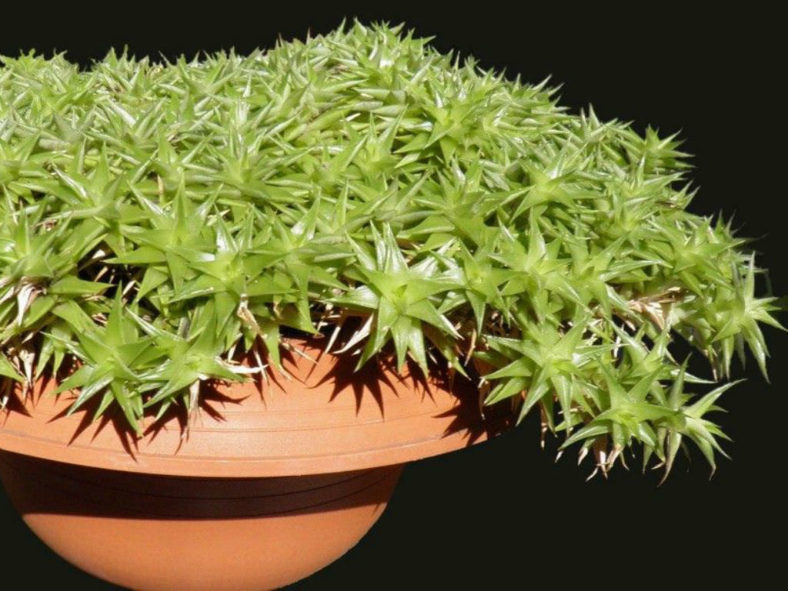
The genus comprises a few generally mat-forming succulents from Argentina and Bolivia. They are rosette-forming terrestrial Bromeliads with heavily spined leaf margins. The flowers are green and inconspicuous, appearing on a short inflorescence. These plants do not die after flowering and often rebloom on the same flower spike. The sizes range from the tiny Deuterocohnia brevifolia, only a few inches across, to huge plants with broad leaves.
Growing Conditions
Light: Deuterocohnias need full sun to light shade.
Water: These plants are drought-tolerant but do best with average water during spring and summer. They don't like water on their leaves in cold weather. Reduce water during the winter.
Soil: Grow your Deuterocohnia in well-drained, humus-rich soil.
Temperature: Hardy down to 20 °F (-7 °C).
Propagation
Remove offset rosettes and replant. You can also grow Deuterocohnias from seed.
Pests and Diseases
Fungal rots from overwatering in poorly draining soils.
Grower's Tips
Deuterocohnias are perennial Bromeliads that grow very slowly into tight, cushion-shaped colonies. In their native environments, they are watered perhaps only twice a year, obtaining most of their moisture from the air. They can get extra moisture from ocean fogs that roll in.
These plants are nice for small-scale groundcover in rock, cactus, or succulent gardens. These bromeliads also make interesting container plants.
Grow your Deuterocohnia in well-drained, humus-rich soil, adding pebbles, perlite, hardwood bark, or other materials to improve drainage. Keep it in bright light or partial sun and water moderately in spring and summer, letting the soil dry between waterings. Reduce water during the winter. Deuterocohnias are probably among the cold-hardiest bromeliads, but winter wetness on their foliage makes them difficult to keep outside.
Links
- Back to genus Deuterocohnia
- Succupedia: Browse succulents by Scientific Name, Common Name, Genus, Family, USDA Hardiness Zone, Origin, or cacti by Genus