

Astrophytum myriostigma, commonly known as Bishop's Cap or Bishop's Miter, is a spineless, star-shaped cactus native to the highlands of northeastern and central Mexico. It is highly valued by collectors for its unique geometric shape and the distinctive white, woolly flecks (trichomes) that cover its green stem, giving it a silvery-grey appearance. This species has received the prestigious Award of Garden Merit🡕 of the Royal Horticultural Society.
Taxonomy of Astrophytum myriostigma
Scientific Name
Astrophytum myriostigma Lem.
Synonym(s)
Echinocactus myriostigma
Common Name(s)
Bishop's Cap, Bishop's Hat, Bishop's Hood, Bishop's Miter, Bishop's Mitre
Scientific Classification
Family: Cactaceae
Subfamily: Cactoideae
Tribe: Cacteae
Genus: Astrophytum
Etymology
The specific epithet "myriostigma" (pronounced "my-ree-oh-STIG-muh") means "many-spotted" and refers to the abundance of tiny, woolly flecks that cover the stem of this species.
Origin of Astrophytum myriostigma
Astrophytum myriostigma is native to Mexico. It grows in rocky, calcareous soils at elevations ranging from 2,240 to 4,920 feet (750 to 1,500 m).
Description of Astrophytum myriostigma
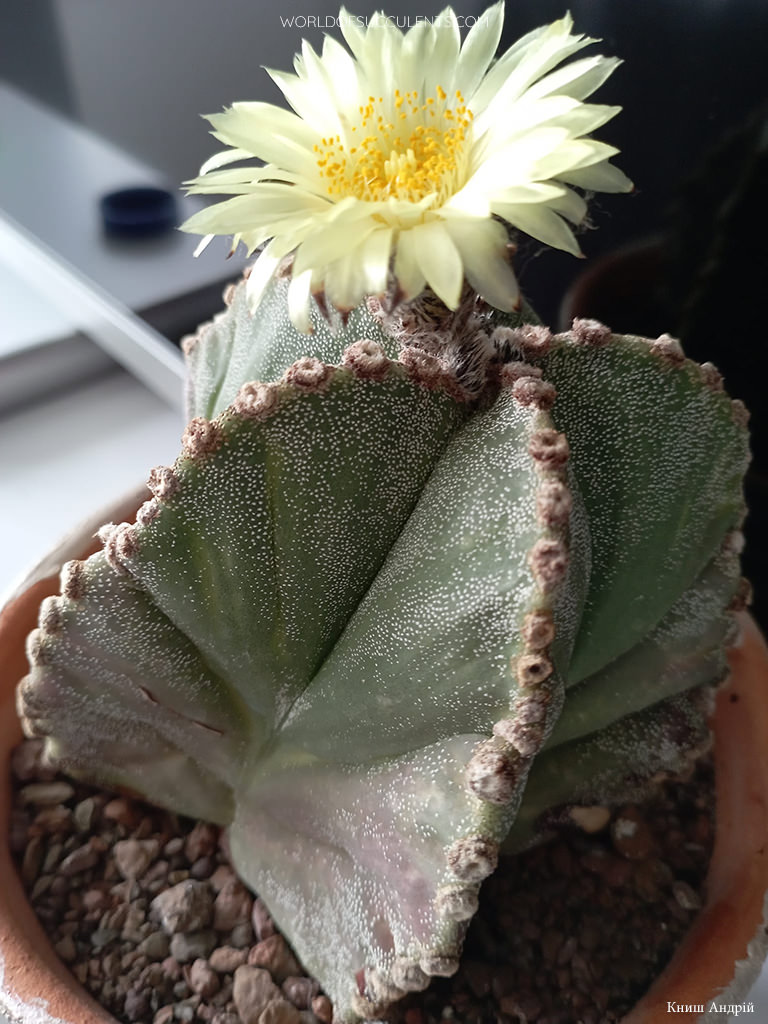
Astrophytum myriostigma is a spineless cactus with a bright green, typically solitary stem densely covered with tiny, white, woolly scales. Initially, the stem is round with five broad, prominent ribs that taper to an acute point. As the plant ages, the stem may acquire more ribs and become more columnar, reaching up to 40 inches (1 m) in height and 8 inches (20 cm) in diameter. The edges of the ribs are lined with woolly, brownish-to-greyish areoles.
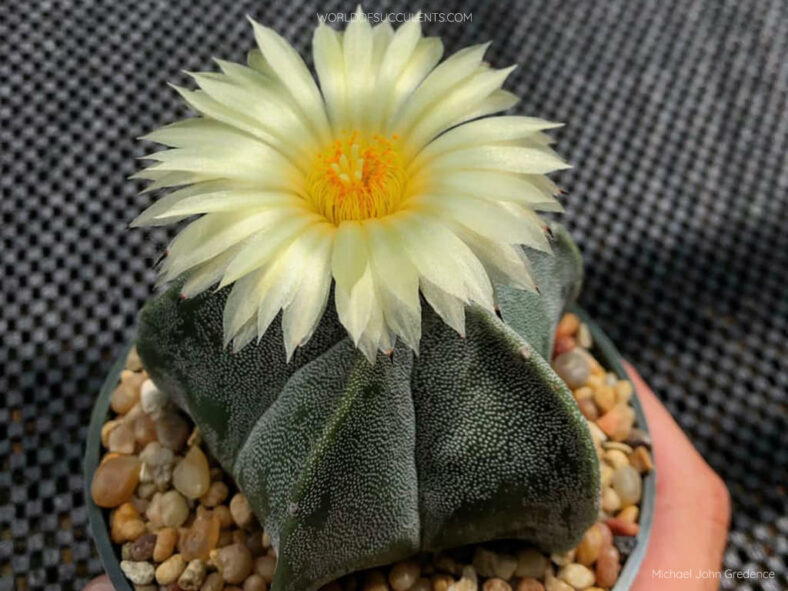
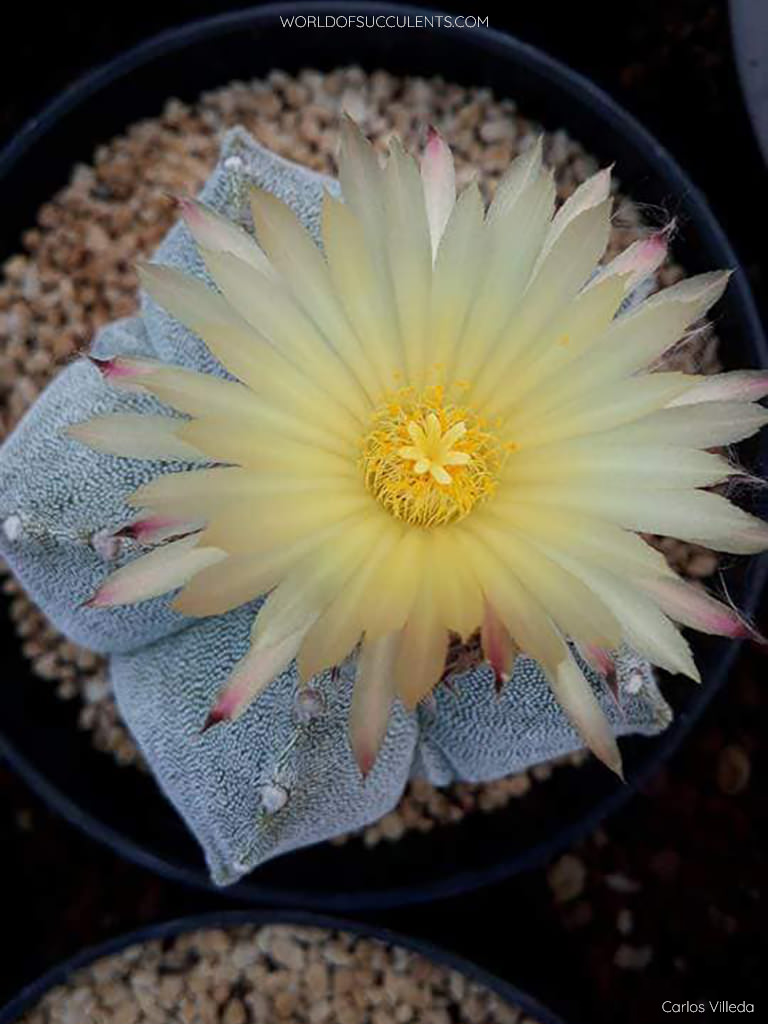
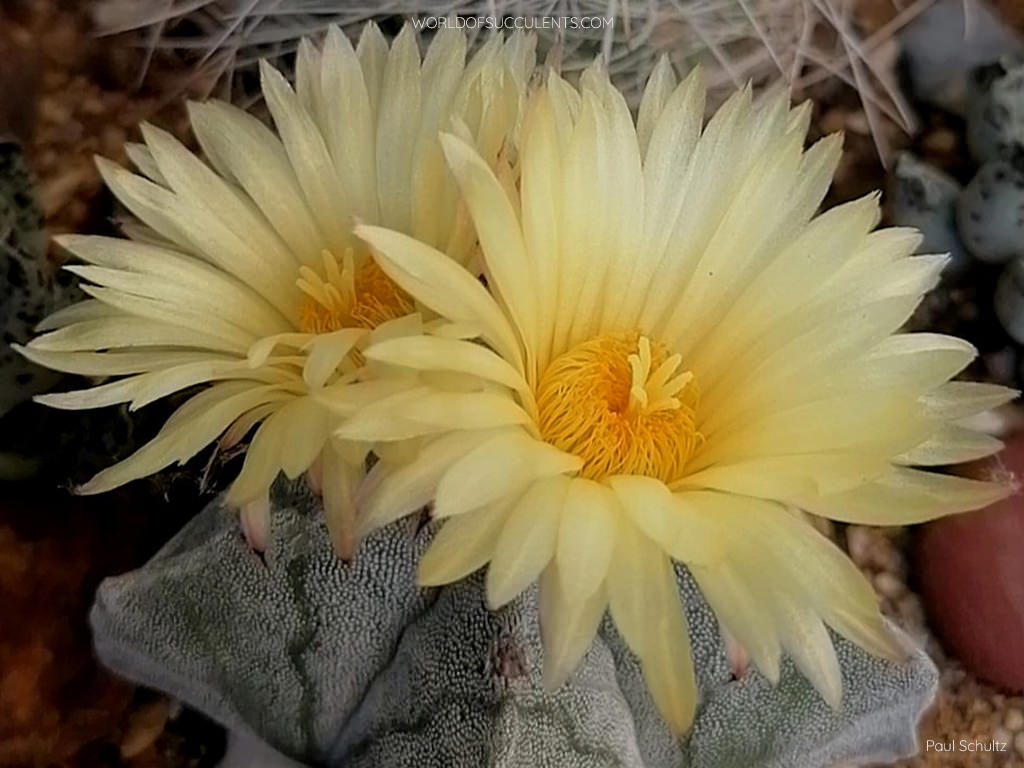
When mature, Astrophytum myriostigma produces fragrant, glossy yellow flowers from the areoles at the stem tip from spring to fall. The flowers are funnel-shaped and can reach a length of 3 inches (7.5 cm) and a diameter of 2 inches (5 cm). They appear in succession and last for about two days. The fruits are greenish to reddish, covered with overlapping brown scales, and have long wool in their axils. They are oval, contain dark brown seeds, and can grow up to 1 inch (2.5 cm) in diameter.
Subspecies and Forms of Astrophytum myriostigma
- Astrophytum myriostigma subsp. myriostigma
- Astrophytum myriostigma subsp. quadricostatum
- Astrophytum myriostigma var. nudum (not accepted as a separate variety and is treated as a synonym of Astrophytum myriostigma subsp. myriostigma)
Cultivars of Astrophytum myriostigma
How to Grow and Care for Astrophytum myriostigma
Light: This cactus thrives in bright, indirect light. Although it can handle some direct sun, too much can cause sunburn. If you are growing it indoors, it is best to place it near a window with plenty of indirect sunlight or under grow lights.
Soil: Astrophytum myriostigma requires well-drained soil for optimal growth. You can use a typical cactus potting mix or make your own.
Temperature: This cactus prefers hot temperatures above 70°F (21°C) during the summer and cooler, more temperate winters. Protect it from cold drafts and frost. It grows best in USDA Plant Hardiness Zones 9b to 11b, with average minimum winter temperatures ranging from 25°F to 50°F (-3.9°C to 10°C).
Watering: Astrophytum myriostigma prefers dry conditions, with sporadic watering in the summer and a dry winter. Water the plant infrequently during spring and fall.
Fertilizing: A low-balanced soluble fertilizer diluted to half the recommended strength can help your cactus thrive, but suspend feeding in winter.
Repotting: Regular repotting helps this cactus grow better, so repot Astrophytum myriostigma at the beginning of the growing season for the best results.
Propagation: This cactus can be propagated from seed, but its seeds are fairly fragile, so handle them gently and soak them before sowing.
Learn more at How to Grow and Care for Astrophytum.
Toxicity of Astrophytum myriostigma
Astrophytum myriostigma has no reported toxic effects.
Photo Gallery
Click on a photo to see a larger version.
Internal Links
- Explore all plants within the genus Astrophytum.
- Explore all plants within the family Cactaceae.