Scientific Name
Echeveria 'Imbricata'
Common Name(s)
Blue Rose, Blue Rose Echeveria, Hens and Chicks
Synonym(s)
Echeveria × imbricata
Scientific Classification
Family: Crassulaceae
Subfamily: Sempervivoideae
Tribe: Sedeae
Genus: Echeveria
Etymology
The cultivar epithet 'Imbricata' (pronounced "im-brih-KAY-tuh") means "imbricate; tiled or overlapping like roof tiles" and refers to the leaf arrangement of this plant.
Origin
Echeveria 'Imbricata' is a hybrid that results from a cross between Echeveria glauca (now considered a synonym of Echeveria secunda) and Echeveria gibbiflora 'Metallica'. It was created by Jean-Baptiste A. Deleuil🡕 in Marseille, France, and it is one of the oldest hybrids. This popular hybrid was first listed in Deleuil's 1874 catalog, and the name was published in the same year in "La Belgique Horticole🡕."
It's important to note that several other breeders in Europe, America, and beyond have also created this hybrid. The parental clones were not identical, which explains why Echeveria 'Imbricata' is somewhat variable.
Description
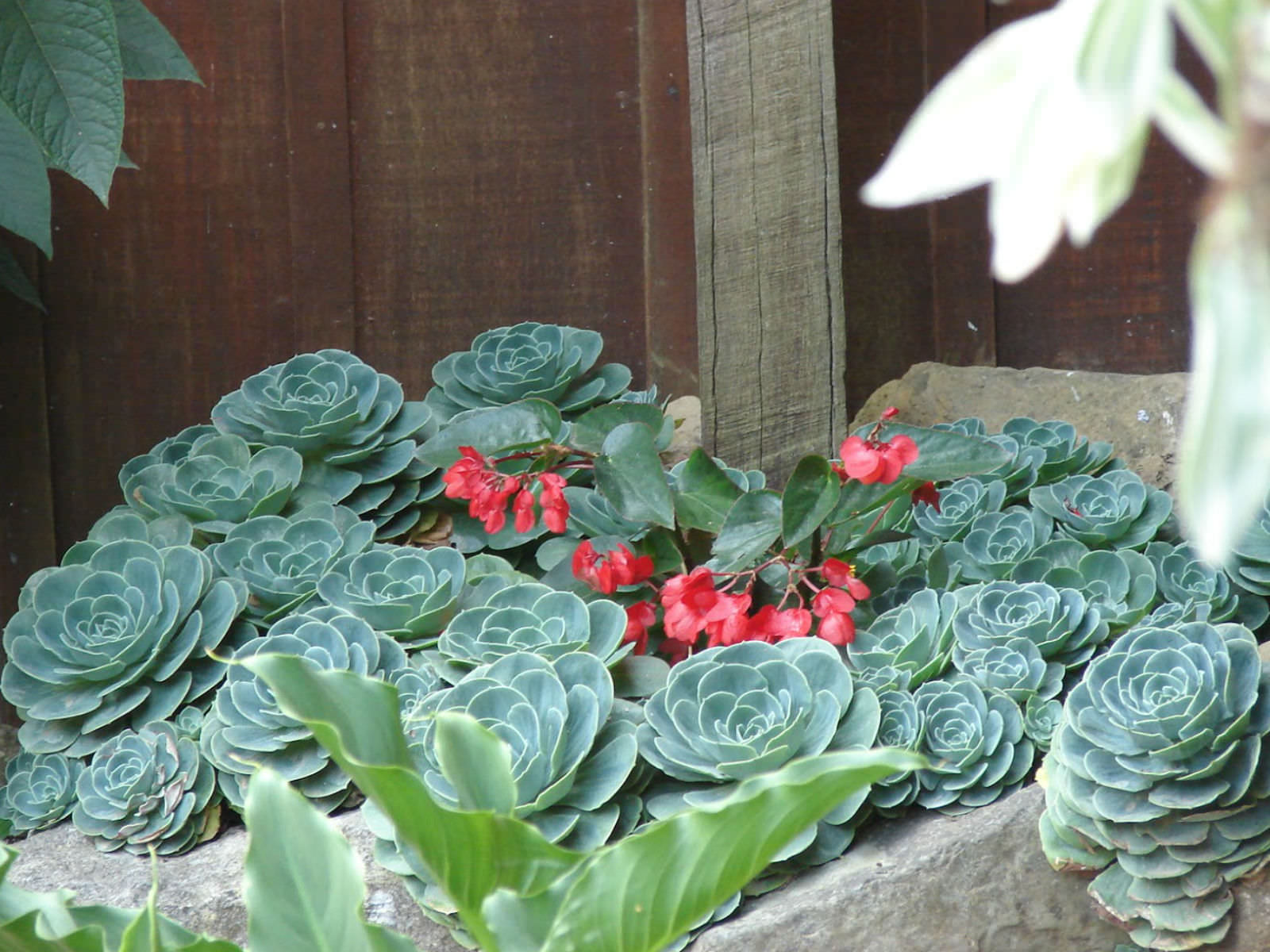
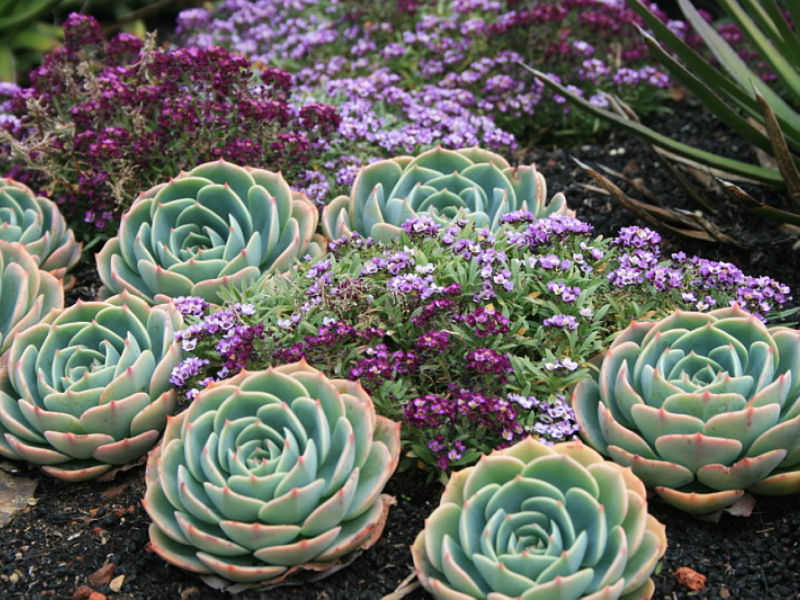
Echeveria 'Imbricata' is a beautiful succulent that forms tight rosettes of grey-green to blue-green, spoon-shaped leaves covered with a fine, powdery coating. The rosettes can grow up to 8 inches (20 cm) in diameter and freely produce offsets, forming large, compact clumps over time. When grown in bright sunlight, the leaves flush pink around the edges.
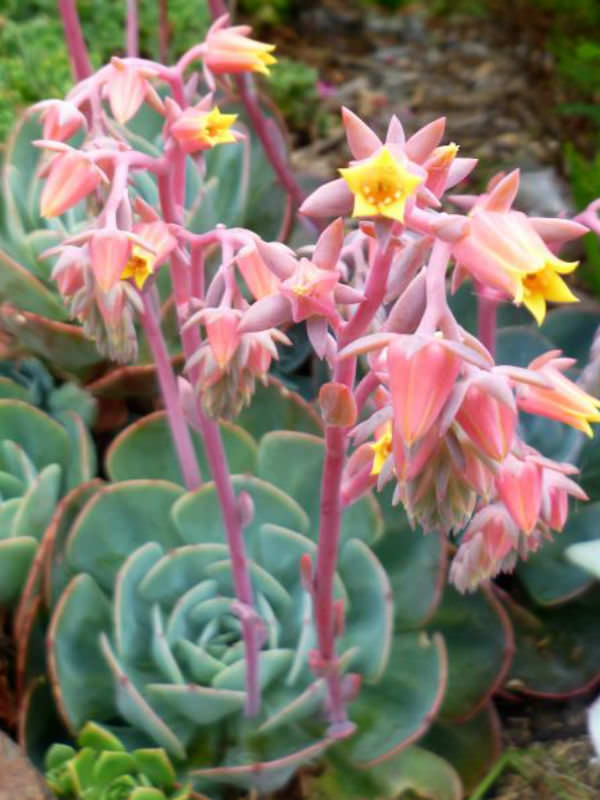
The red, bell-shaped flowers with yellow tips appear in clusters on arching, branched stalks in late spring and early summer.
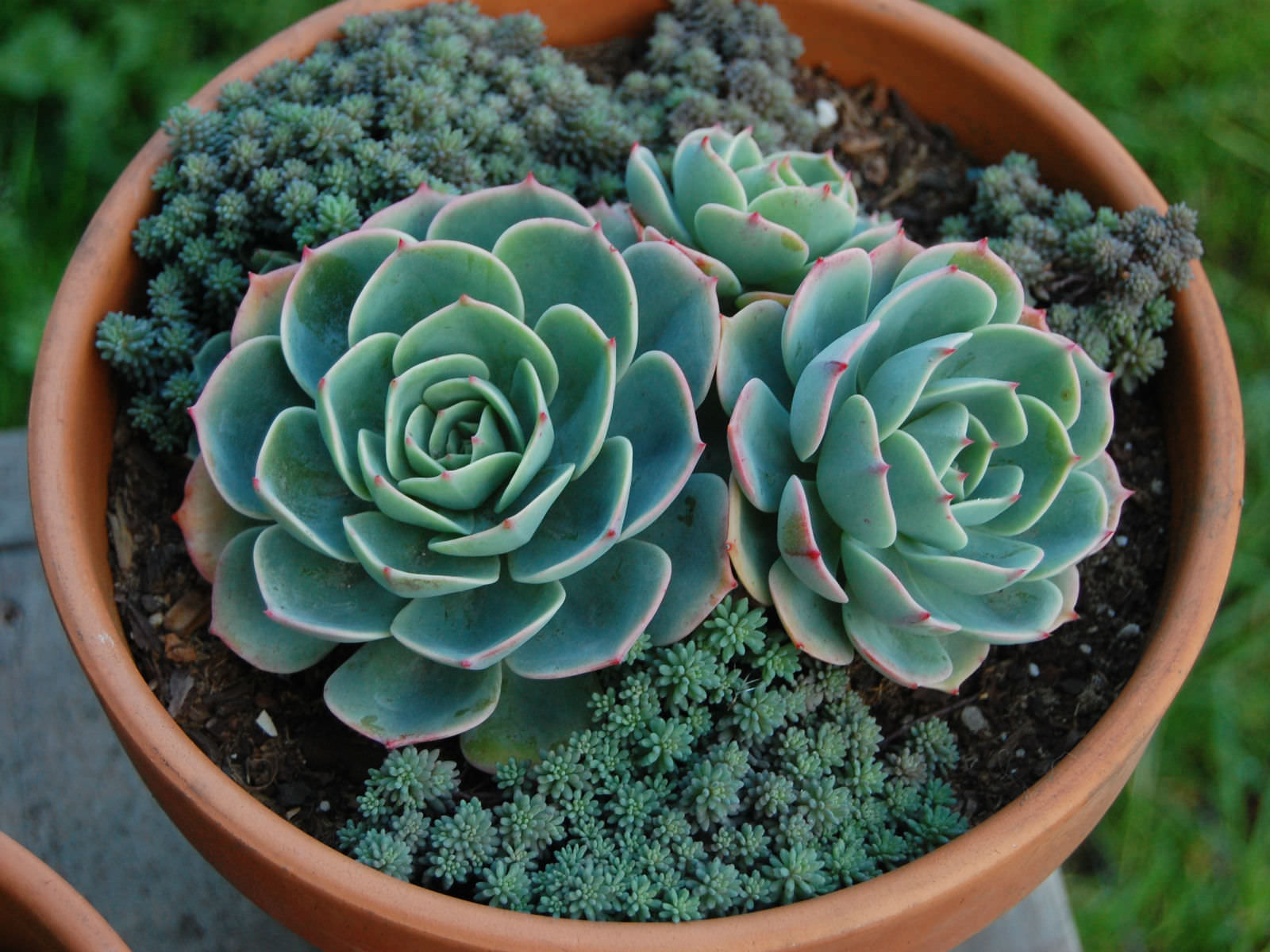
Hybrids of Echeveria 'Imbricata'
How to Grow and Care for Echeveria 'Imbricata'
Hardiness: USDA hardiness zones 9a to 11b: from 20°F (-6.7°C) to 50°F (10°C).
Most common Echeveria species are not complicated succulents to grow, provided you follow a few basic rules. First, be careful never to let water sit in the rosette, as it can cause rot or fungal diseases that will kill the plant. Additionally, remove dead leaves from the bottom of the plant as it grows. These dead leaves provide a haven for pests, and Echeverias are susceptible to mealybugs. As with all succulents, careful watering habits and plenty of light will help ensure success.
Repot as needed, preferably during the warm season. To repot a succulent, ensure the soil is dry, then gently remove the pot. Gently remove the old soil from the roots, discarding any rotted or dead roots. Treat any cuts with a fungicide.
Most Echeverias can be easily propagated from leaf cuttings, although a few are better propagated from seeds or stem cuttings. To propagate a leaf cutting, place the individual leaf in potting mix specifically formulated for succulents and cover the dish until the new plant sprouts.
Learn more at How to Grow and Care for Echeveria.
Links
- Back to genus Echeveria
- Succupedia: Browse succulents by Scientific Name, Common Name, Genus, Family, USDA Hardiness Zone, Origin, or cacti by Genus
Photo Gallery
Click on a photo to see a larger version.