Scientific Name
Echeveria elegans Rose
Synonym(s)
Echeveria perelegans
Common Name(s)
Hens and Chicks, Mexican Gem, Mexican Snowball, Mexican Snow Ball, Pearl Echeveria, White Mexican Rose
Scientific Classification
Family: Crassulaceae
Subfamily: Sempervivoideae
Tribe: Sedeae
Genus: Echeveria
Etymology
The specific epithet "elegans" (pronounced "ELL-eh-ganz") means "elegant; graceful; fine" and refers to the elegant appearance of this species.
Description
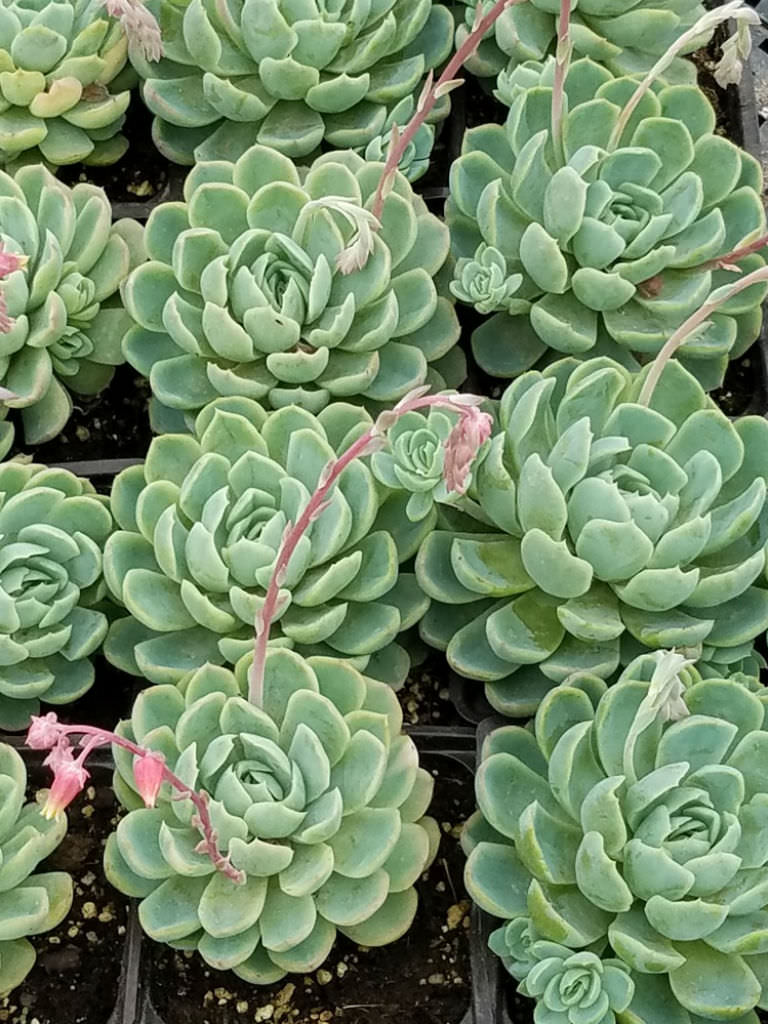
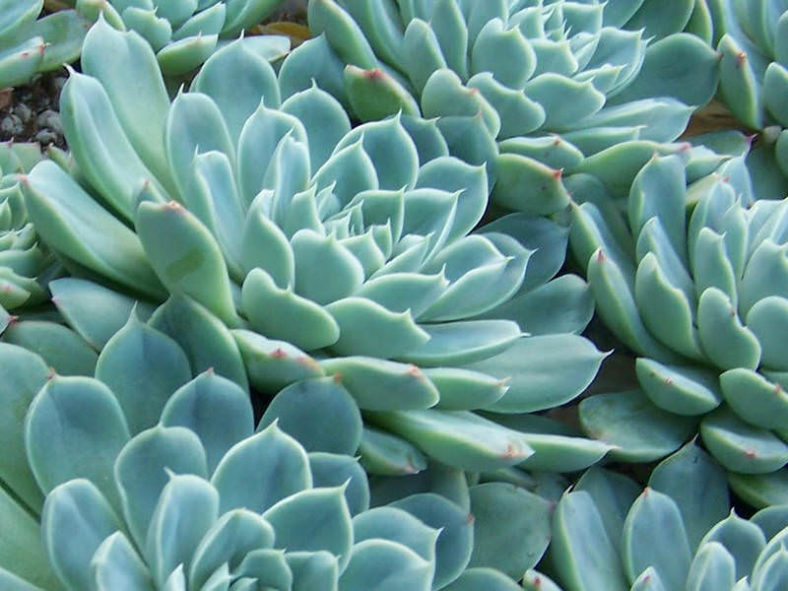
Echeveria elegans is a popular succulent plant that forms compact rosettes of pale bluish-green, spoon-shaped leaves. It is a variable species with several forms that differ only slightly in leaf size, shape, and flower color. The leaves are thick and fleshy and can measure up to 2.6 inches (6 cm) long and 0.8 inches (2 cm) broad. They can take on a lovely pink blush if grown in bright sunlight. The plant offsets freely and forms a dense carpet of rosettes over time.
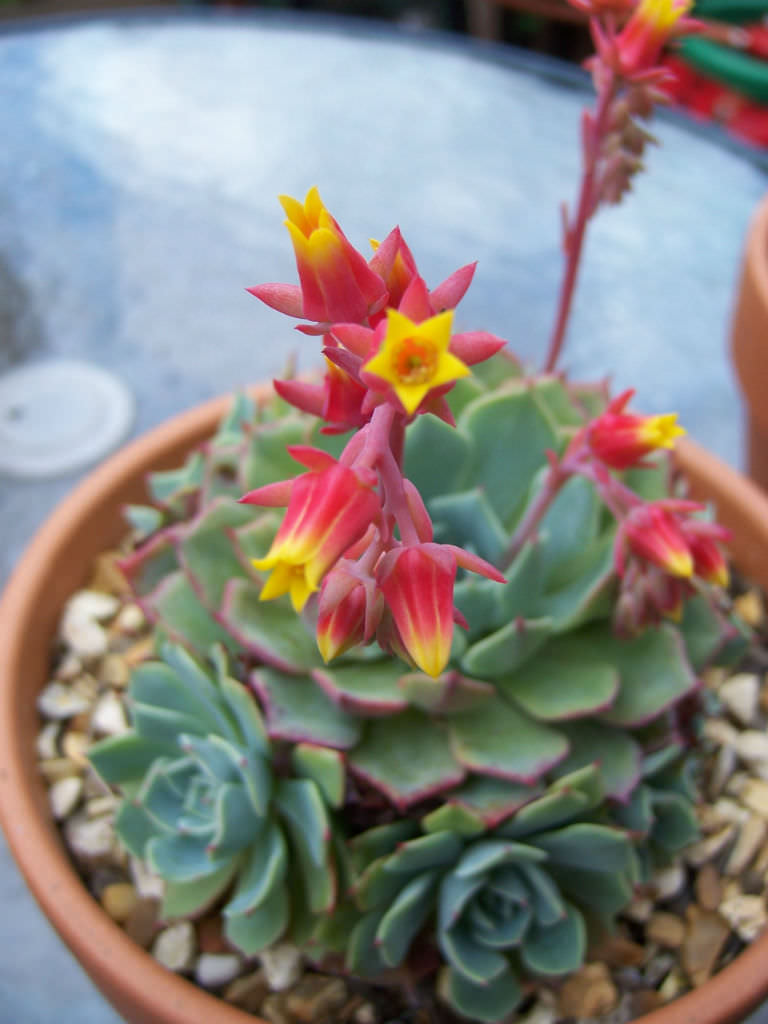
The rosettes send up slender pinkish stalks that can grow up to 1 foot (30 cm) tall, bearing pinkish-red flowers tipped with yellow from late winter to mid-summer.
Origin
Echeveria elegans is native to Mexico's semi-desert regions.
Varieties and forms of Echeveria elegans
- Echeveria elegans var. elegans
- Echeveria elegans var. hernandonis
- Echeveria elegans var. tuxpanensis
- Echeveria albicans
Hybrids of Echeveria elegans
- Echeveria 'Apus'
- Echeveria 'Gilva'
- Echeveria × gilva 'Red'
- Echeveria 'Hercules'
- Echeveria 'Violet Queen'
- ×Graptoveria 'Fantome'
- ×Sedeveria 'Blue Lotus'
How to Grow and Care for Echeveria elegans
Light: E. elegans prefers full sun to partial shade. If you move your plant outside in the spring, do it gradually. The intense afternoon sun can cause sunburn. During the winter, when your E. elegans is inside, put it near the brightest window in your home. It will stretch if it doesn't get enough sunlight.
Soil: This succulent needs a potting soil mix that drains quickly. Many growers create their own mix, but commercial succulent potting mixes will also work well.
Hardiness: This plant is a tender succulent, so it must be brought indoors for winter to survive. E. elegans can withstand temperatures as low as 20°F to 50°F (-6.7°C to 10°C), USDA hardiness zones 9a to 11b.
Watering: Provide moderate amounts of water from spring to fall. The "soak and dry" method is the preferred schedule for watering E. elegans. If you have saucers under the pots, empty the water briefly. During the winter, water the plant just enough to keep it from shriveling.
Fertilizing: E. elegans grows well without fertilizer but may benefit from the extra nutrients. In spring, use a slow-release or liquid fertilizer diluted 2 to 4 times more than usual, and use it less often than recommended.
Repotting: Repot the plant only as needed during spring or early summer when it grows actively. To repot your E. elegans, make sure the soil is dry before repotting.
Propagation: Like all Echeverias, this succulent is usually propagated from leaves and offsets, but you can also grow it from stem cuttings and seeds. Spring is the best time to take cuttings and separate offsets. Sow the seeds in spring or summer.
Learn more at How to Grow and Care for Echeveria.
Toxicity of Echeveria elegans
E. elegans has no toxic effects reported. It is safe around pets and humans, although it is not advisable to eat it.
Links
- Back to genus Echeveria
- Succupedia: Browse succulents by Scientific Name, Common Name, Genus, Family, USDA Hardiness Zone, Origin, or cacti by Genus
Photo Gallery
Click on a photo to see a larger version.