Scientific Name
Dudleya virens (Rose) Moran
Synonym(s)
Cotyledon virens, Echeveria virens
Common Name(s)
Green Liveforever, Bright Green Dudleya
Scientific Classification
Family: Crassulaceae
Subfamily: Sempervivoideae
Tribe: Sedeae
Genus: Dudleya
Etymology
The specific epithet "virens" (pronounced "VEER-enz") means "green" and refers to the green (typically non-glaucous) leaves of this species.
Description
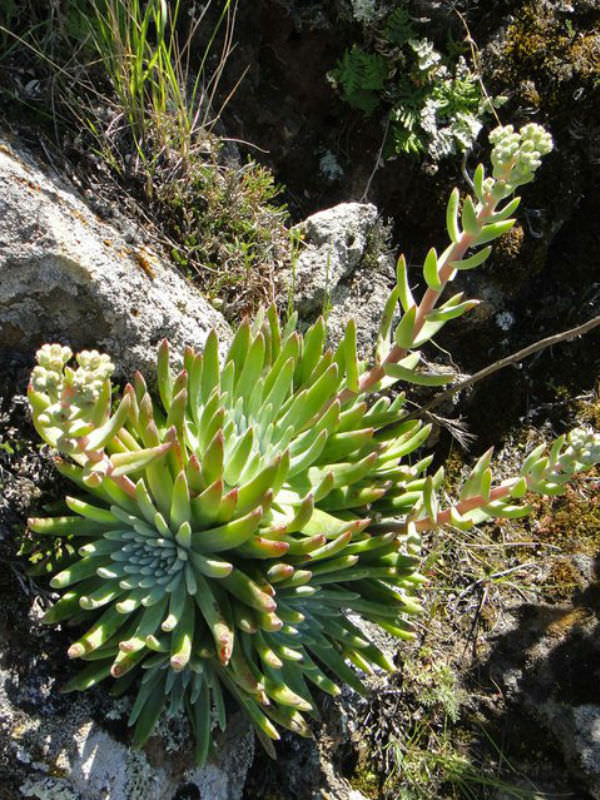
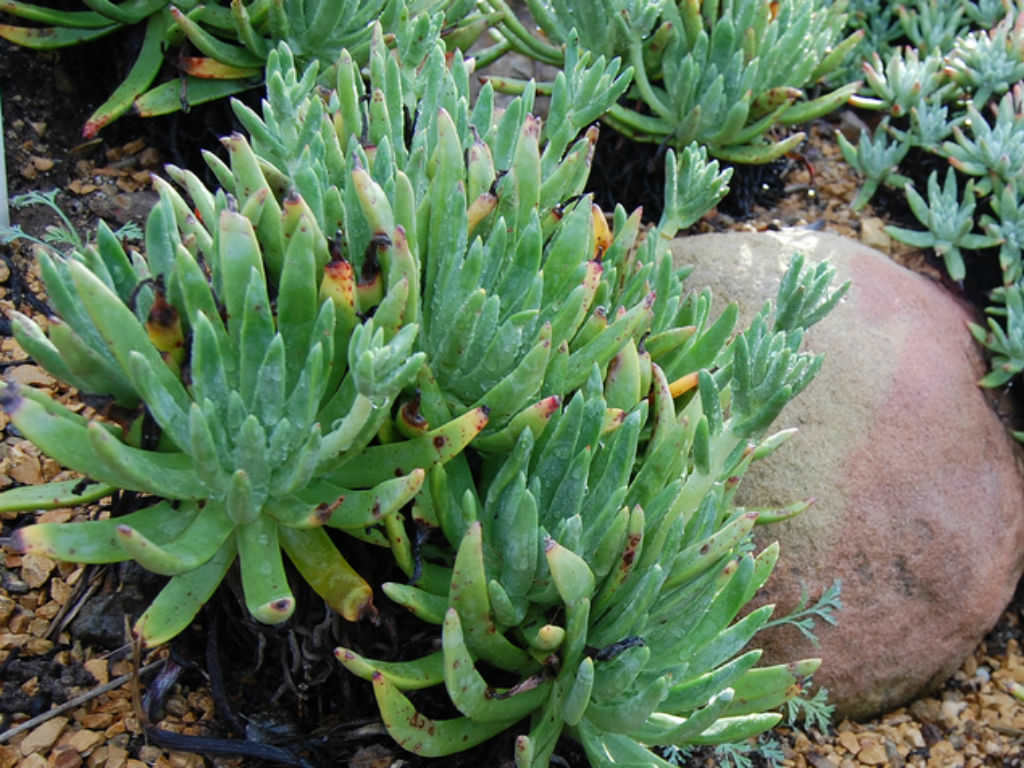
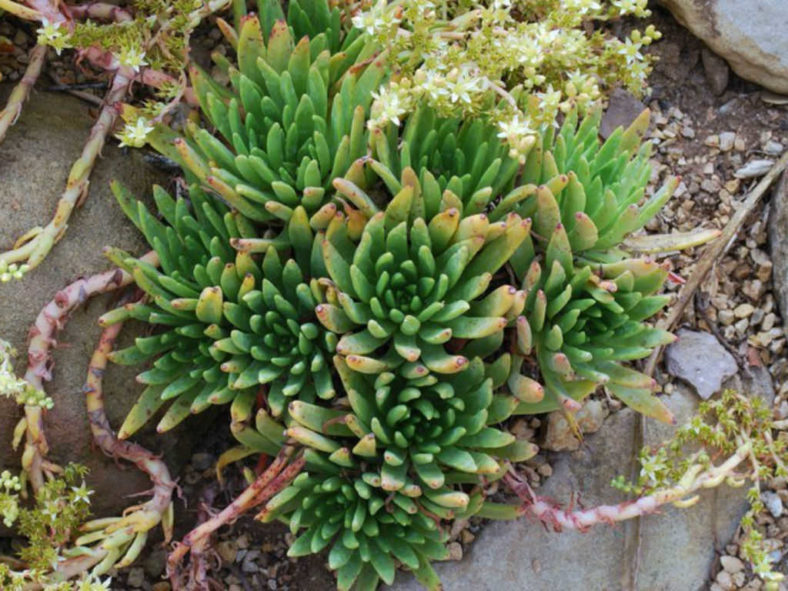
Dudleya virens is a succulent plant that forms clumps of rosettes of fleshy, usually green, sometimes glaucous leaves at the tips of branching stems. The rosettes can reach a diameter of 10 inches (25 cm). The stems are erect at first, later decumbent, and can grow up to 3.3 feet (1 m) long and 1.2 inches (3 cm) in diameter. The leaves are linear to triangular-lanceolate, measuring up to 10 inches (25 cm) in length and 1.2 inches (3 cm) in width. They are 2 to 5 times as wide as they are thick.
The star-shaped flowers are white, somewhat red-tinged, and appear in spring.
Origin
Dudleya virens is native to the United States and Mexico. It occurs in several coastal locations in southern California and Baja California.
Subspecies of Dudleya virens
- Dudleya virens subsp. extima
- Dudleya virens subsp. hassei
- Dudleya virens subsp. insularis
- Dudleya virens subsp. virens
How to Grow and Care for Dudleya virens
Hardiness: USDA hardiness zones 9a to 11b: from 20°F (-6.7°C) to 50°F (10°C).
Most of the various habitats Dudleyas occupy become dry in summer. Therefore, cutting off water to Dudleyas in your garden during the summer is important. Plants grown in sandy soils or containers are exceptions. They will accept infrequent summer watering as long as the soil drains well. The onset of fall or winter rains reawakens Dudleyas from drought-induced dormancy. Their shriveled leaves plump up quickly, growth resumes, and flowering occurs during the following spring or summer. These plants are amazingly resilient. If a portion of a colony sloughs off a cliff face or is uprooted by a burrowing animal, it can persist for months until soil contact is re-established. Species that naturally grow on ocean bluffs are also salt-spray tolerant.
Dudleyas have their share of disease and pest problems. However, if you can prevent Argentine Ants from introducing mealybugs or aphids to your Dudleya, they will be healthier. Mealybugs nestle in the deep recesses of the leaves, and their feeding weakens the plants.
Learn more in "How to Grow and Care for Dudleya."
Links
- Back to genus Dudleya
- Succupedia: Browse succulents by Scientific Name, Common Name, Genus, Family, USDA Hardiness Zone, Origin, or cacti by Genus
Photo Gallery
Click on a photo to see a larger version.