Scientific Name
Crassula 'Pangolin'
Scientific Classification
Family: Crassulaceae
Subfamily: Crassuloideae
Genus: Crassula
Etymology
The generic name "Crassula" (pronounced "KRASS-oo-la") means "somewhat thick" and refers to the thick, fleshy, and succulent nature of the leaves and stems that are characteristic of nearly every species in this genus.
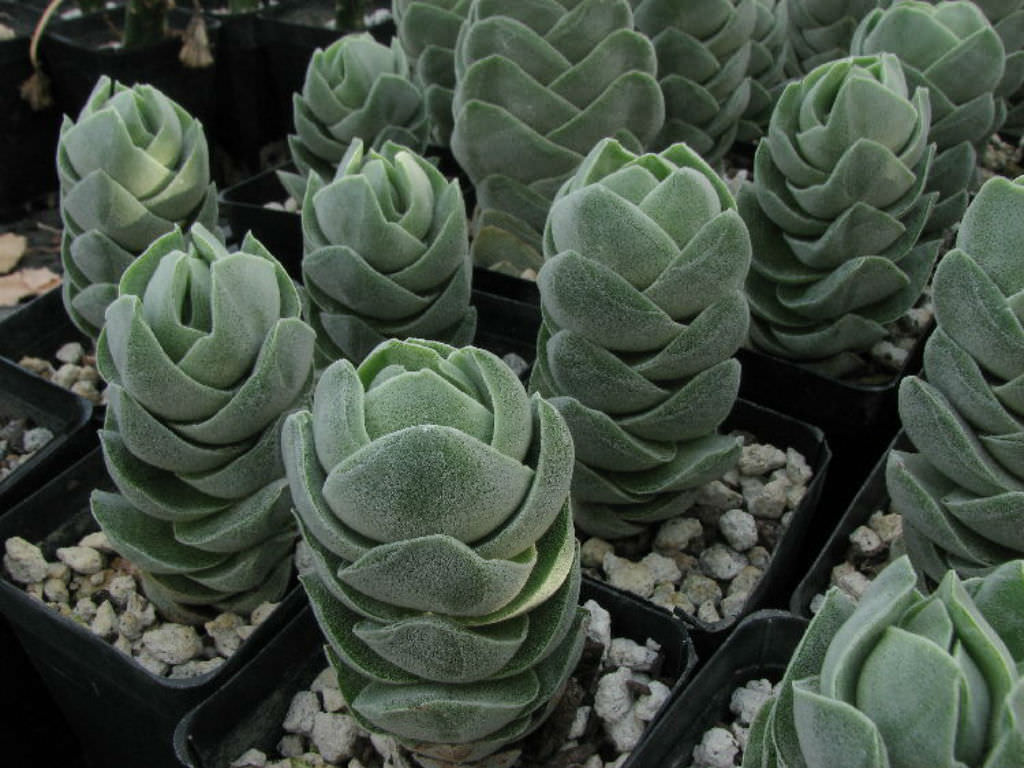
The cultivar epithet 'Pangolin' refers to the plant's tightly packed, overlapping leaves, which resemble the overlapping scales of a pangolin🡕.
Description
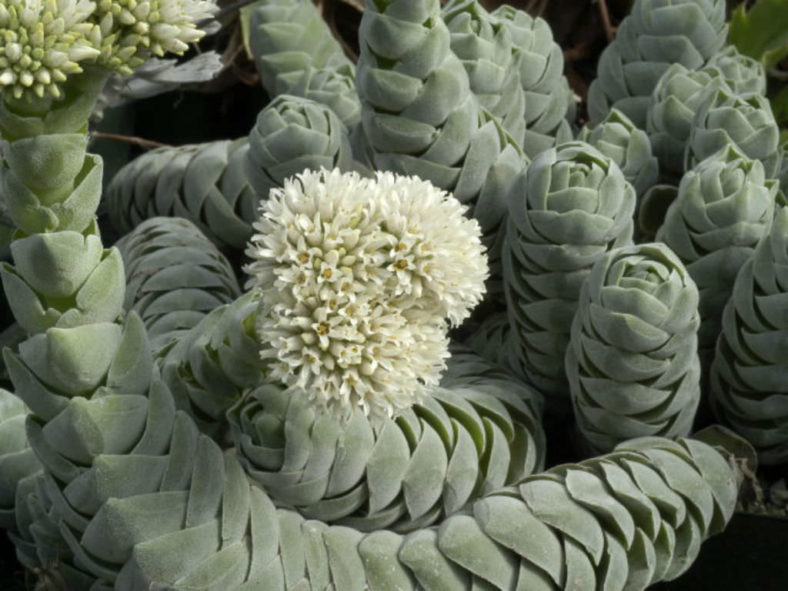
Crassula 'Pangolin' is an attractive, slow-growing succulent with branches bearing felted, silvery, tightly packed leaves, giving it the appearance of a pangolin, a weird-looking creature with an armor of overlapping, leathery scales. The branches can grow up to 6 inches (15 cm) long and 1.2 inches (3 cm) in diameter.
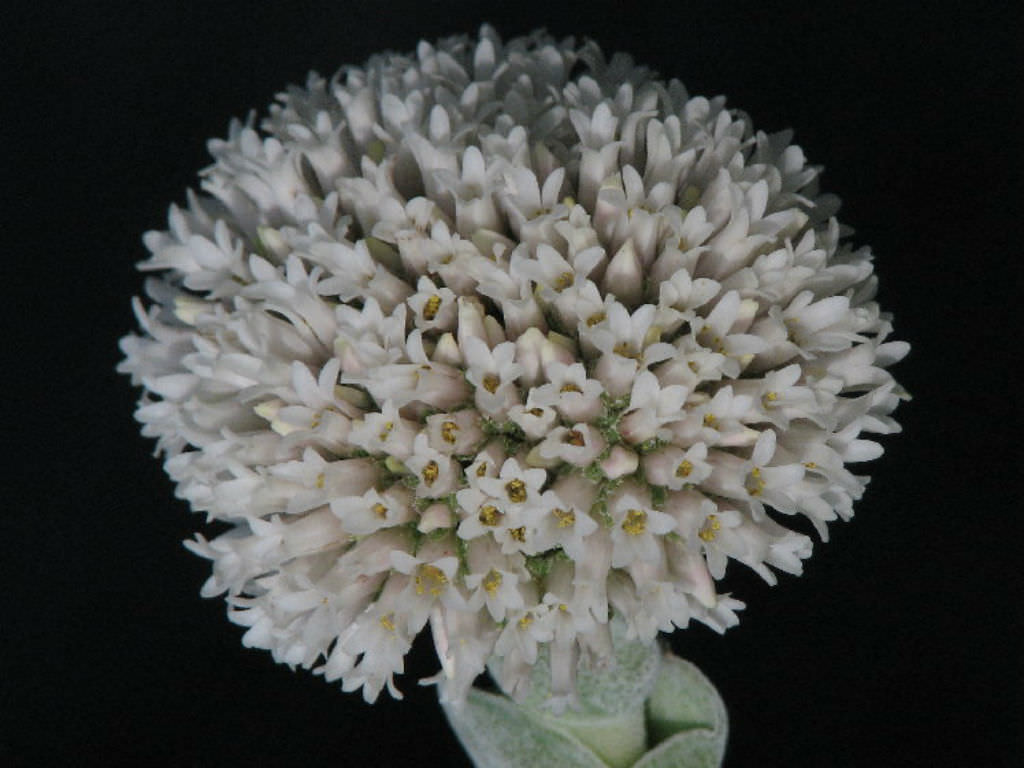
After several years, Crassula 'Pangolin' produces large, spherical clusters of creamy-white flowers at the end of the branches. The flowers have a delicious, honey-like fragrance.
Origin
Crassula 'Pangolin' is one of the newest hybrids from the United States, created by John Trager. It results from a cross within the Huntington International Succulent Introduction program, specifically between an unnamed hybrid of Crassula perfoliata var. minor, possibly with Crassula tecta, and Crassula barklyi. This hybrid was first distributed as ISI 2011-23.
How to Grow and Care for Crassula 'Pangolin'
Hardiness: USDA hardiness zones 9b to 11b: from 25°F (-3.9°C) to 50°F (10°C).
Crassulas are easy to grow but susceptible to mealybugs and fungal diseases. As with all succulents, overwatering is fatal, so err on the side of too dry rather than too wet. Never let your plant sit in water. If you water from below by placing the plant in a saucer, make sure to pour off any excess water after a few minutes.
These succulents are generally started by division, offsets, or leaf cuttings. Crassulas can be easily propagated from a single leaf. To sprout leaves, place them in a potting mix designed for succulents, then cover the dish until they sprout.
Repot as needed, preferably during the warm season. To repot your Crassula, ensure the soil is dry, then gently remove the pot. Knock away the old soil from the roots, removing any rotted or dead roots. Treat any cuts with a fungicide. Place the plant in its new pot and backfill it with potting soil, spreading the roots as you repot. Leave the plant dry for a week or so, then begin to water lightly to reduce the risk of root rot.
Learn more at How to Grow and Care for Crassula.
Links
- Back to genus Crassula
- Succupedia: Browse succulents by Scientific Name, Common Name, Genus, Family, USDA Hardiness Zone, Origin, or cacti by Genus
Photo Gallery
Click on a photo to see a larger version.