

Succulents store water in their tissue. That, by definition, is what makes them succulent plants. They use the water they store to help them survive long, dry periods. Since succulents, as a general rule, grow in dry places, they take up water through their roots very quickly and efficiently. On the other hand, they cannot quickly remove excess water. While this all works fine in the wild, people can supply more water than the succulents need when cultivated. This is a typical situation, and the plants in cultivation look plump and happy compared to their habitat counterparts.
But the real problems start when people do not just give their succulents more water than they need, but more water than they can handle. This is overwatering. When a succulent is overwatered, it will swell up more and more, and often, the stem will become so saturated that it splits open in one or more places. While a succulent can usually recover from this, another result of overwatering is rot, especially when combined with cold temperatures. Sometimes, just the roots will rot off, but the whole plant will often turn mushy.
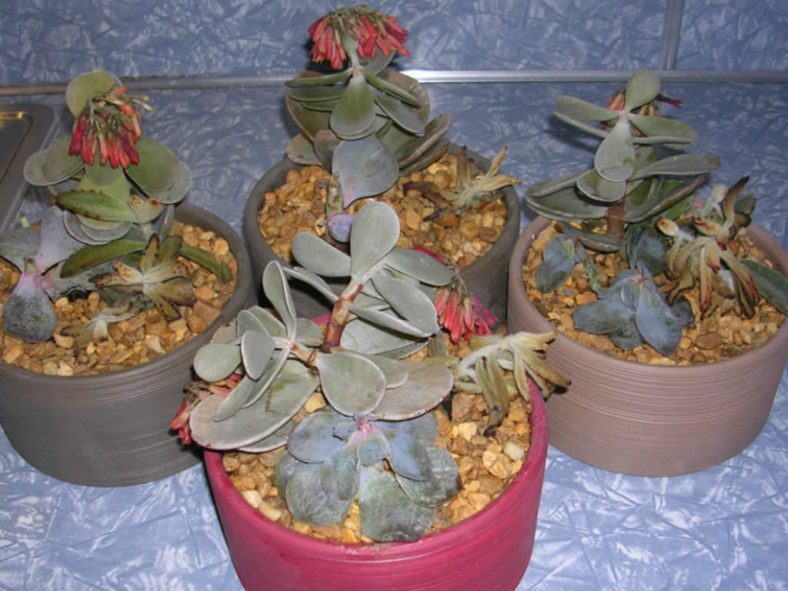
Treatment
The first thing to do with an overwatered succulent is to stop watering it. In most cases, repotting would also be a good idea. When the plant is out of the pot, let it dry for a week or two, then repot it. If the plant body has split anywhere, the damage is permanent, and there is nothing you can do but let it scar over. If the plant has started to rot, saving the plant will depend on how far the rot has set in.
Source: succulentguide.com
Links
- Succupedia: Browse succulents by Scientific Name, Common Name, Genus, Family, USDA Hardiness Zone, Origin, or cacti by Genus