Scientific Name
Anacampseros telephiastrum DC.
Synonym(s)
Anacampseros anacampseros, Portulaca anacampseros, Ruelingia anacampseros, Talinum anacampseros
Scientific Classification
Family: Anacampserotaceae
Genus: Anacampseros
Etymology
The specific epithet "telephiastrum" (pronounced "te-lef-ee-ASS-trum") means "somewhat like Telephium". It refers to the resemblance of this species to the group of plants historically known as Telephium (Telephium clade, not the genus Telephium).
Origin
Anacampseros telephiastrum is native to South Africa. It grows on rocky flats and slopes from Worcester in the Western Cape through the southern Great Karoo to the Eastern Cape.
Description
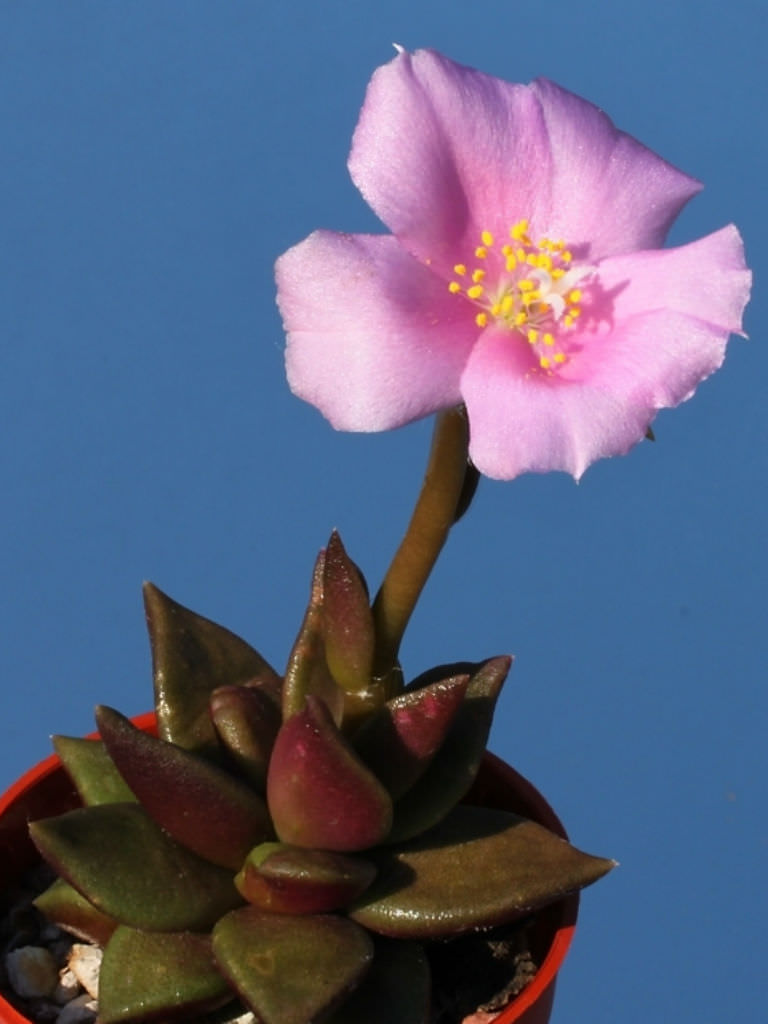
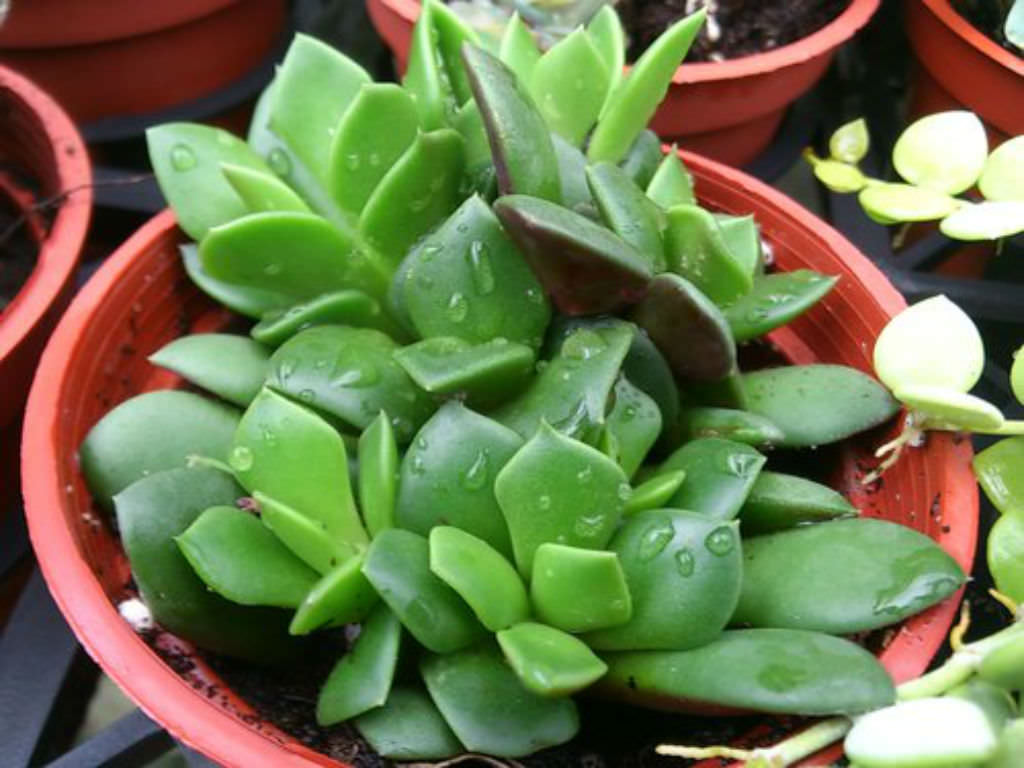
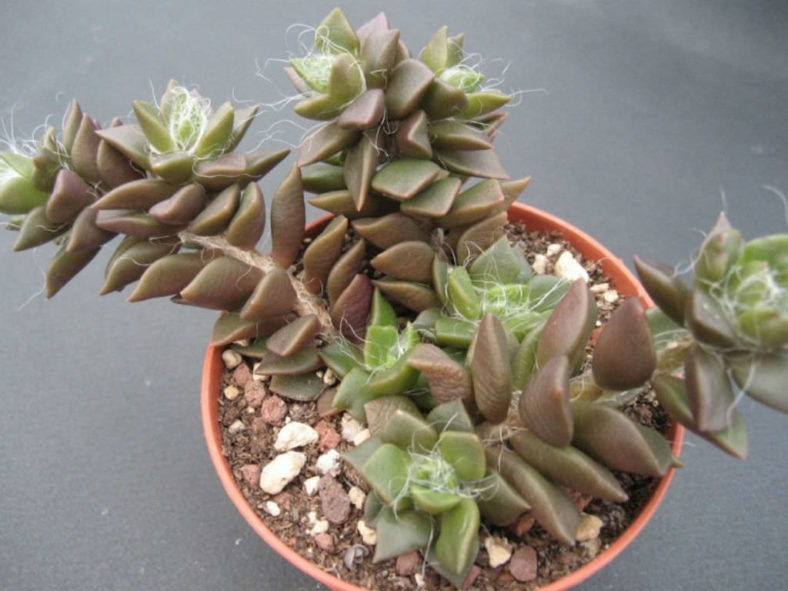
Anacampseros telephiastrum is a small, clump-forming succulent with fleshy, green to brownish-green, closely crowded leaves on short stems and axillary hairs usually shorter than the leaves. It can grow up to 6 inches (15 cm) tall and form a small caudex as a plant base with age. The leaves are ovate, pointed at the tip, and can measure up to 1.2 inches (3 cm) long and 0.8 inches (2 cm) wide.
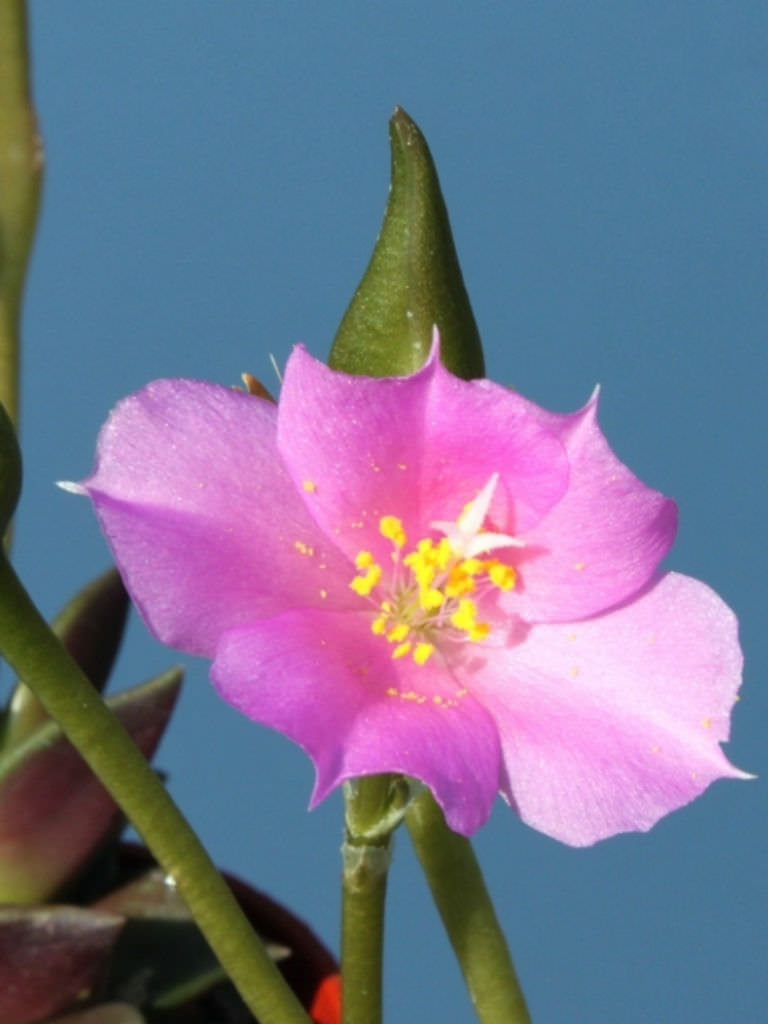
The flowers are pink, appear on stout peduncles in summer, and open in the afternoon. They can reach a diameter of 1.4 inches (3.5 cm).
Cultivars of Anacampseros telephiastrum
How to Grow and Care for Anacampseros telephiastrum
Hardiness: USDA hardiness zones 10a to 11b: from 30°F (-1.1°C) to 50°F (10°C).
Anacampseros grow well in partial sun or bright light, enhancing leaf color and keeping them compact. They require gritty, free-draining soil with added organic material and low to moderate watering. The caudiciform species are prone to rot and should be watered very sparingly. Feed with a high-potassium fertilizer during the growing season, diluted to 1/4 strength, and mix into the watering can for application.
These succulents are excellent plants for container growing. Anacampseros always look good and stay small. They look fine in a cold greenhouse and frame and do well outdoors in raised beds and terraces.
Anacampseros may be attractive to a variety of insects. Still, plants in good condition should be nearly pest-free, especially if grown in a mineral potting mix with good exposure and ventilation. Nonetheless, watch carefully for any significant decline in health. This may signal a pest problem that should be dealt with quickly to prevent scarring, stunting, and even death.
Learn more at How to Grow and Care for Anacampseros.
Links
- Back to genus Anacampseros
- Succupedia: Browse succulents by Scientific Name, Common Name, Genus, Family, USDA Hardiness Zone, Origin, or cacti by Genus
Photo Gallery
Click on a photo to see a larger version.