

Acanthocereus tetragonus, commonly known as Triangle Cactus, Barbed-wire Cactus, or Night-blooming Cereus, is a tall, columnar cactus native to coastal regions of the United States, Mexico, Central America, the Caribbean, and northern South America. It is highly regarded both as an impressive wild shrub and for its popular miniature cultivar, Acanthocereus tetragonus 'Fairy Castle'.
Taxonomy of Acanthocereus tetragonus
Scientific Name
Acanthocereus tetragonus (L.) Hummelinck
Synonym(s)
Cactus tetragonus, Cereus tetragonus
Common Name(s)
Barbed-wire Cactus, Dildo Cactus, Night-blooming Cereus, Triangle Cactus, Sword Pear
Scientific Classification
Family: Cactaceae
Subfamily: Cactoideae
Tribe: Hylocereeae
Genus: Acanthocereus
Etymology
The generic name "Acanthocereus" (pronounced "a-kan-tho-KER-ee-us") means "thorny Cereus" and refers to the spiny fruits of the plants in the genus.
The specific epithet "tetragonus" (pronounced "tet-ra-GON-us") means "tetragonal" and refers to the juvenile stems, which often have four angles.

Description
Acanthocereus tetragonus is a columnar cactus with dark green stems, each with 3 to 5 ribs lined with clusters of spines. It can grow up to 23 feet (7 m) tall and branches near the base, sometimes forming a well-developed trunk. The stems can reach a diameter of 3 inches (8 cm). The areoles are grey and up to 1.2 inches (3 cm) apart. Each areole bears 1 to 2 central and 6 to 8 radial spines that can grow up to 1 inch (2.5 cm) long.
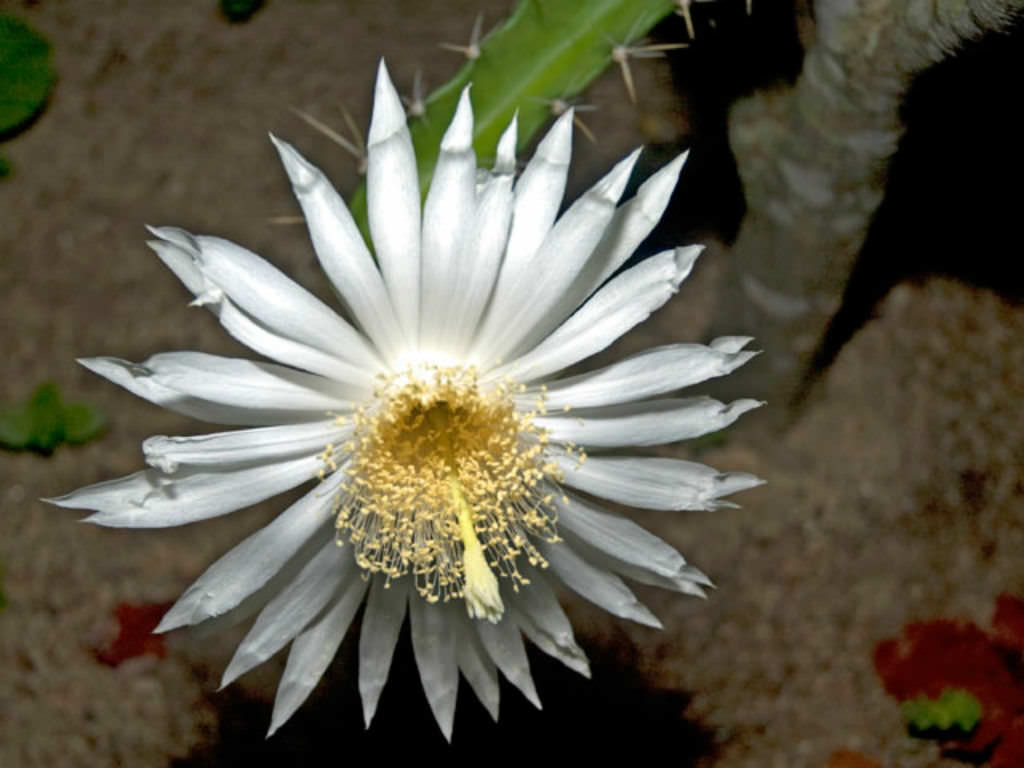
The flowers have greenish-white outer tepals, pure white inner tepals, and creamy white pistils. They can reach 6 inches (15 cm) long and 8 inches (20 cm) in diameter. The bright red fruits are oval to oblong and can grow up to 3.2 inches (8 cm) long.
Origin
Acanthocereus tetragonus is native to Southern Florida and the Lower Rio Grande Valley of Texas in the United States, as well as Mexico, Central America, the Caribbean, and northern South America.
Forms and Cultivars of Acanthocereus tetragonus
How to Grow and Care for Acanthocereus tetragonus
Light: Acanthocereus tetragonus thrives in bright light and requires several hours of direct sunlight. Gradually acclimate the plant to stronger sunlight, especially when moving it outdoors. Insufficient light can result in weak, elongated growth.
Soil: Use a well-draining, gritty cactus mix. A combination of mineral materials such as pumice, perlite, and coarse sand, with a small amount of organic matter, works well. Avoid heavy soils that retain excess moisture.
Hardiness: Acanthocereus tetragonus prefers warm conditions and should be protected from frost, particularly in areas with prolonged cold or wet winters. In colder climates, grow it in a container and overwinter it in a bright, frost-free location. This cactus is suitable for USDA hardiness zones 9a–11b, where the average annual extreme minimum temperatures range from 20°F to 50°F (-6.7°C to 10°C).
Watering: Water thoroughly during the active growing season, allowing the substrate to dry out completely between waterings. During the cooler winter months, reduce watering significantly, especially if you keep the plant in a cool location. Avoid prolonged moisture around the roots.
Fertilizing: Feed occasionally during spring and summer with a diluted, low-nitrogen fertilizer formulated for cacti and succulents. Avoid fertilizing during winter or when Acanthocereus tetragonus is not actively growing.
Repotting: Repot every 2 to 3 years, or when the plant outgrows its container or the substrate deteriorates. Use a sturdy pot with drainage holes, as mature plants can become large and top-heavy.
Propagation: You can propagate Acanthocereus tetragonus by stem cuttings or seeds. Let stem cuttings dry and form a callus before planting. Keep them in a warm, bright location until roots develop.
Learn more at How to Grow and Care for Cereus.
Toxicity of Acanthocereus tetragonus
Acanthocereus tetragonus is generally not considered chemically toxic, and its fruit is reported to be edible. However, its sharp spines can cause painful injuries, so handle the plant carefully and keep it away from children and pets.
Photo Gallery
Click on a photo to see a larger version.


Internal Links
- Explore all plants within the genus Acanthocereus.
- Explore all plants within the family Cactaceae.