Scientific Name
Paleoagave bracteosa (S.Watson ex Engelm.) A.Vázquez, Rosales & García-Mor.
Synonym(s)
Agave bracteosa
Common Name(s)
Candelabrum Agave, Spider Agave, Squid Agave
Scientific Classification
Family: Asparagaceae
Subfamily: Agavoideae
Genus: Paleoagave
Etymology
The specific epithet "bracteosa" (pronounced "brak-tee-OH-suh") means "bracteose; having many bracts" and refers to the persistent bracts of this species' flowers.
Description
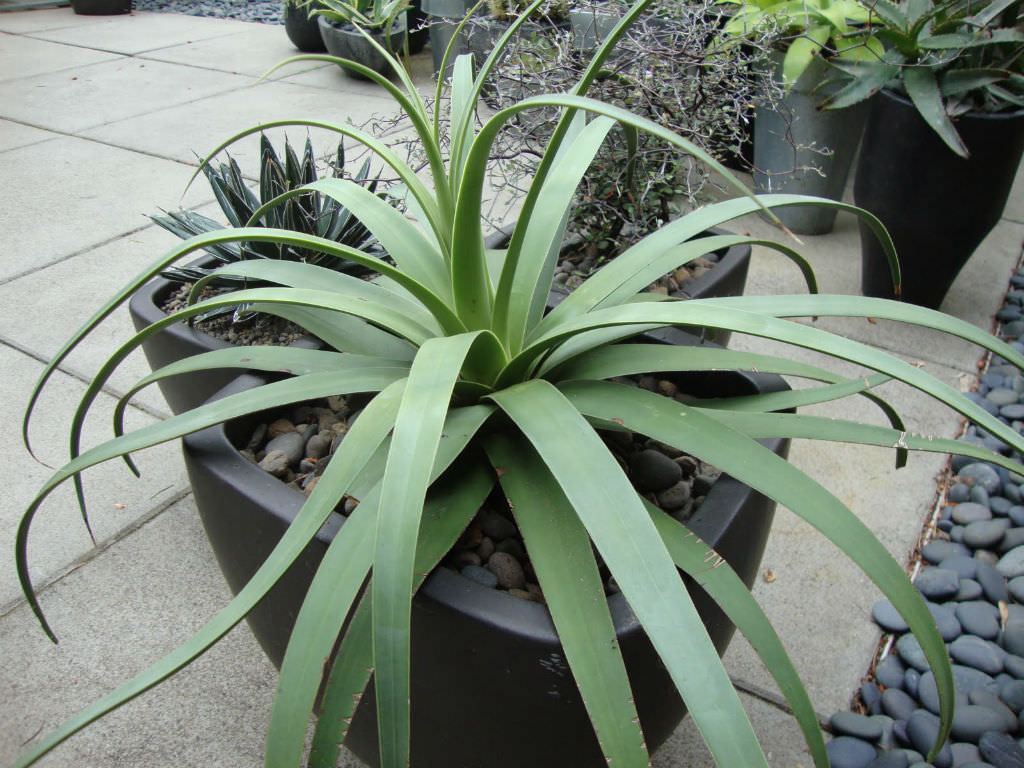
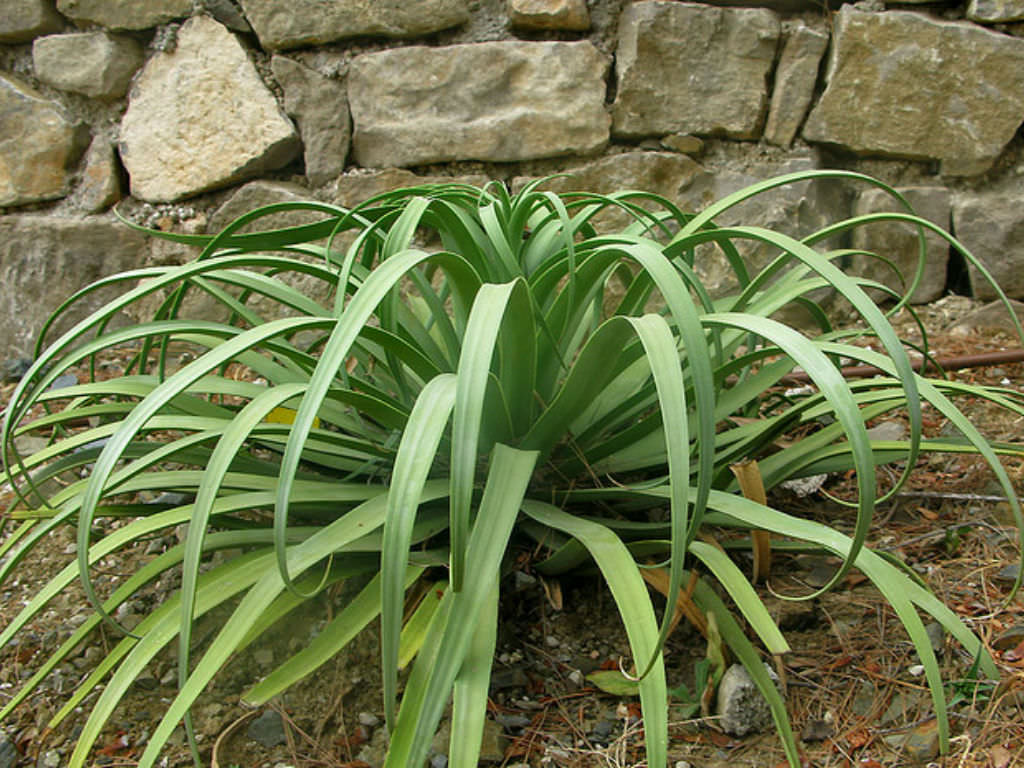
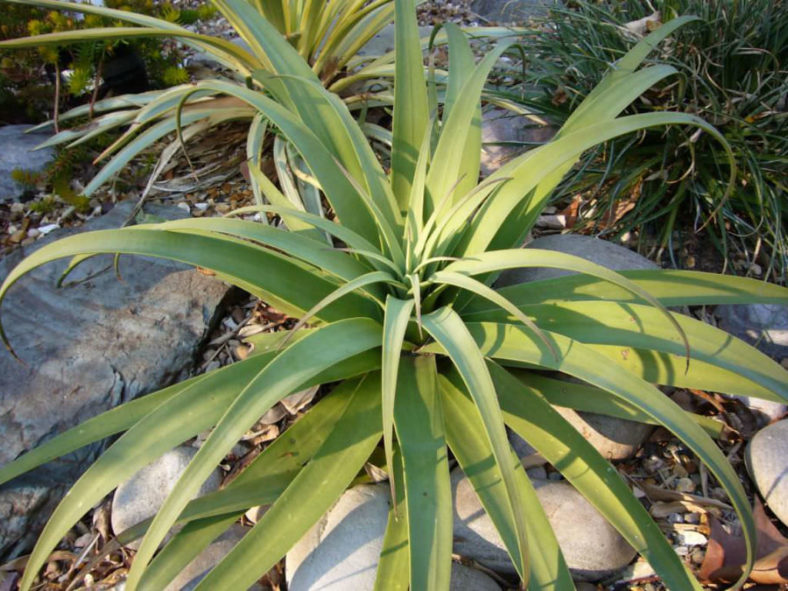
Paleoagave bracteosa, formerly known as Agave bracteosa, is a slow-growing succulent that forms rosettes of toothless, green to yellowish-green leaves that emerge upright in the center and arch gracefully back toward the outside of the rosette. The rosettes can grow up to 1.5 feet (45 cm) tall and 2 feet (60 cm) in diameter, producing offsets that form a clump with age. The leaves have minute serrations along the margins but no teeth or spines at the ends. They are lance-shaped, measuring up to 28 inches (71 cm) long and 2 inches (5 cm) wide.
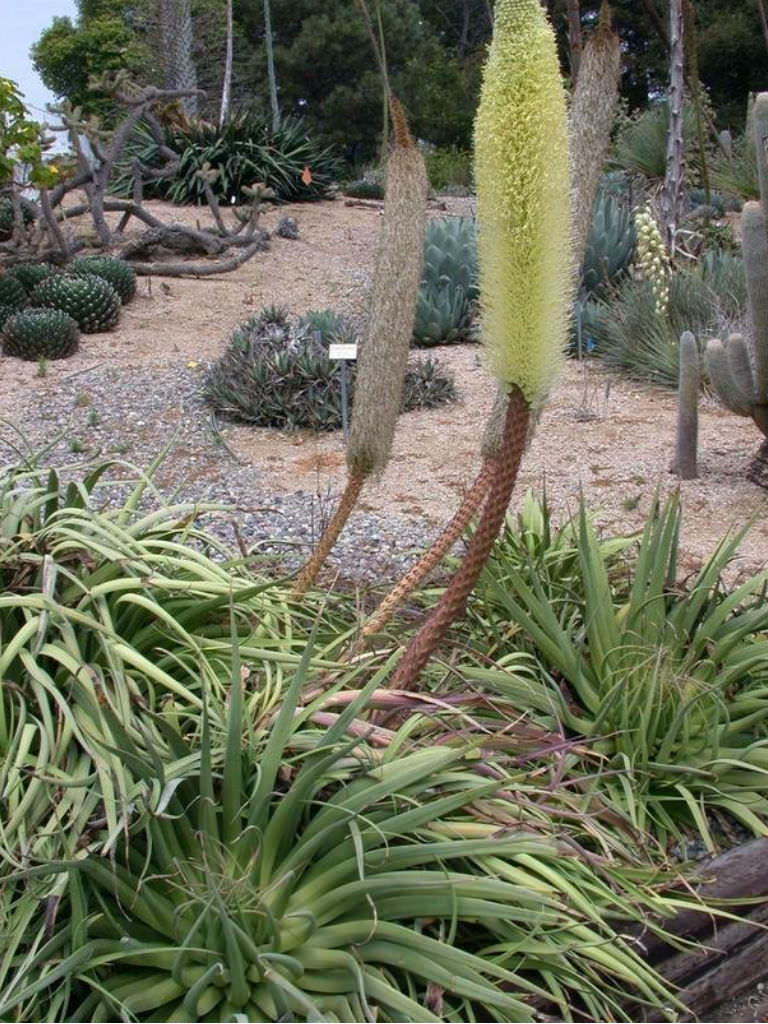
The mature rosettes send up an unbranched, ascending to erect spike that bears a dense terminal cluster of white flowers, distinctive from all other species. The flower stalks can grow up to 5 feet (1.5 m) tall. After flowering, the rosette slowly dies, but the offsets perpetuate the plant.
Origin
Paleoagave bracteosa is native to the mountains of the Sierra Madre Oriental in northeastern Mexico (Tamaulipas, Coahuila, and Nuevo León). It grows on cliffs and rocky slopes at elevations ranging from 2,950 to 5,580 feet (900 to 1,700 m).
Cultivars of Paleoagave bracteosa
How to Grow and Care for Paleoagave bracteosa
Hardiness: USDA hardiness zones 8a to 11b, from 10°F (-12.2°C) to 50°F (10°C).
Agaves are easy to grow. They are slow-growing and dramatic and will even thrive on a bit of neglect. If you like to fuss with houseplants and water them a lot, an Agave is probably not the plant for you. On the other hand, if you like to set it and forget it and have a sunny window, Agave might be the way to go. Be aware that some large varieties will eventually outgrow your room (unless you have a large greenhouse), and Agave can be aggressive. They have irritating sap and sometimes very sharp thorns that can injure small children and pets.
Generally, Agaves do not require repotting every year. Most species commonly grown in cultivation grow slowly and take a long time to outgrow their pot. It is also best to handle your plants as little as possible, since they don't like to be disturbed. When repot, refresh the spent soil with a new potting mix and ensure the plant is firmly anchored in its pot. However, be careful not to pot the Agave too deeply, as that will encourage stem rot during the growing season.
Learn more in "How to Grow and Care for Agave."
Links
- Back to genus Paleoagave
- Succupedia: Browse succulents by Scientific Name, Common Name, Genus, Family, USDA Hardiness Zone, Origin, or cacti by Genus
Photo Gallery
Click on a photo to see a larger version.