Scientific Name
Lophophora fricii Haberm.
Synonym(s)
Lophophora diffusa subsp. fricii, Lophophora williamsii var. fricii, Peyotl zacatensis var. fricii
Common Name(s)
False Peyote
Scientific Classification
Family: Cactaceae
Subfamily: Cactoideae
Tribe: Cacteae
Genus: Lophophora
Etymology
The specific epithet "fricii" (pronounced "FRIK-ee-eye") honors Alberto Vojtěch Frič🡕 (1882–1944), a famous Czech botanist, ethnographer, writer, and explorer who discovered and described many species of cacti.
Description
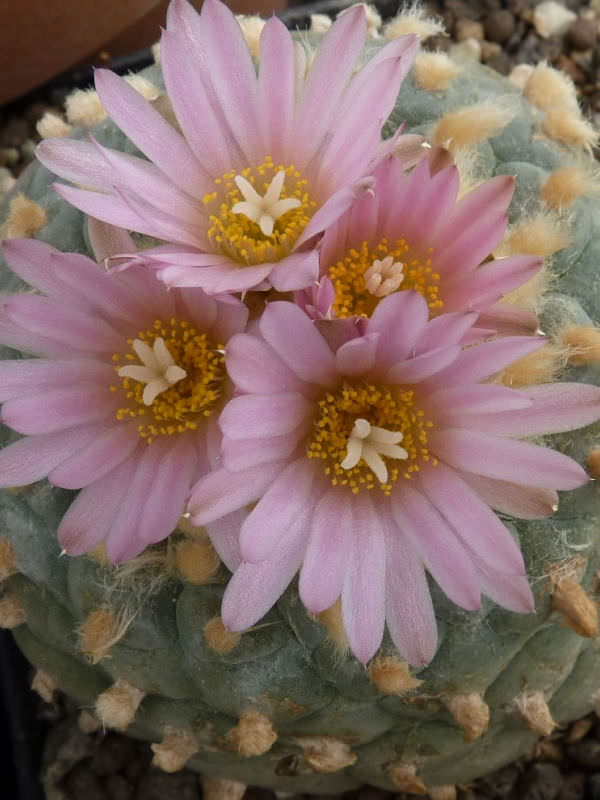
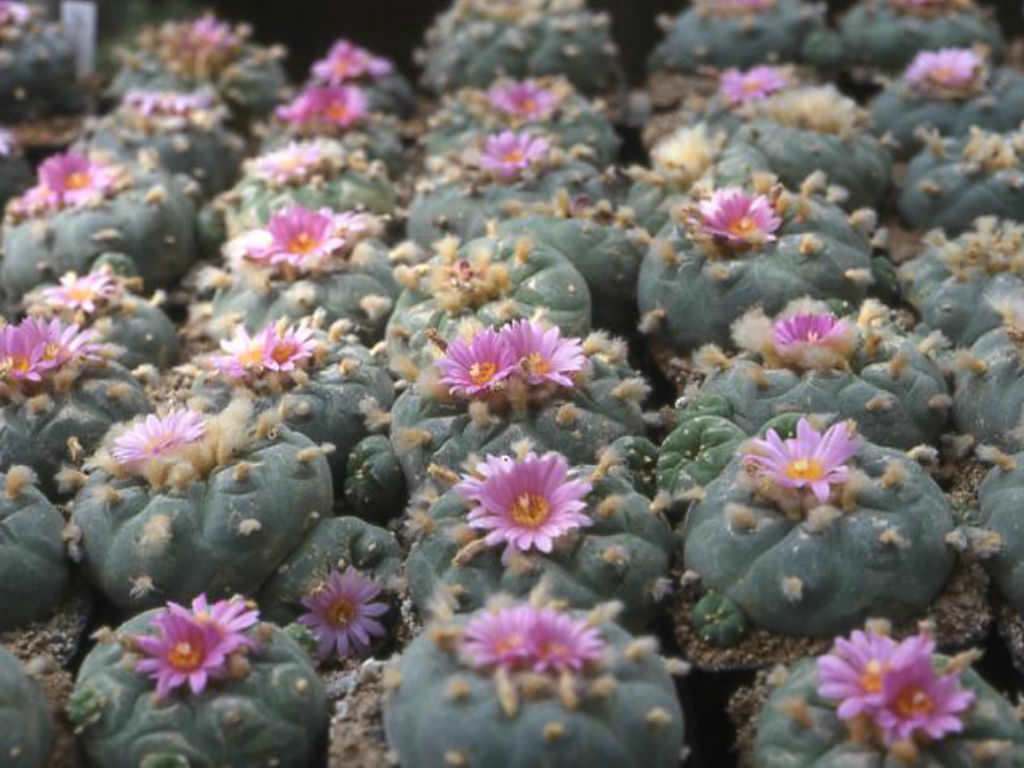
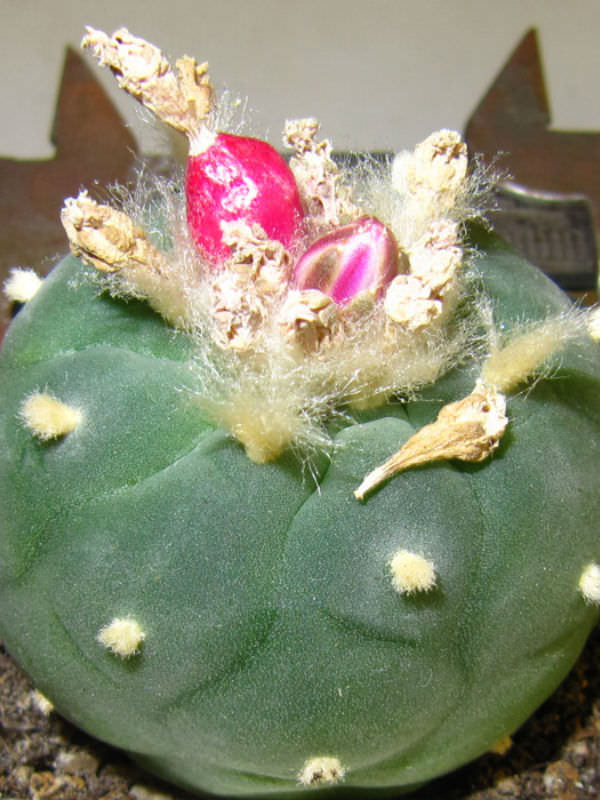
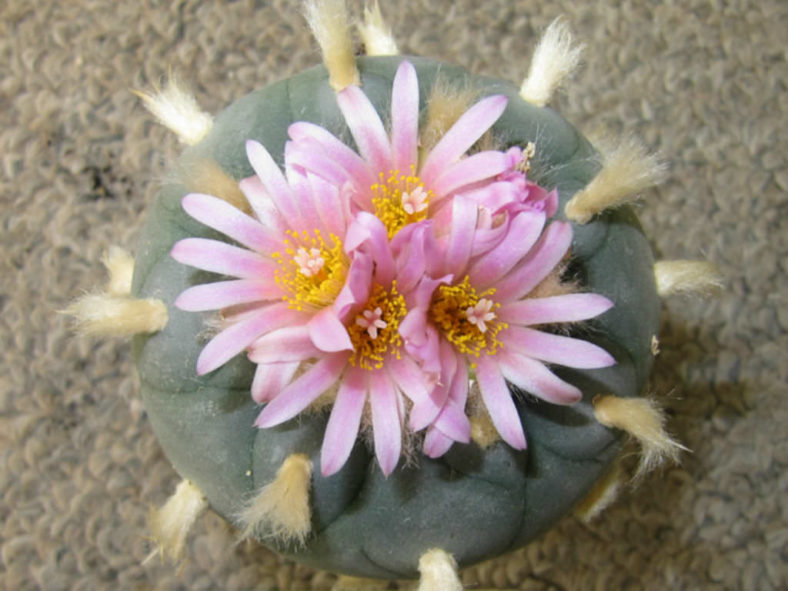
Lophophora fricii, also known as Lophophora williamsii var. fricii, is a small, slow-growing cactus with pale grey-green to yellow-green stems that grow from a large taproot. The stems are spherical, spineless, usually lacking well-defined ribs and furrows, and have tufts of hairs that usually spread irregularly on the prominent podaria.
The flowers are pale to dark pink and can reach a diameter of 1.6 inches (4 cm).
Origin
Lophophora fricii is endemic to Mexico (around the lagoon near Viesca in Coahuila).
How to Grow and Care for Lophophora fricii
Hardiness: USDA hardiness zones 9b to 11b: from 25°F (-3.9°C) to 50°F (10°C).
Lophophora is more tolerant of soil types than its relatives and typically grows in areas with decomposed limestone. In cultivation, Lophophora does best in a fast-draining, mineral-based soil with about 2/3 sand.
Abundant water is beneficial in the summer, when temperatures exceed 90°F (32°C), and plants are exposed to full sunlight for maximum growth. However, it must be allowed to dry out completely between waterings.
They should also be fertilized twice a year. Over-fertilizing will typically cause Lophophora to develop cracks and split.
Some Lophophoras may develop a corky material on their bodies when exposed to pesticides or insecticidal soap. This corky condition will usually heal similarly to human skin if the plants are exposed to full sunlight.
Lophophoras are free-flowering in cultivation, and although they can withstand low temperatures during winter, they do not require a cold shock to initiate flowering.
Learn more at How to Grow and Care for Lophophora.
Links
- Back to genus Lophophora
- Succupedia: Browse succulents by Scientific Name, Common Name, Genus, Family, USDA Hardiness Zone, Origin, or cacti by Genus
Photo Gallery
Click on a photo to see a larger version.