

Euphorbia paralias is a long-lived coastal plant used in traditional medicine for its anti-inflammatory, purgative, and local anesthetic properties.
Taxonomy of Hoya phuwuaensis
Scientific Name
Euphorbia paralias L.
Synonym(s)
Esula paralias, Euphorbion paralium, Galarhoeus paralias, Tithymalus paralias
Common Name(s)
Sea Spurge
Scientific Classification
Family: Euphorbiaceae
Subfamily: Euphorbioideae
Tribe: Euphorbieae
Subtribe: Euphorbiinae
Genus: Euphorbia
Etymology
The specific epithet "paralias" (pronounced "par-uh-LEE-as") means "of the seashore" or "coastal" and refers to the native habitat of this species.
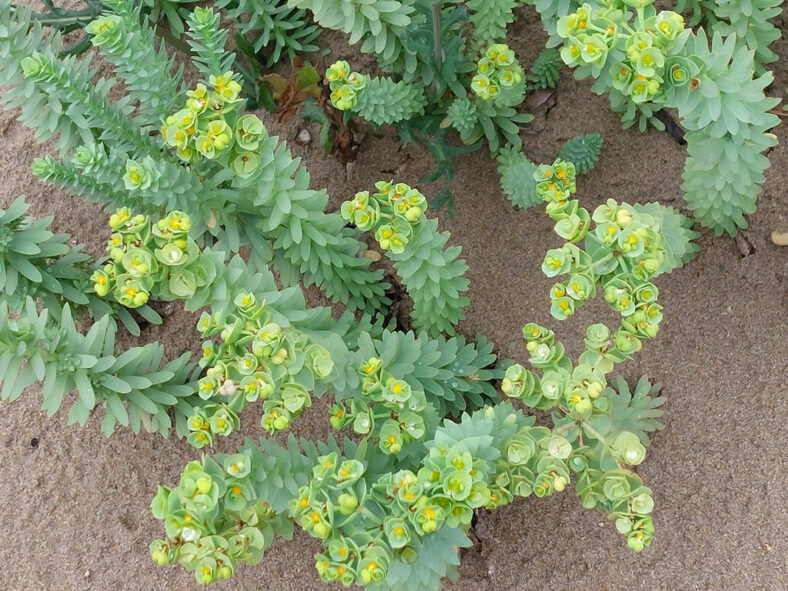
Description of Euphorbia paralias
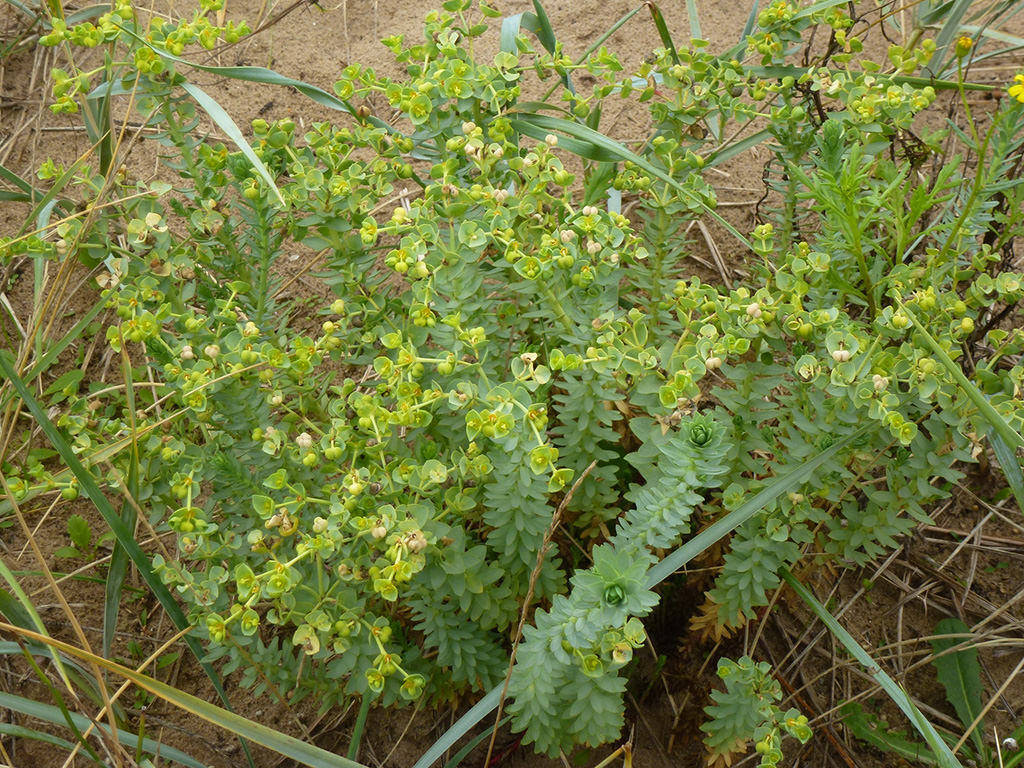
Euphorbia paralias is a succulent subshrub with upright stems covered in tightly packed, somewhat fleshy leaves. The stems can grow up to 32 inches (70 cm) tall, with 1 to 12 arising from the top of the rootstock. Each stem is divided into 3 to 10 terminal fertile branches, which are further branched. The leaves are glaucous, sometimes tinged with red, vary in shape from ovate to elliptic, and have a pointed tip. As the leaves approach the stem tip, they increase in size, measuring 1.2 inches (3 cm) long and 0.6 inches (1.5 cm) wide.
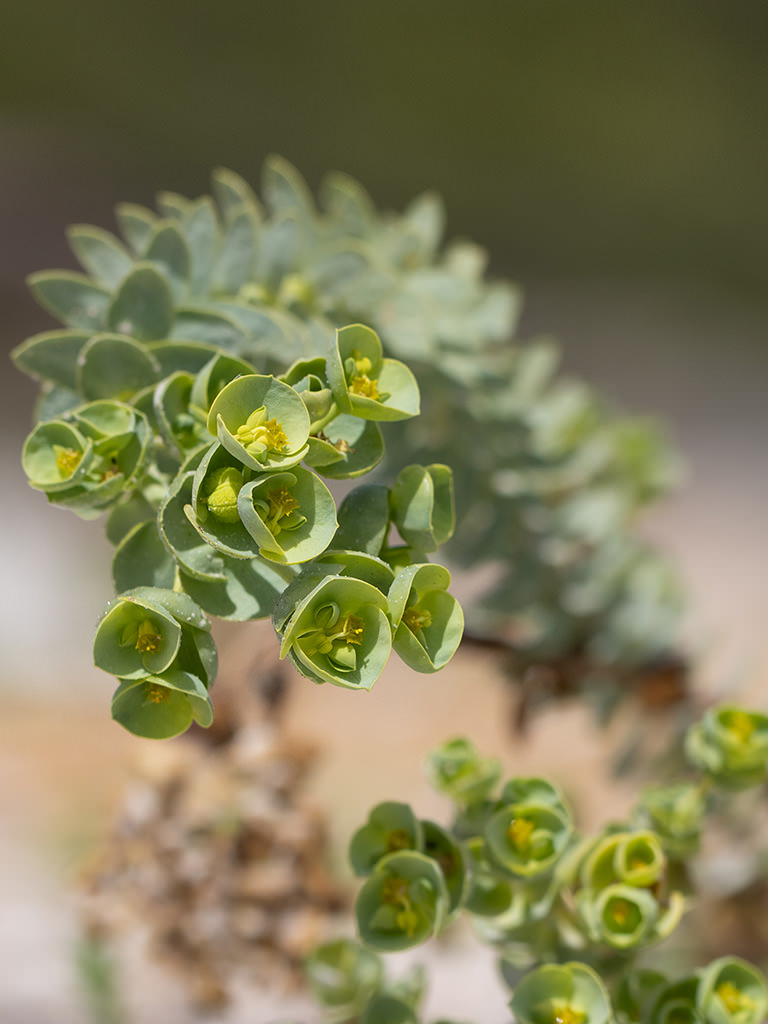
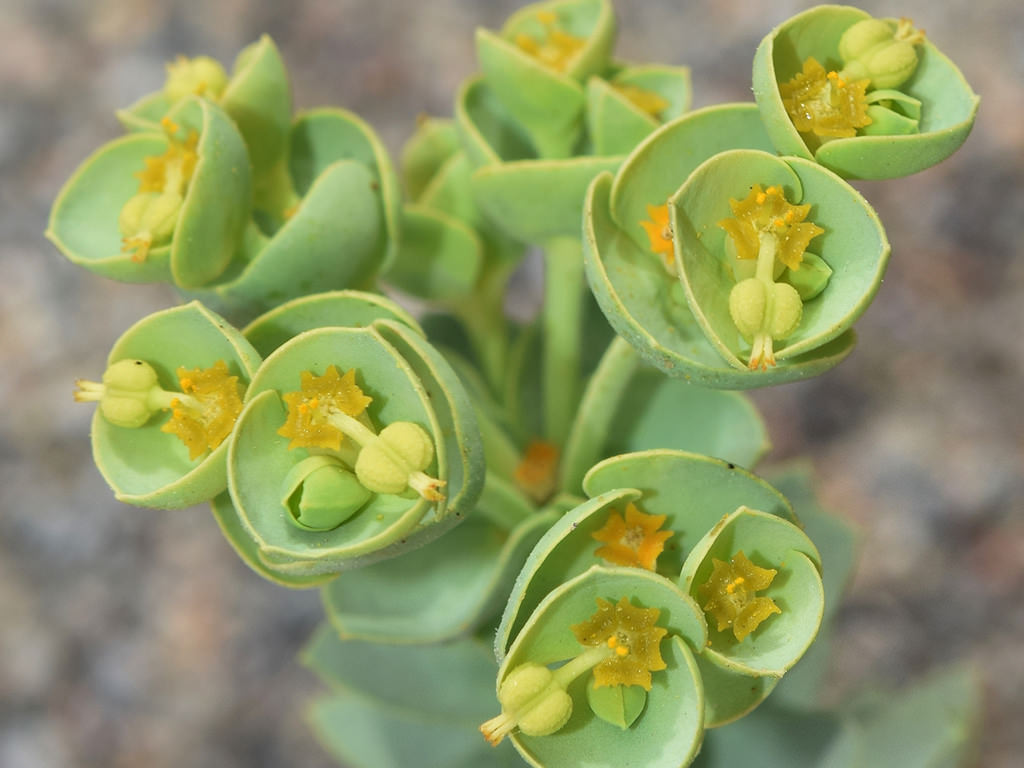
The cyathia, which appear from spring to fall, are solitary and appear in the upper forks or terminal, surrounded by bell-shaped, yellow-green bracts. The fruits are dark green, deeply grooved capsules that mature to gray-brown, and each contains three pale-grey seeds.
Origin of Euphorbia paralias
Euphorbia paralias is native to western and southern Europe, the Canary Islands, northern Africa, and western Asia. It typically grows on sandy beaches and dunes. However, this species is widely naturalized in Australia, where it is considered an invasive beach weed.
How to Grow and Care for Euphorbia paralias
Light: Providing your Euphorbia paralias with plenty of sunlight is important for optimal growth. Place it near a sunny window or move it to your balcony or garden during the warmer months, gradually increasing sun exposure to avoid sunburn.
Soil: Use a well-draining soil, either a commercial potting mix formulated for succulents or one you create yourself.
Temperature: While high summer temperatures are not a problem, low winter temperatures can damage or kill your plant. Euphorbia paralias grows best in USDA Plant Hardiness Zones 8a to 10b, with average minimum winter temperatures ranging from 10°F to 40°F (-12.2°C to 4.4°C).
Watering: From spring to fall, water the plant when the top inch (2.5 cm) of soil feels dry. Reduce watering in winter and give it just enough water to prevent wilting. In the warm season, the evening is the best time to water.
Fertilizing: To ensure the potted plant receives sufficient nutrients, apply a balanced 10-10-10 NPK fertilizer diluted to 1/4 strength weekly during the growing season.
Repotting: Although your Euphorbia paralias does not need to be repotted often, it will benefit from repotting when it outgrows its pot. The repotting is best done in early spring at the beginning of the growing season. Wear gloves, protective clothing, and appropriate eye protection when handling this plant.
Propagation: The easiest and quickest way to propagate this plant is by stem cuttings. Although it can be started from seeds, germination can be difficult. Take cuttings during the growing season; spring is the best time to sow seeds.
Learn more at How to Grow and Care for Euphorbia.
Toxicity of Euphorbia paralias
Euphorbia paralias produces a poisonous white milky sap that may cause burns or irritation if in contact with the skin or eyes. Therefore, keeping this plant out of reach of children and pets is best.
Photo Gallery
Click on a photo to see a larger version.
Internal Links
- Explore all plants within the genus Euphorbia.
- Explore all plants within the family Euphorbiaceae.