Scientific Name
Dyckia platyphylla L.B.Sm.
Common Names
Wide-leafed Dyckia
Scientific Classification
Family: Bromeliaceae
Subfamily: Pitcairnioideae
Genus: Dyckia
Etymology
The specific epithet "platyphylla" (pronounced "plat-TY-fil-uh") means "broad-leaved" and refers to the relatively broad leaves of this species compared to other species of the genus.
Origin
Dyckia platyphylla is endemic to the State of Bahia in eastern Brazil. It has reportedly never been found in its natural habitat, and there is speculation that it is a hybrid, maybe even involving Dyckia marnier-lapostollei and Dyckia brevifolia.
Description
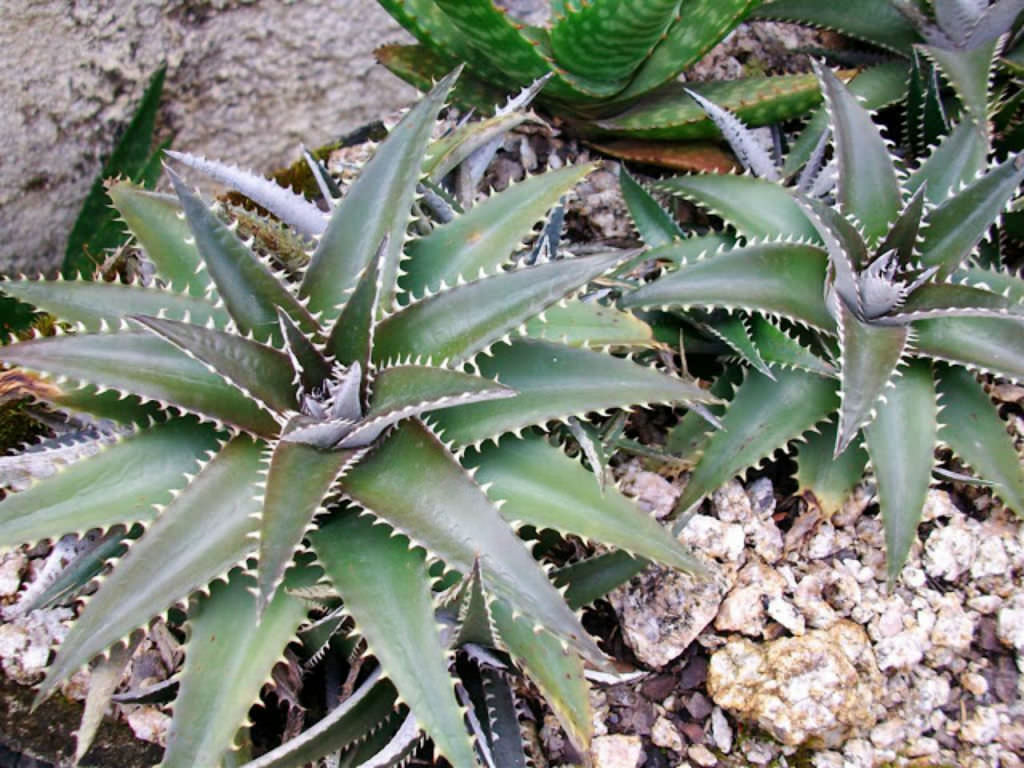
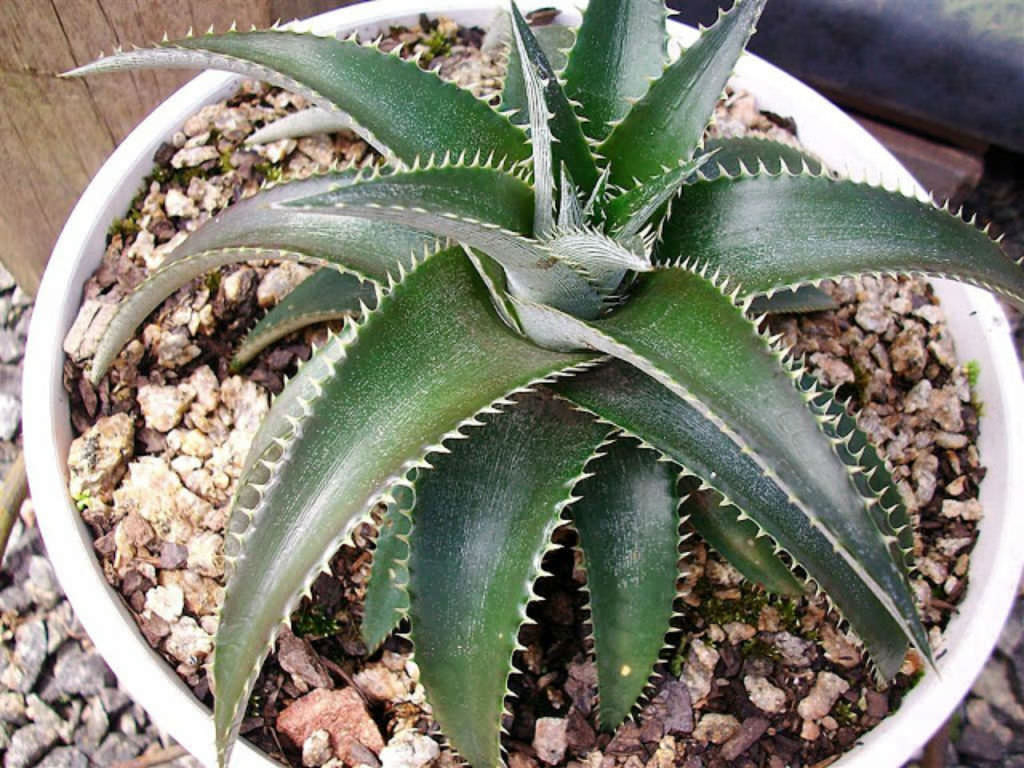
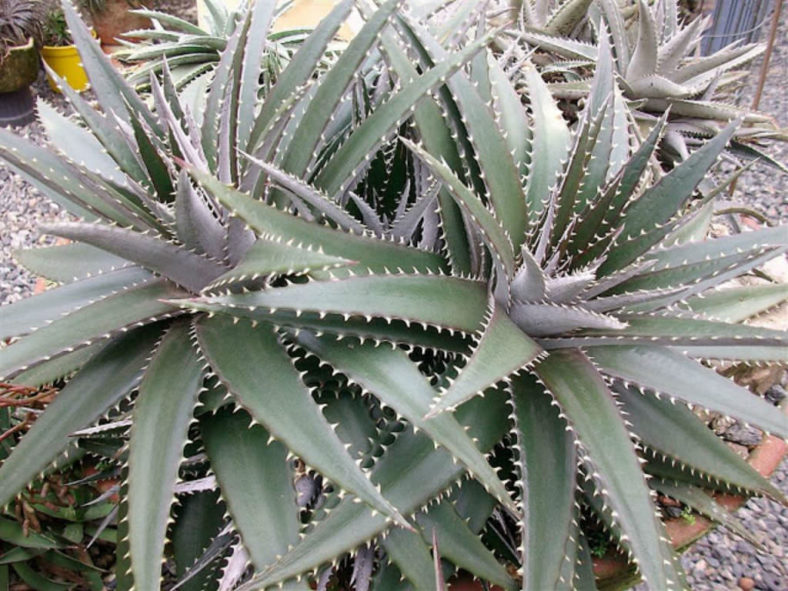
Dyckia platyphylla is an attractive terrestrial bromeliad that forms rosettes of narrowly triangular, glossy, deep green leaves, covered with silvery scales on the undersides and with whitish teeth along the margins. The rosettes can grow up to 8 inches (20 cm) tall and produce offsets, forming large clusters over time. When exposed to full sun, the leaves blush bronze to purple. They are thick and fleshy, measuring up to 9.2 inches (23 cm) long and 2 inches (5 cm) wide.
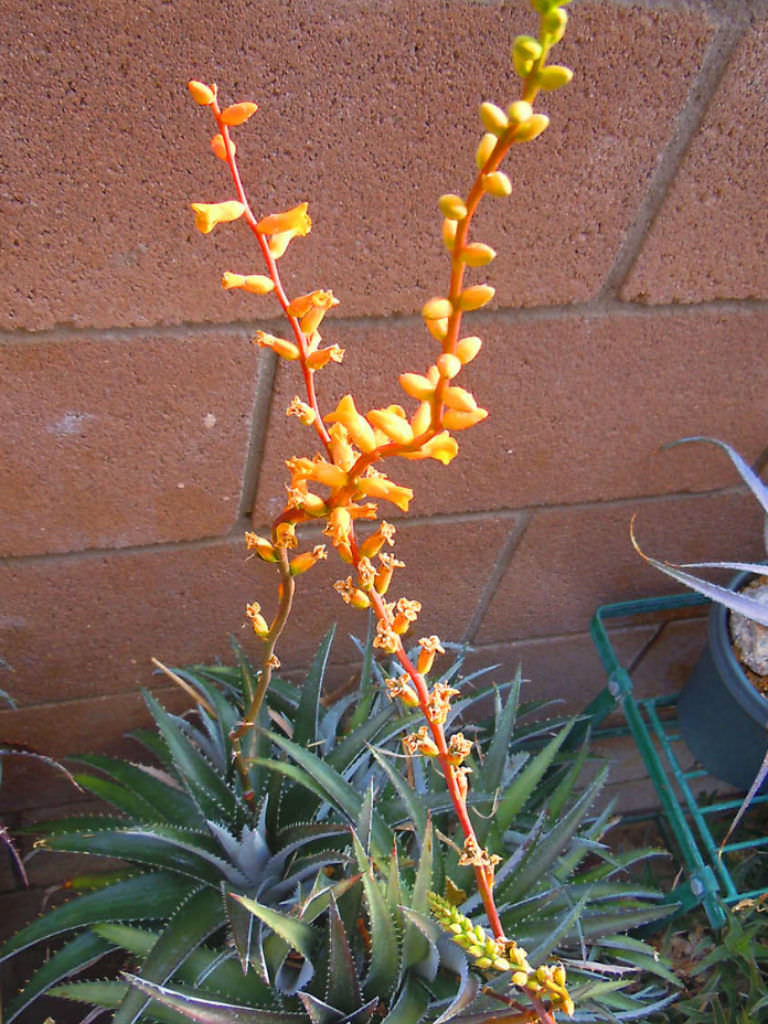
The yellow-orange flowers are mostly suberect and appear on stalks that can grow up to 3 feet (90 cm) tall from spring to summer.
How to Grow and Care for Dyckia platyphylla
Hardiness: USDA hardiness zones 9b to 11b: from 25°F (-3.9°C) to 50°F (10°C).
Dyckias are not technically succulents, as they do not store water in their leaves like true succulents. They are xerographic and survive long periods without water by going dormant. Their rosette of thick, succulent leaves will eventually wilt, but recovery is rapid when watering is resumed.
Most plants survive in warm regions with heavy rainfall for half the year and very dry conditions for the other half. This makes Dyckia care slightly challenging, as getting the proper moisture balance to keep the plant happy may be difficult. The growing conditions in their natural setting should be mimicked as much as possible.
In their native region, it is not uncommon to find some forms growing on top of rocks near the water. Water and the monsoon cycle are essential factors in Dyckia's health. They are used to relatively poor soil when they grow in-ground and should be planted in a good succulent mixture.
Learn more at How to Grow and Care for Dyckia.
Links
- Back to genus Dyckia
- Succupedia: Browse succulents by Scientific Name, Common Name, Genus, Family, USDA Hardiness Zone, Origin, or cacti by Genus
Photo Gallery
Click on a photo to see a larger version.