

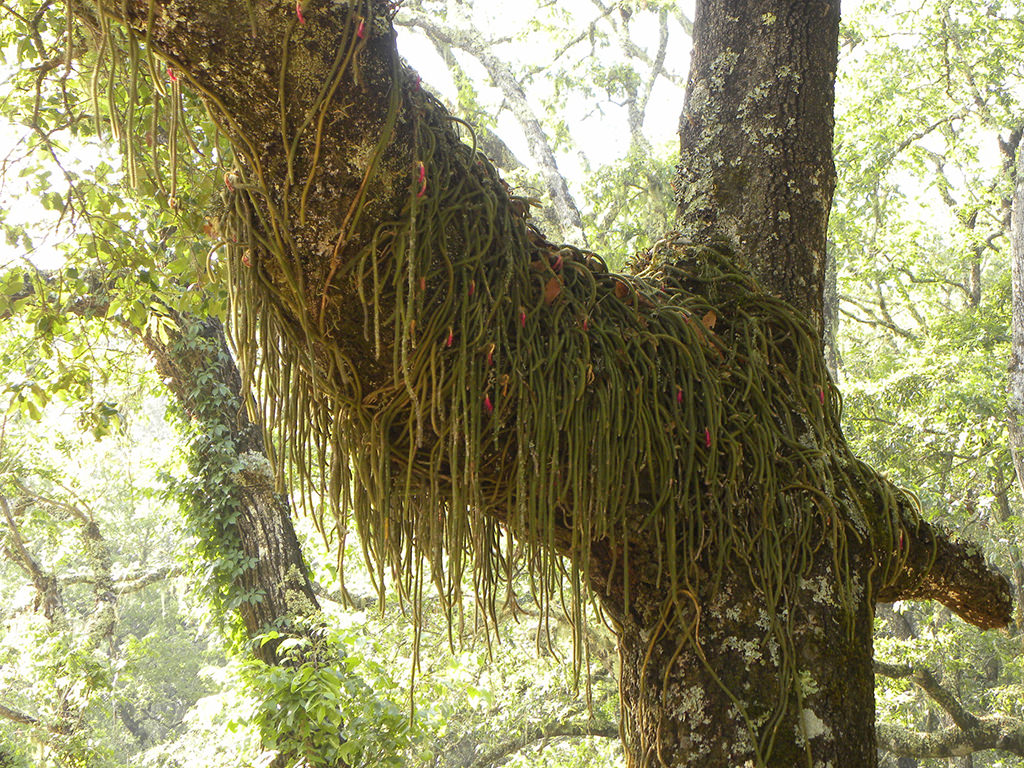
Aporocactus flagelliformis, commonly known as the Rat Tail Cactus, is a popular ornamental cactus valued for its long, trailing stems and vibrant, tubular flowers. It was one of the first cacti introduced to European culture, likely before 1690, as noted by William Watson🡕 in 1898. Native to the dry forests of Mexico, this species naturally grows as an epiphyte (on trees) or a lithophyte (on rocks).
Taxonomy of Aporocactus flagelliformis
Scientific Name
Aporocactus flagelliformis (L.) Lem.
Synonym(s)
Cactus flagelliformis, Cereaster flagelliformis, Cereus flagelliformis, Disocactus flagelliformis
Common Name(s)
Rattail Cactus
Scientific Classification
Family: Cactaceae
Subfamily: Cactoideae
Tribe: Hylocereeae
Genus: Aporocactus
Etymology
The specific epithet "flagelliformis" (pronounced "fla-gel-ih-FOR-miss") means "whip-shaped" and refers to the long, slender stems of this species. The common name "Rattail Cactus" reflects this same characteristic.
Hybrids of Aporocactus flagelliformis
Origin of Aporocactus flagelliformis
Aporocactus flagelliformis is native to Mexico. It grows as a lithophyte or epiphyte in the dry forests of Hidalgo and Oaxaca.
Description of Aporocactus flagelliformis
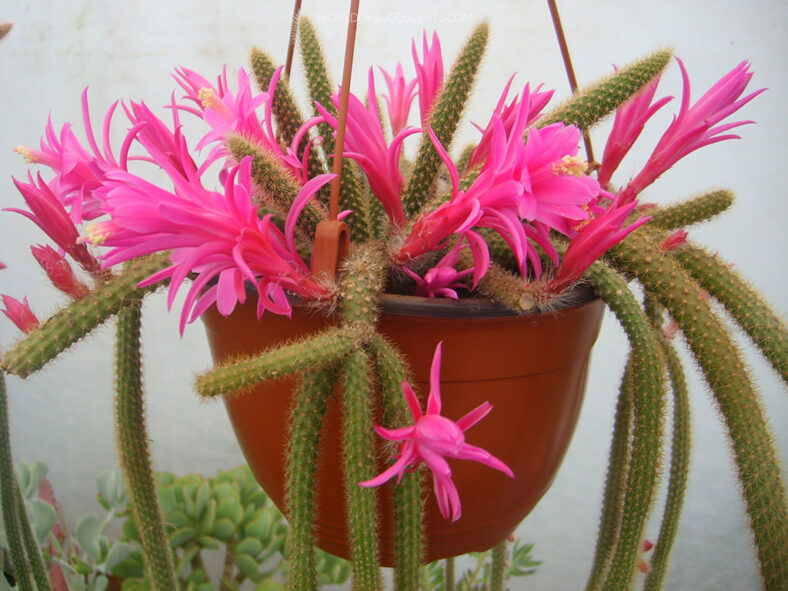
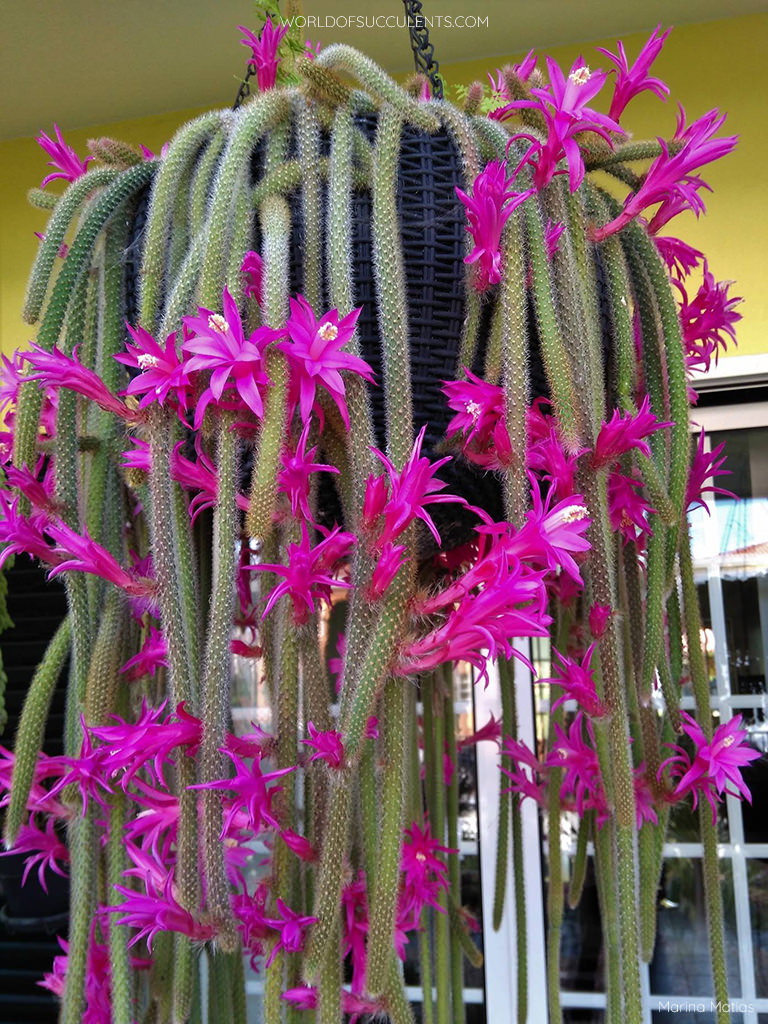
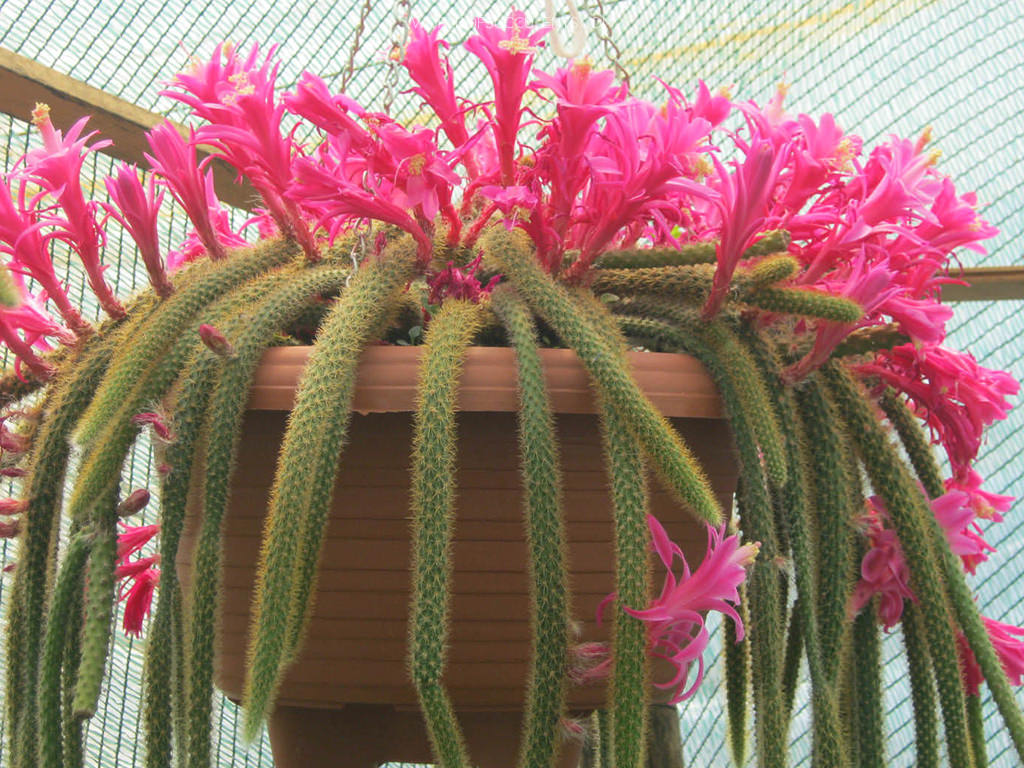
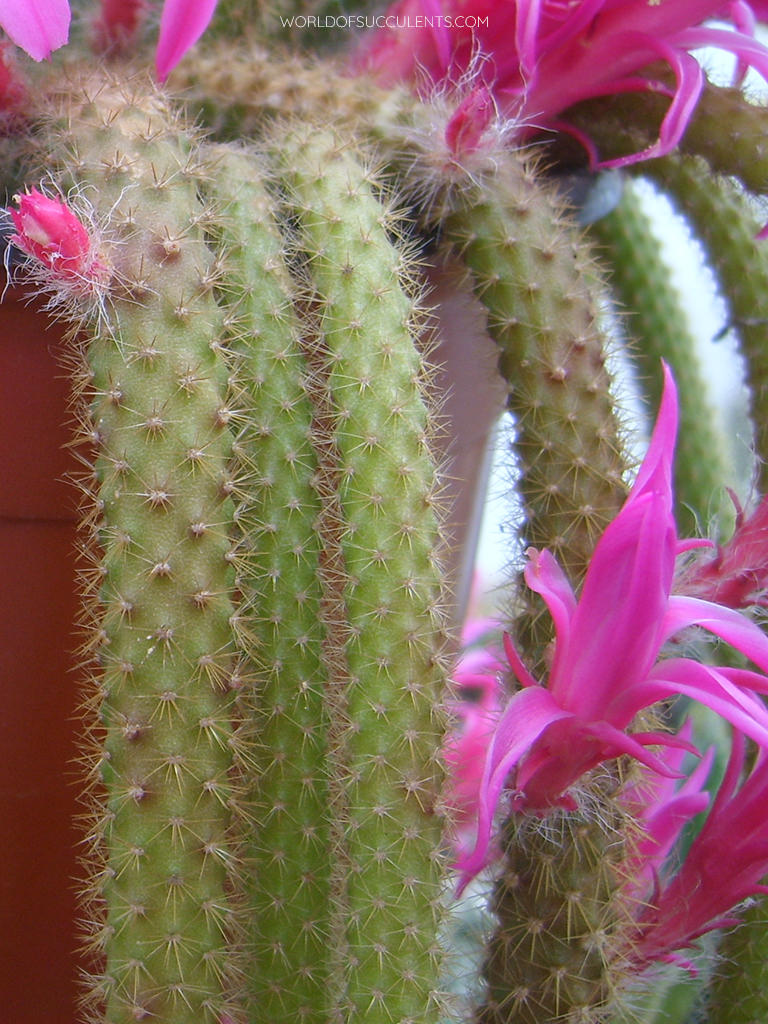
Aporocactus flagelliformis, also known as Disocactus flagelliformis, is an attractive cactus with slender, cylindrical stems that have 7 to 14 ribs lined with clusters of bristle-like spines. Initially, the stems are ascending, but as they lengthen, they become trailing or hanging. They appear green and gradually turn gray-green, reaching lengths of up to 6.6 feet (2 meters) and a diameter of 1 inch (2.5 cm). The tiny areoles are whitish, each bearing 8 to 20 reddish-brown to reddish-yellow spines measuring up to 0.4 inches (1 cm) long.
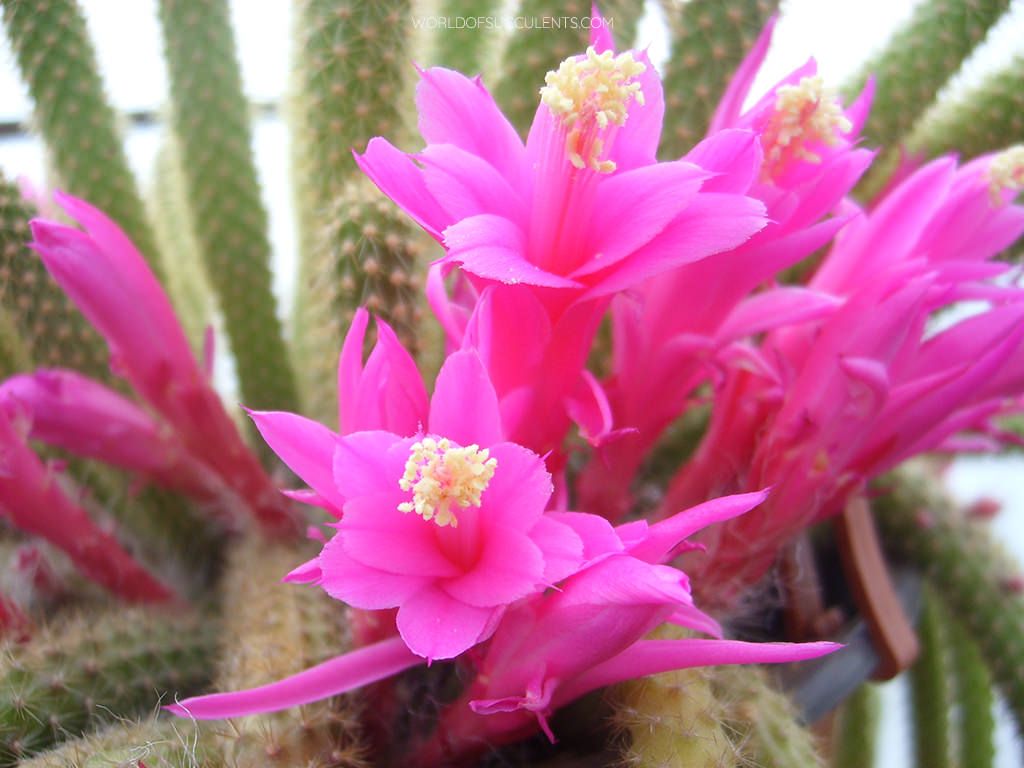
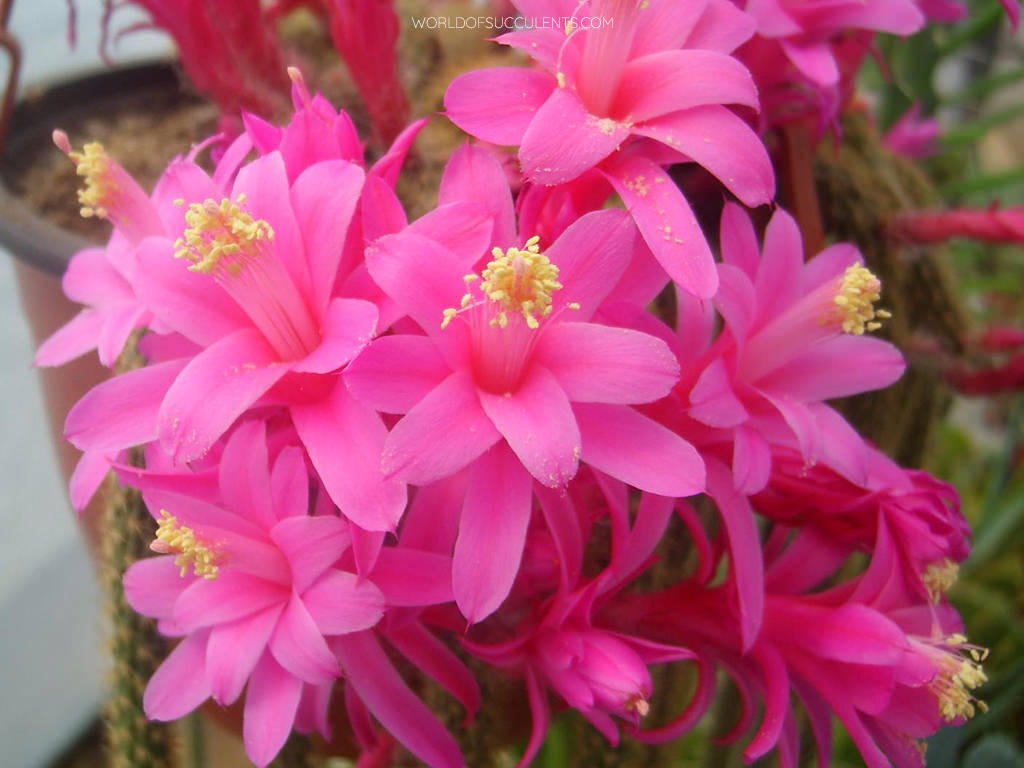
From mid to late spring, Aporocactus flagelliformis produces scentless flowers ranging from bright red to purplish-pink. These funnel-shaped flowers can reach 3.2 inches (8 cm) in length and 1.6 inches (4 cm) in diameter. They bloom during the day and remain open for 3 to 5 days. The fruits are red, bristly, and spherical, growing up to 0.5 inches (1.2 cm) in diameter. Inside, the fruits contain yellowish pulp and tiny, brownish-red seeds.
How to Grow and Care for Aporocactus flagelliformis
Light: Aporocactus flagelliformis tolerates partial shade but thrives in full sun. If you are growing it indoors, a sunny window is an excellent location. To promote balanced growth, rotate the pot a quarter turn every week or two. If possible, move the cactus outdoors from spring to fall.
Soil: This cactus grows best in well-draining soil. You can use a commercial soil mix specifically formulated for cacti or make your own.
Hardiness: During the growing season, Aporocactus flagelliformis thrives in warm temperatures, while in winter, it prefers cooler conditions. It grows best in USDA Plant Hardiness Zones 10a to 11b, with average minimum winter temperatures ranging from 30°F to 50°F (-1.1°C to 10°C).
Watering: During the growing season, this cactus requires frequent watering. Water the soil abundantly until it is completely soaked, but allow it to dry out between waterings. In winter, keep the soil relatively dry.
Fertilizing: During the growing season, this cactus benefits from regular fertilizing. Use a balanced, water-soluble fertilizer diluted to 1/4 strength and add it to each watering. A 10-10-10 fertilizer is ideal. Alternatively, you can use dry fertilizers instead of a liquid solution. However, stop fertilizing during winter.
Repotting: Repot Aporocactus flagelliformis once a year while it is young and whenever it outgrows its pot as it matures.
Propagation: The easiest method to propagate this cactus is by stem cuttings, as seed propagation is a slow process. The best time to take cuttings and sow seeds is during spring and summer.
Learn more at How to Grow and Care for Disocactus.
Toxicity of Aporocactus flagelliformis
Aporocactus flagelliformis is considered non-toxic.
Photo Gallery
Click on a photo to see a larger version.
Internal Links
- Explore all plants within the genus Aporocactus.
- Explore all plants within the family Cactaceae.