Scientific Name
Didymaotus lapidiformis (Marloth) N.E.Br.
Synonym(s)
Mesembryanthemum lapidiforme
Common Name(s)
Spirit Stone, Stone Plant
Scientific Classification
Family: Aizoaceae
Subfamily: Ruschioideae
Tribe: Ruschieae
Genus: Didymaotus
Etymology
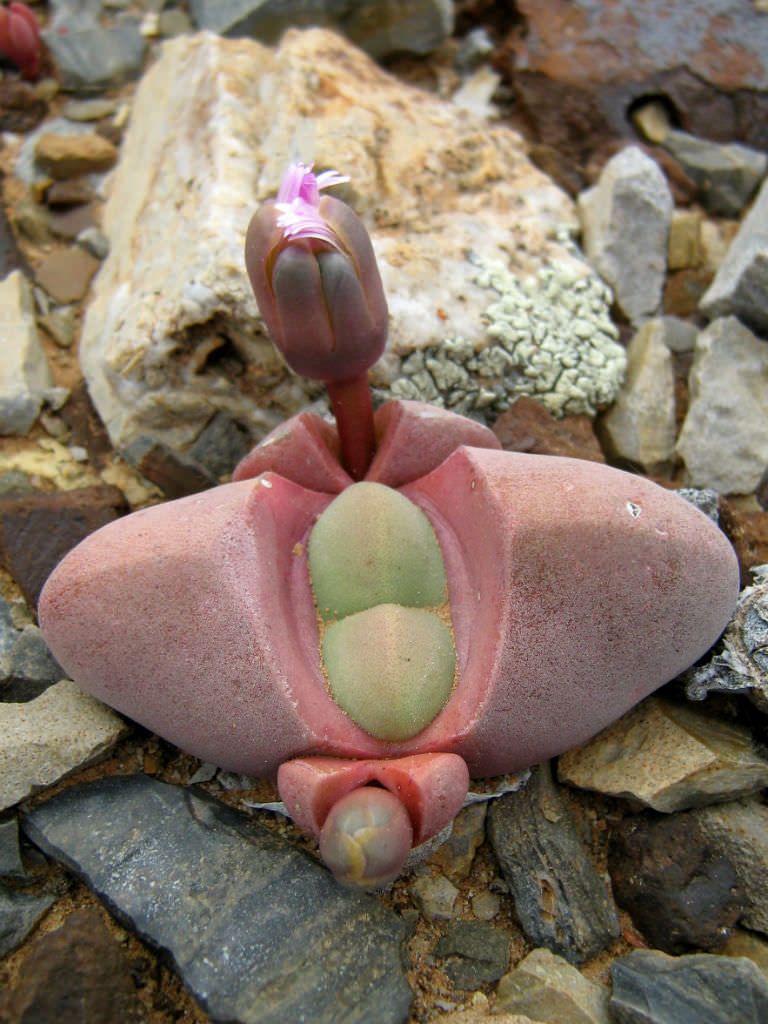
The specific epithet "lapidiformis" (pronounced "lap-id-EE-form-iss") means "stone-shaped" and refers to the shape of the bodies of this species, which blend in with surrounding stones and are not easily seen in their native habitat.
Origin
This species is native to South Africa. It grows on brown shale in the Tanqua Karoo near Ceres in the Western Cape province.
Description
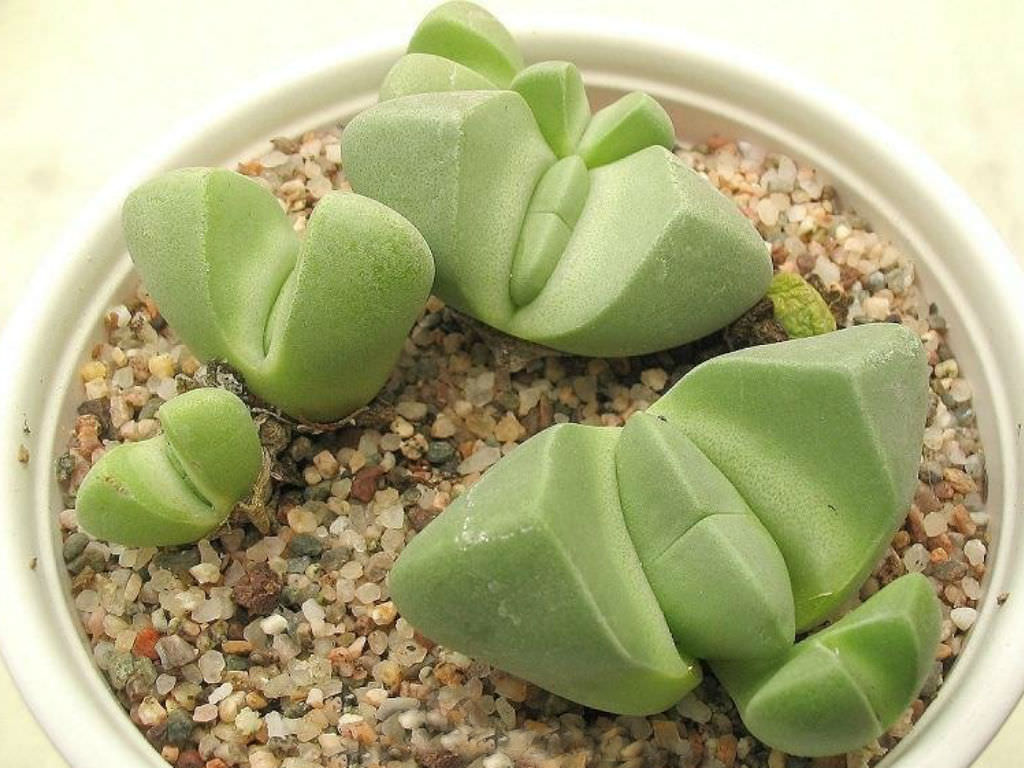
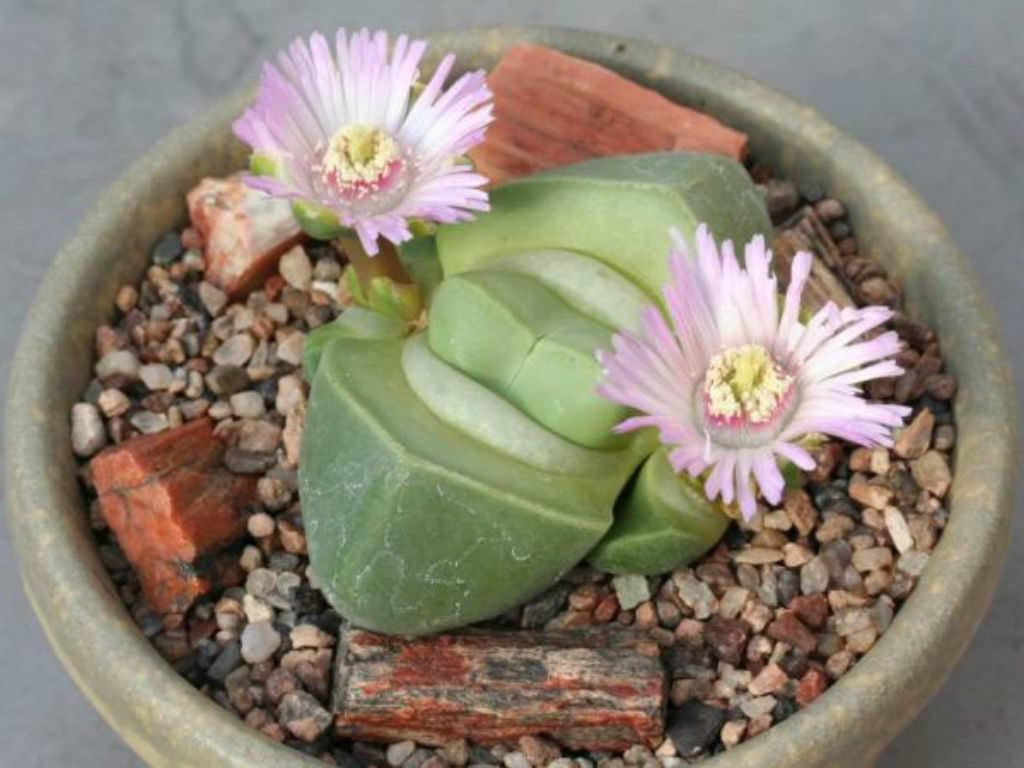
Didymaotus lapidiformis is a dwarf compact succulent that usually consists of a single pair of chunky leaves pressed together in a resting state. The broad, thick leaves are brownish-green, triangular in cross-section, measuring up to 1.6 inches (4 cm) long. The plant lives for about 20 to 25 years in its natural habitat.
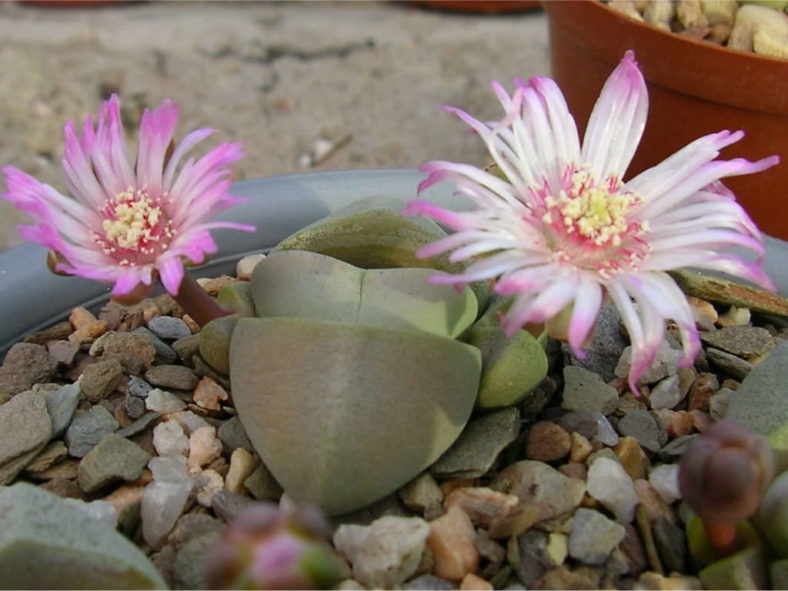
The solitary flowers are white to pink, and appear in spring on lateral shoots to one or both sides of the new central leaf pair. They can reach a diameter of up to 1.4 inches (3.5 cm). The fruits are mostly 6-locular capsules and ripen very quickly.
How to Grow and Care for Didymaotus lapidiformis
Hardiness: USDA hardiness zone 10b to 11b: from 35°F (1.7°C) to 50°F (10°C).
The basics of Mesemb care are very simple, with free-draining soil, plenty of sun and ventilation, and regular light watering in the right season. Yet the difficulties are endless, trying to adapt to the mesembs' adaptability and follow their growth habits in your particular conditions.
Mesembs require a loam-based compost with extra drainage material such as horticultural grit or perlite. They all like good light conditions and plenty of ventilation.
Some are relatively cold-hardy and can even survive mild winters outside. Most will survive temperatures down to the freezing point. Some Mesembs begin to grow in the autumn as temperatures drop and days get shorter.
Because different genera within the Mesemb family have different growing conditions, care must be taken with watering. Some genera will benefit from light spray water to prevent shriveling during their dormant period.
See more at How to Grow and Care for Mesembs.
Links
- Back to genus Didymaotus
- Succupedia: Browse succulents by Scientific Name, Common Name, Genus, Family, USDA Hardiness Zone, Origin, or cacti by Genus
Photo Gallery
Click on a photo to see a larger version.