Scientific Name
Orbea lugardii (N.E.Br.) Bruyns
Synonym(s)
Angolluma lugardii, Caralluma lugardii, Ceropegia lugardiana, Ceropegia lugardianai, Pachycymbium lugardii
Scientific Classification
Family: Apocynaceae
Subfamily: Asclepiadoideae
Tribe: Ceropegieae
Subtribe: Stapeliinae
Genus: Orbea
Etymology
The specific epithet "lugardii" (pronounced "loo-GAR-dee-eye") honors Edward James Lugard (1865–1957), British military officer and plant collector who collected extensively in Botswana (specifically around Lake Ngami) during the late 1890s.
Origin
Orbea lugardii is native to Botswana, Namibia, South Africa, and possibly in southern Angola and western Zimbabwe. It grows in dry (but not desertic) areas under small bushes.
Description
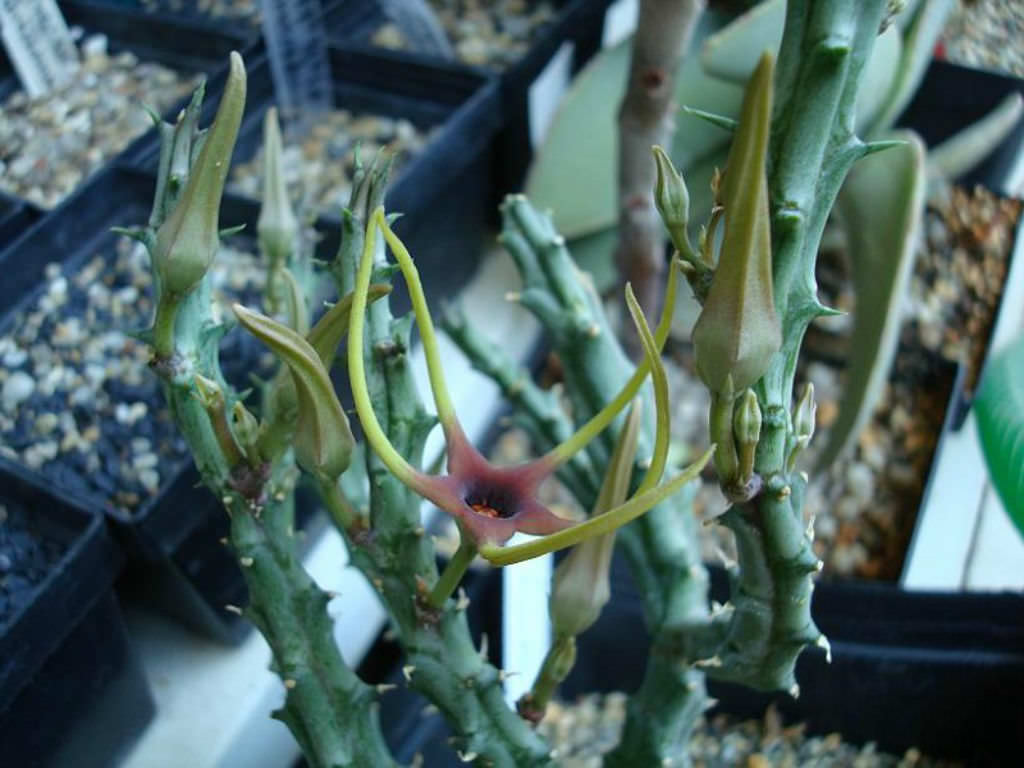
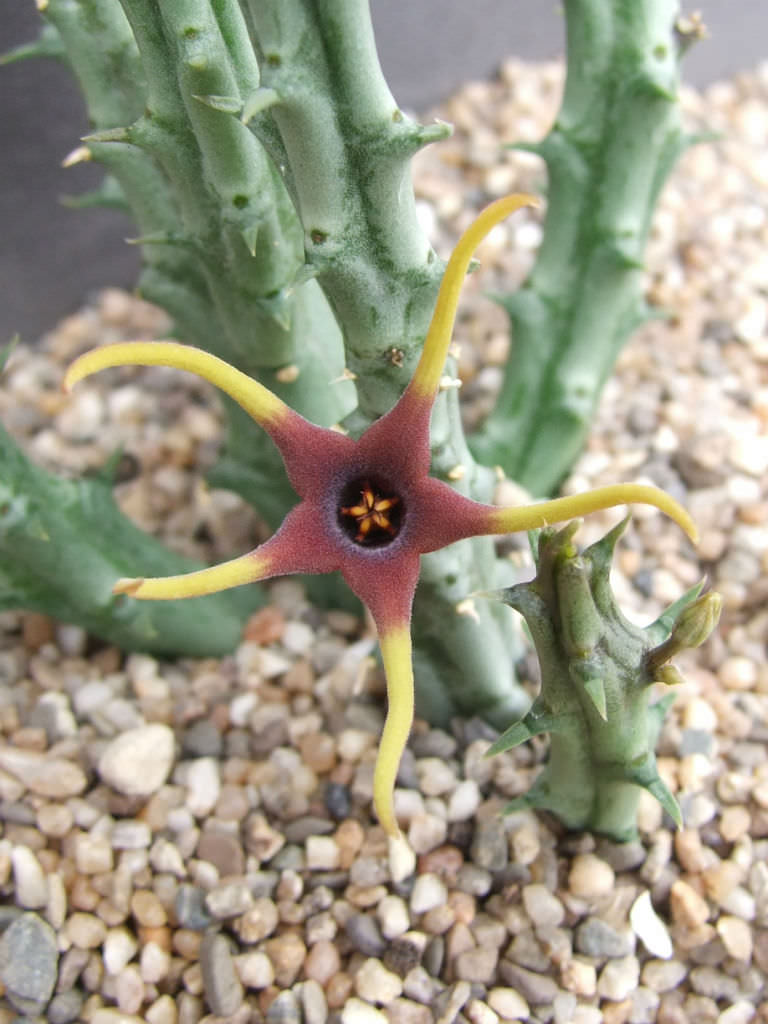
Orbea lugardii is a small succulent plant with erect stems with tubercles arranged and partly joined into four angles along the stem with a groove between them. It usually consists of several clumps connected by horizontal rhizomes. The stems can grow up to 6 inches (15 cm) long and 0.5 inches (1.2 cm) thick, excluding teeth. They are pale green to silvery grey, flecked with purple-brown, mainly down the grooves between the angles.
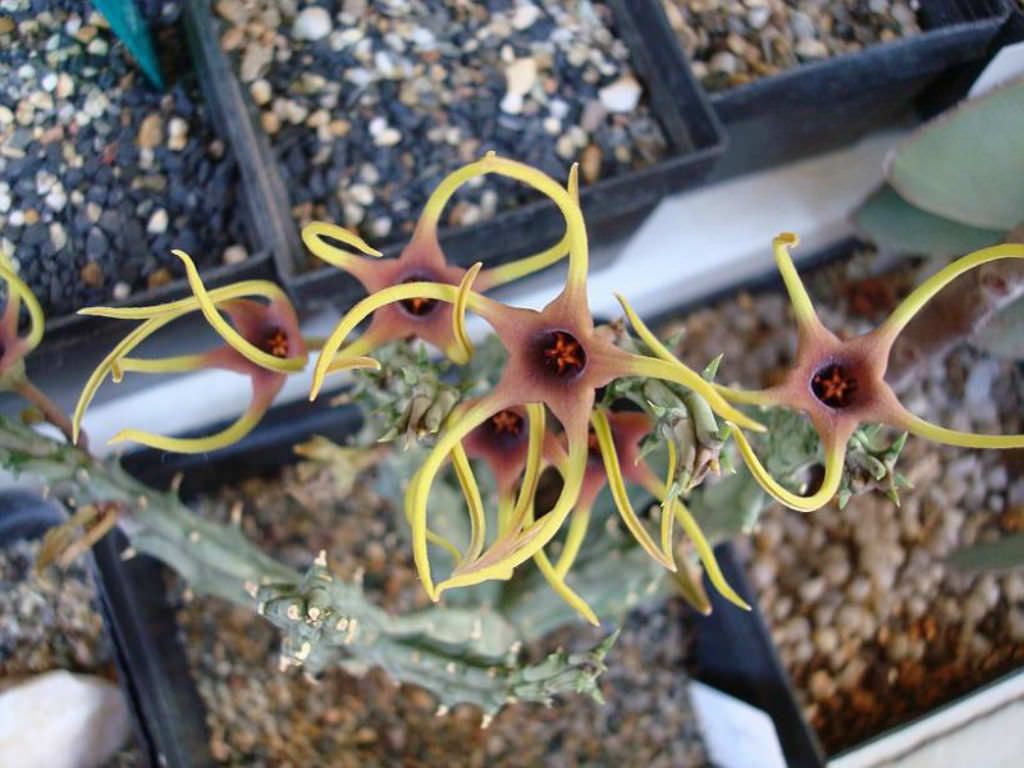
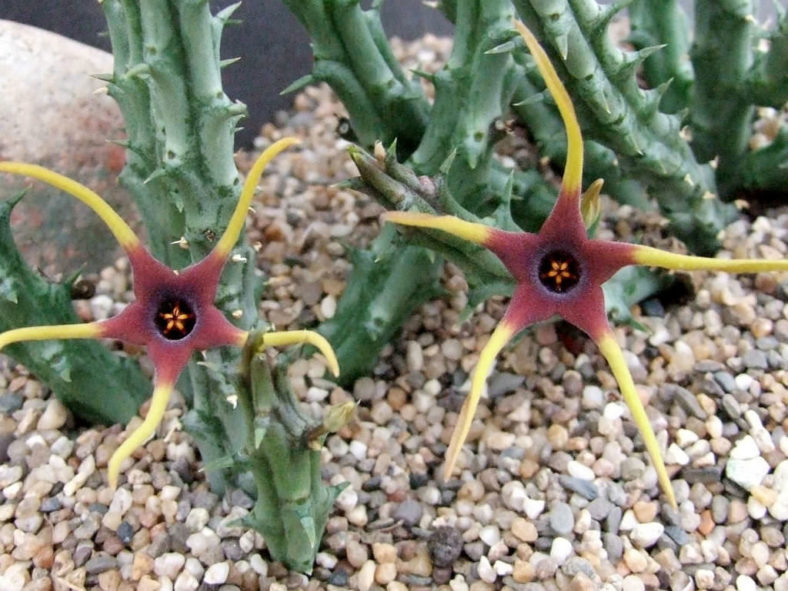
The inflorescences, which appear 2 to 6 per stem, are situated in the upper half or near the apex, each bearing usually 1 to 3 highly smelly flowers that develop in gradual succession or sometimes all opening simultaneously. The corolla is deeply and narrowly lobed and can reach a diameter of up to 1.8 inches (4.5 cm). Outside is smooth and pale green; inside is finely papillate and variably colored, usually with lobes paler than the center (yellow, yellow-green, red, or brown with red or brown center). The corona is deeply bifid and red to purple-brown.
How to Grow and Care for Orbea lugardii
Hardiness: USDA hardiness zone 9b to 11b: from 25°F (-3.9°C) to 50°F (10°C).
Several species are fairly easy to grow. Others, often those with slightly hairy stems and the more unusual flowers, are more challenging and require careful watering (with some fertilizer) during the growing season and complete withdrawal of water during the winter months. A minimum winter temperature of 10°C (50°F) is acceptable, provided plants are kept dry. A heated growing bench or incubator may help delicate plants to get through the colder months. However, many species live under shrubs in their habitat and prefer light shade rather than full sun.
A gritty compost is essential, and clay pots are advisable for the more delicate species. Some growers prefer mineral-only compost to minimize the risk of fungal attack on roots. A layer of grit on the compost surface prevents moisture from accumulating around the base of the stems.
Keeping Stapelias and their roots free of pests such as mealybugs is the real key to success, as fungal attacks often occur due to insect damage to stems.
See more at How to Grow and Care for Stapelia.
Links
- Back to genus Orbea
- Succupedia: Browse succulents by Scientific Name, Common Name, Genus, Family, USDA Hardiness Zone, Origin, or cacti by Genus
Photo Gallery
Click on a photo to see a larger version.