Scientific Name
Cereus 'Spiralis'
Common Name(s)
Contorted Cereus, Spiraled Cereus, Twisted Cereus
Synonym(s)
Cereus forbesii 'Spiralis', Cereus peruvianus 'Spiralis', Cereus validus 'Spiralis'
Scientific Classification
Family: Cactaceae
Subfamily: Cactoideae
Tribe: Cereeae
Genus: Cereus
Origin
Although some sources claim that this cactus is a monstrose form of Cereus forbesii, its true origin is unknown. In the early 1980s, a few divisions of the original plant were imported into Europe at a very high price. Some sources suggest Peru as its country of origin, while others suggest Brazil. The original clone, known as the "short-spined clone," has strong, grey stems covered with a dense layer of pruina and short spines. However, most of the plants available today likely result from cross-pollinated seed with Cereus repandus (formerly known as Cereus peruvianus) or Cereus stenogonus. These hybrids are generally darker blue-green in color and have longer spines.
Description
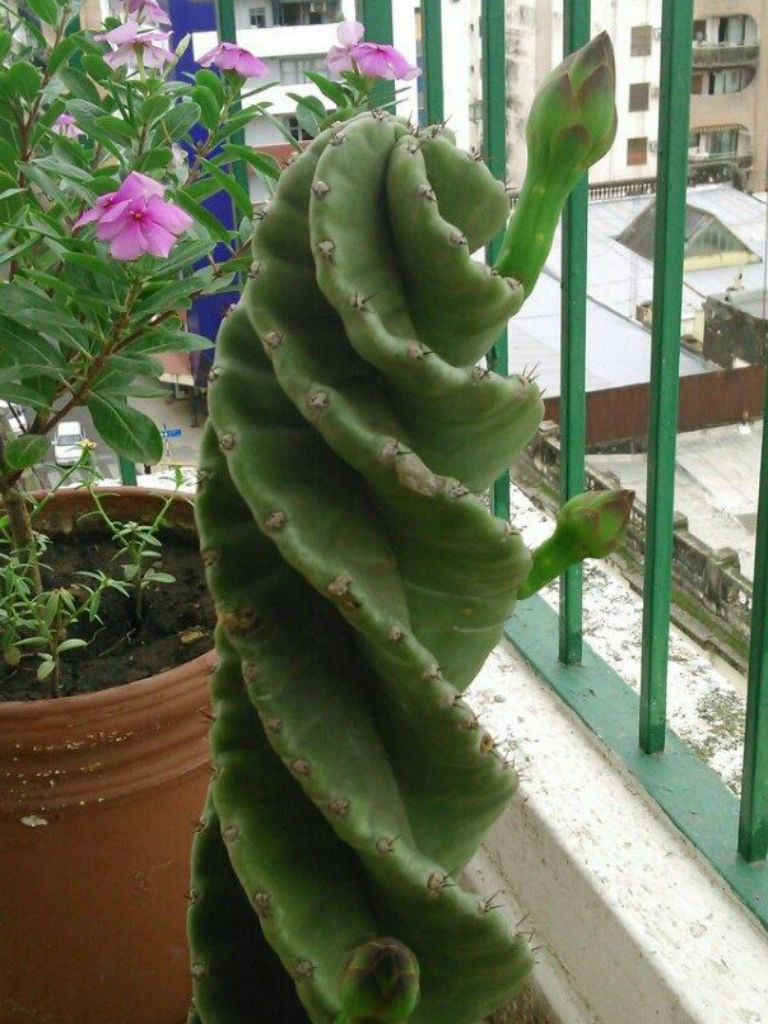
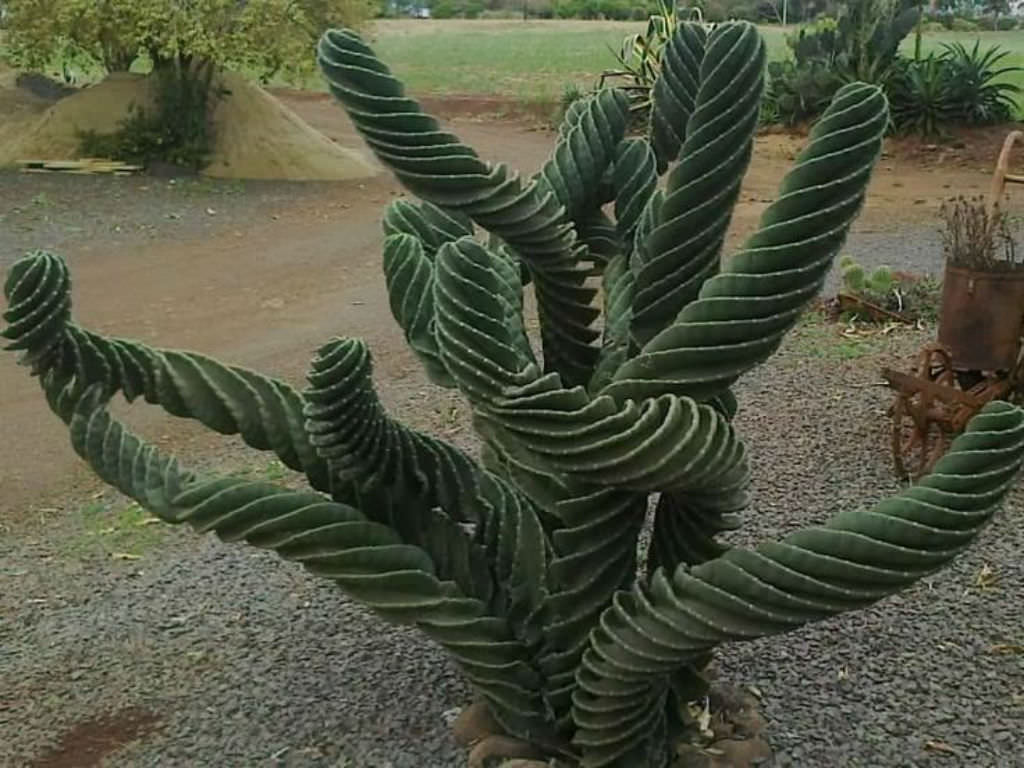
Cereus 'Spiralis', also known as Cereus forbesii 'Spiralis', is a striking cactus with numerous columnar stems that grow in a unique spiraling pattern. The stems have short spines along the ribs and can reach up to 16.5 feet (5 m) in height and 5 inches (12.5 cm) in diameter.
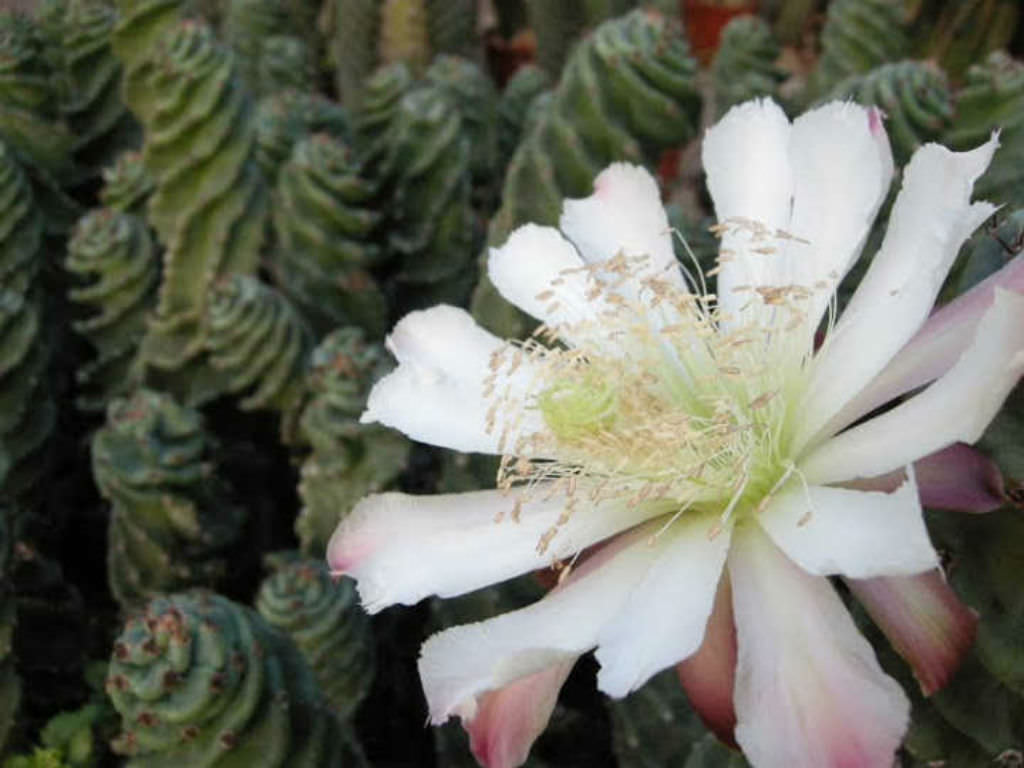
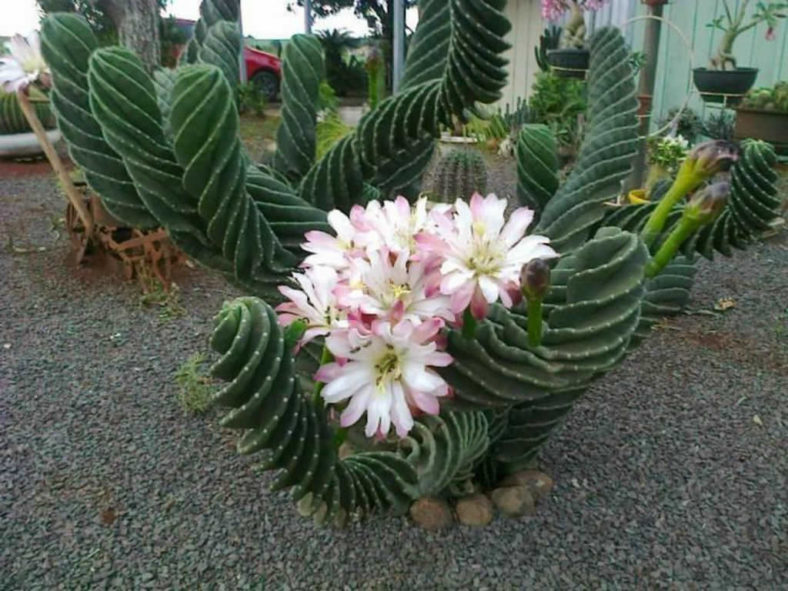
This cactus blooms profusely during the summer. The flowers, which range in color from white to reddish, can measure up to 8 inches (20 cm) long and 5 inches (12.5 cm) in diameter. After blooming, Cereus 'Spiralis' produces ornamental red fruits that contain lilac pulp and tiny black seeds.
How to Grow and Care for Cereus 'Spiralis'
Hardiness: USDA hardiness zones 9a to 11b: from 20°F (-6.7°C) to 50°F (10°C).
Like most cacti, Cereus are relatively low-maintenance and hardy. Ensure they receive sufficient water without becoming waterlogged, especially during the summer, and fertilize them for optimal results. If the roots have turned black or become overly soft, the cactus may be experiencing root rot. Cut away the affected parts and replant them. Most gardeners interested in cacti should be able to cultivate these without much problem.
It may become necessary to repot your Cereus if it outgrows its container. If so, ensure the soil is dry, then remove the pot. Knock away old soil, prune away rotted or dead roots, then replant in a new pot and backfill with fresh soil. Ensure that cacti planted in new pots are not overwatered, as this can lead to root rot. The soil should be left dry for about a week, then lightly watered.
These cacti propagate quite easily from cuttings. Sever a branch and replant in moist, well-drained soil.
Learn more at How to Grow and Care for Cereus.
Links
- Back to genus Cereus
- Succupedia: Browse succulents by Scientific Name, Common Name, Genus, Family, USDA Hardiness Zone, Origin, or cacti by Genus
Photo Gallery
Click on a photo to see a larger version.