

Agave cantala is a succulent with relatively thin, flexible, and flexuous leaves. It has been widely cultivated in Southeast Asia, particularly in the Philippines and Indonesia, as well as in India, due to its high-quality leaf fiber used to make rope and twine. Agave cantala is not recognized as a separate species, and it is treated as a synonym of Agave vivipara.
Taxonomy of Agave cantala
Scientific Name
Agave cantala (Haw.) Roxb. ex Salm-Dyck
Accepted Scientific Name
Agave vivipara L.
Synonym(s)
Furcraea cantala
Common Name(s)
Bombay Aloe, Cantala, Cantala Fibre, Cebu Maguey, Manila Maguey
Scientific Classification
Family: Asparagaceae
Subfamily: Agavoideae
Genus: Agave
Etymology
The specific epithet "cantala" (pronounced "kan-TAL-uh") is a vernacular name for this species (and the hard fiber produced from its leaves) that was accepted into botanical nomenclature. The name was used in Southeast Asia—especially in the Philippines and Indonesia—during the 19th and early 20th centuries, when Agave cantala was widely cultivated for fiber production.
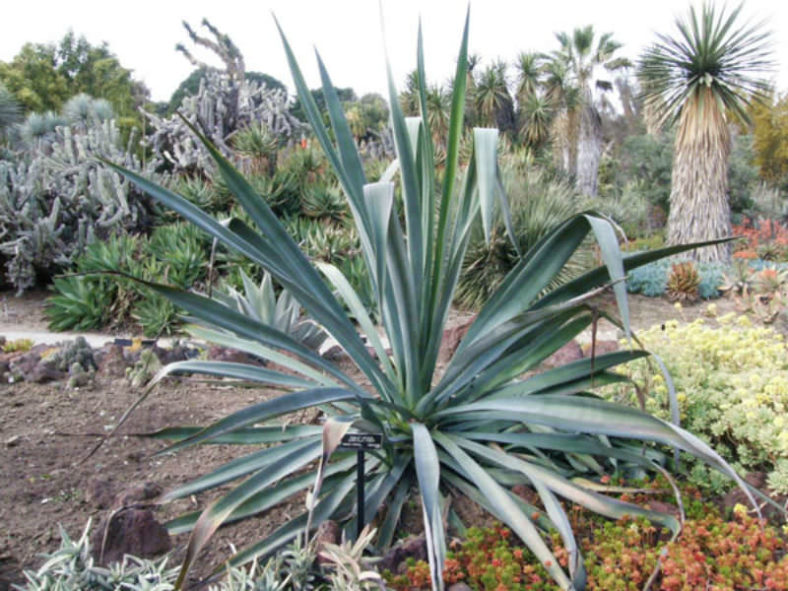
Origin of Agave cantala
Agave cantala is probably native to Mexico. However, it is commonly grown in southeastern Asia, from the Philippines to India.
Description of Agave cantala
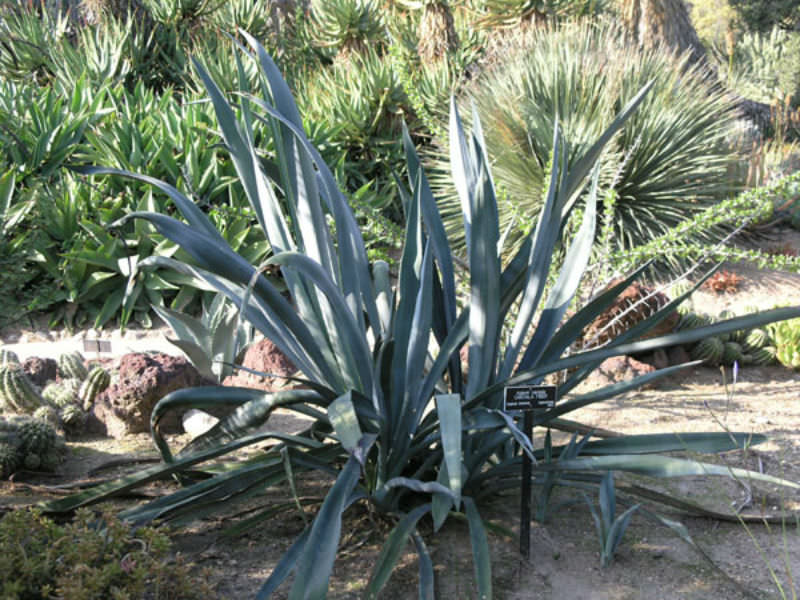
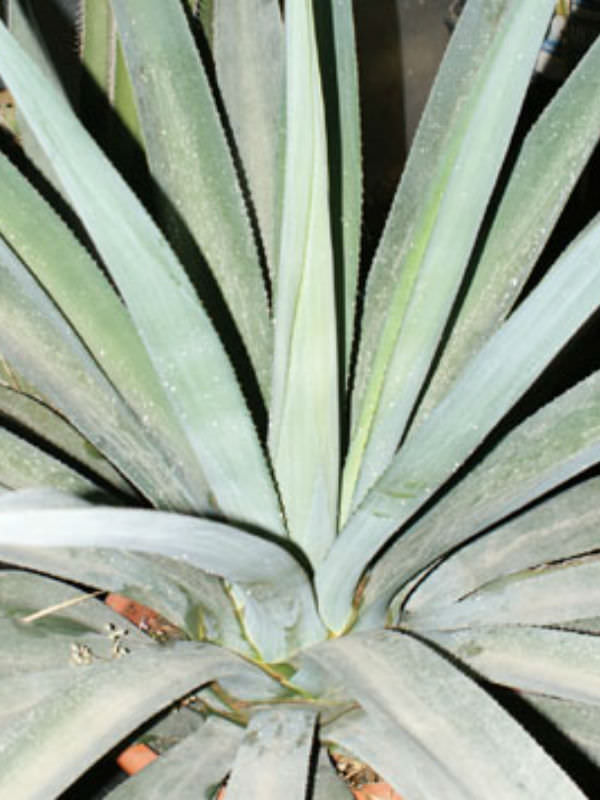
Agave cantala is a succulent plant that forms short-stemmed rosettes of dark blue-green, linear-lanceolate leaves with black spines along the margins and a long black terminal spine. The stem can grow up to 2 feet (60 cm) tall. The terminal spine can reach a length of 1 inch (2.5 cm). The leaves are thick, channelled towards the base, and can measure up to 6.5 feet (2 m) in length and up to 4 inches (10 cm) in width. The rosette has a life cycle of 6 to 15 years, sometimes extending up to 25 years, during which it produces approximately 250 leaves.
The inflorescence can grow up to 26 feet (8 m) tall, and has a many-flowered panicle with spreading branches on a long peduncle. The flowers are yellow-green with a purple or red tinge. The plant is monocarpic, meaning that the rosette dies after flowering.
How to Grow and Care for Agave cantala
Hardiness: USDA hardiness zones 9a to 11b: from 20°F (-6.7°C) to 50°F (10°C).
Agaves are not difficult plants to grow. They are slow-growing and dramatic and will even thrive on a bit of neglect. If you are the type of person who likes to fuss with houseplants and water a lot, Agave is probably not the plant for you. On the other hand, if you are the type who likes to set it and forget it and you have a sunny window, Agave might be the way to go. Be aware that some large varieties will eventually outgrow your room (unless you have a large greenhouse), and Agave can be aggressive. They have irritating sap and sometimes very sharp thorns that can injure small children and even pets.
Generally, Agaves do not require repotting every year. Most species commonly found in cultivation grow very slowly and take a long time to outgrow their pot. It is also best to handle your plant as little as possible, since they do not like being disturbed. When you repot, refresh the spent soil with a new potting mix and ensure the plant is firmly anchored in its pot. However, be careful not to pot the Agave too deeply, as that will encourage stem rot during the growing season.
Learn more at How to Grow and Care for Agave.
Photo Gallery
Click on a photo to see a larger version.
Internal Links
- Explore all plants within the genus Agave.
- Explore all plants within the family Asparagaceae.