

Succulents originally came from dry, arid areas. Some succulents, such as Orchid Cacti, get rainfall, but they grow in branches or areas where the rain might not reach them so easily. Many succulents originate from Africa and other regions with long dry seasons, where plants have evolved ways to store and use water more effectively.
Succulents have been around for a long time and have been used as office plants and in indoor gardens. However, in recent years, their popularity has grown. The reasons for this are many:
Succulents are low-maintenance. Succulents require less watering and little to no pruning.
Succulents come in a variety of sizes, shapes, and colors. This includes tiny plants in small pots that can easily find a home on a desk.
Succulents attract fewer pests. Often, plants attract pests because they require constant watering. When you don't have to water the plants as much, such as succulents, the risk of pests reduces dramatically. The thick, waxy leaves of succulents are also more resistant to pests that penetrate and feed on them.
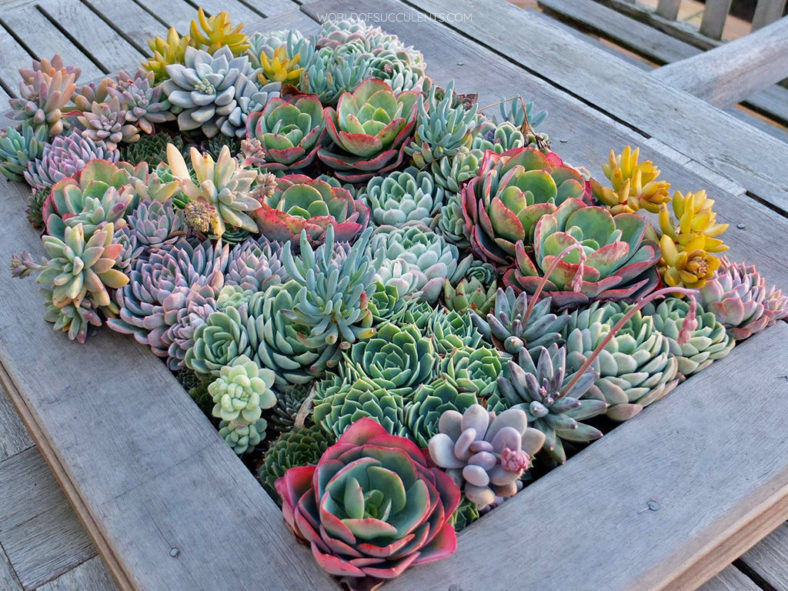
Succulents are easier for greenhouses and stores to sell. Since they can last a very long time without water, they can sit on a truck for days, making transportation easier. In addition, many succulents are small, allowing growers to ship large numbers with lower freight costs. Some can even be packed in plastic bags and shipped across the country. They can also be stored at the garden center for much longer.
It is tough for most succulents to overgrow. One of the problems with some common indoor plants is that they grow and eventually start to vine. This requires a lot of maintenance and can be inconvenient.
Source: ambius.com
Links
- Succupedia: Browse succulents by Scientific Name, Common Name, Genus, Family, USDA Hardiness Zone, Origin, or cacti by Genus