Scientific Name
Sempervivum arachnoideum 'Rubrum'
Common Name(s)
Red Cobweb Houseleek, Red Spider Web Hens and Chicks
Scientific Classification
Family: Crassulaceae
Subfamily: Sedoideae
Tribe: Sedeae
Subtribe: Sedinae
Genus: Sempervivum
Etymology
The generic name "Sempervivum" (pronounced "sem-per-VEE-vum") means "always (forever) alive" and refers to the evergreen and resilient nature of the plants that belong to the genus Sempervivum.
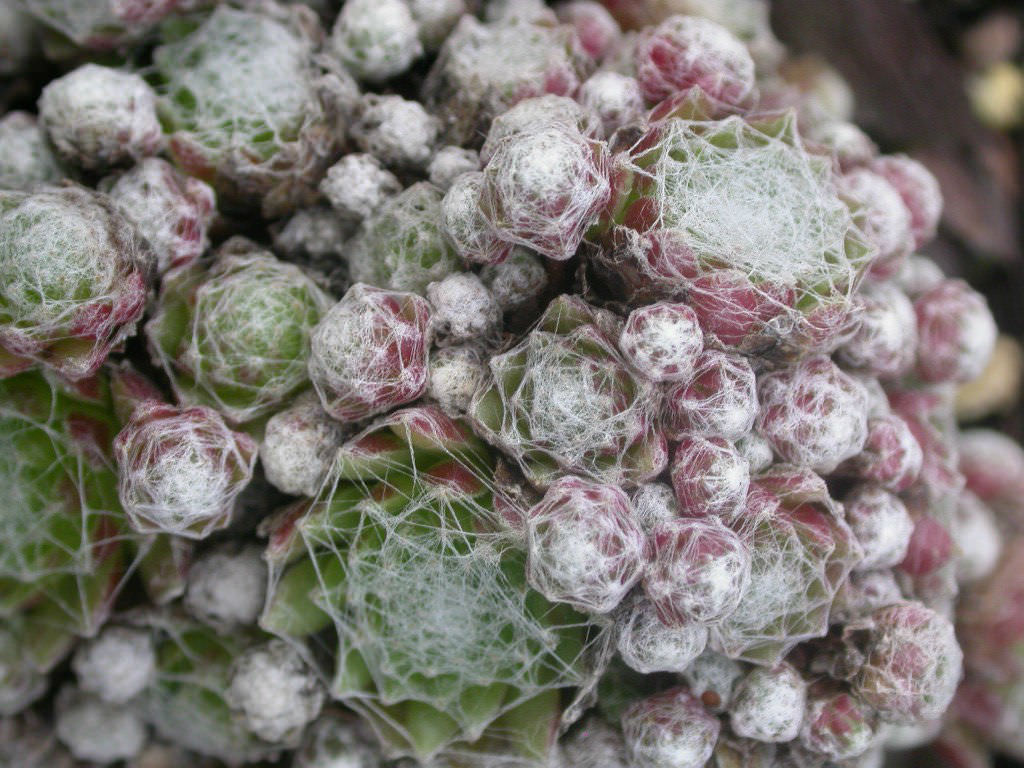
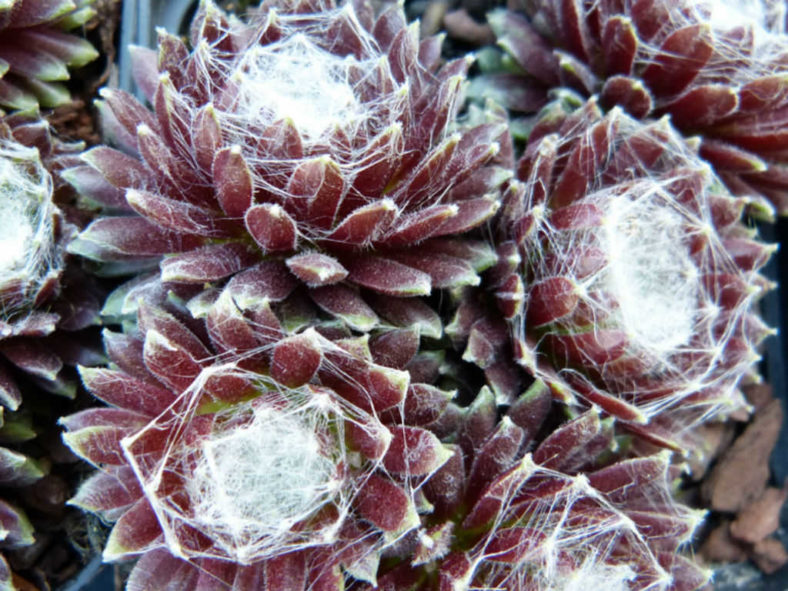
The specific epithet "arachnoideum" (pronounced "a-rak-NOY-dee-um") means "resembling a cobweb" and refers to the cobwebby white hairs at the tips of the leaves of this species.
The cultivar epithet 'Rubrum' means "red; ruddy" and refers to the color of the leaves of this plant.
Origin
Sempervivum arachnoideum 'Rubrum' is a cultivar of Sempervivum arachnoideum.
Description
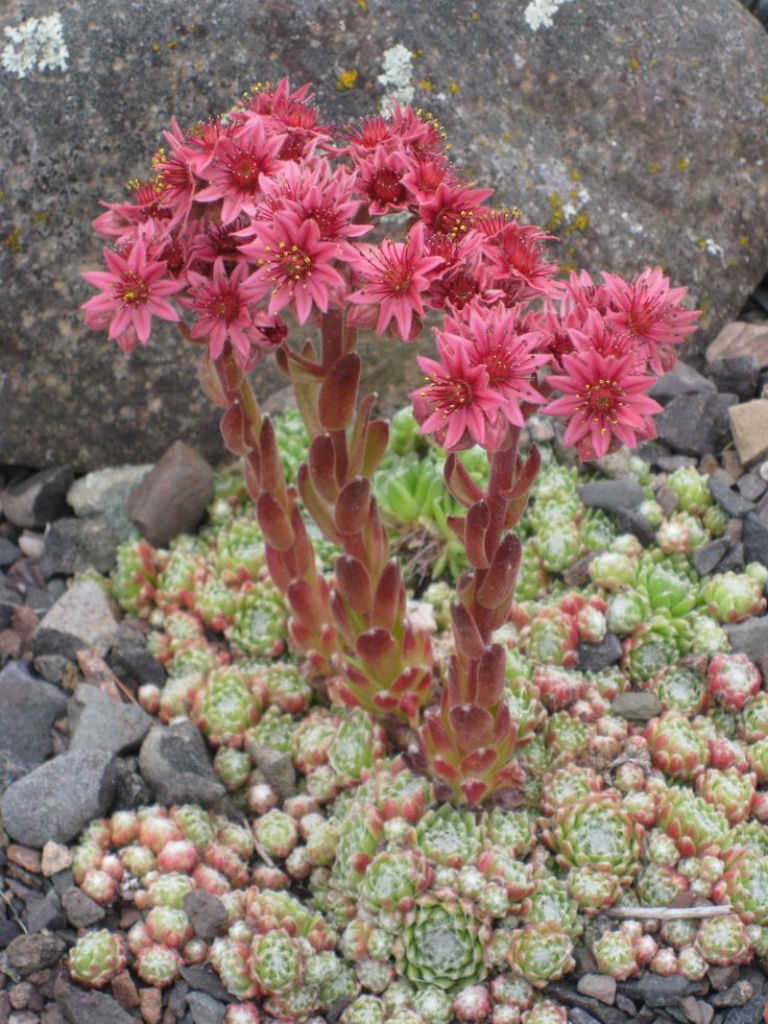
Sempervivum arachnoideum 'Rubrum' is a low-growing succulent that forms a mat of small rosettes of fleshy, ruby-red leaves with cobwebby, white hairs at the tips.
Stalks that bear clusters of star-shaped, pink flowers appear in summer on mature rosettes, which die after flowering.
How to Grow and Care for Sempervivum arachnoideum 'Rubrum'
Hardiness: USDA hardiness zones 4a to 10b: from -30°F (-34.4°C) to 40°F (4.4°C).
It is relatively easy to grow in a container, rock garden, scree bed, wall crevice, trough, or alpine house. It is ideal in so many ways, as it quickly forms very tight clusters of rosettes, filling in Sempervivum walls, mosaics, and topiary. Its shallow yet fibrous root systems hold soil in place even in vertical plantings. After the plant blooms and sets seed, it will die, but many offsets will take root.
Plant in well-drained succulent soil mix in full sun to light shade. Water regularly during the growing season and allow the soil to dry out before watering again. Water very little during the winter months.
See more at How to Grow and Care for Sempervivum.
Uses
The crushed leaves or their juice are applied externally to boils, wounds, etc., and also used to stop nosebleeds. The slightly warmed juice has been used to relieve ear inflammations, and toothaches can be relieved by chewing on the leaves. When macerated and infused in vinegar, the plant can be used to remove warts and corns.
The leaves are harvested in the summer and are best used when fresh, since they are difficult to dry properly. The leaf pulp is used to make a cooling face mask for reddened or sunburned skin.
Links
- Back to genus Sempervivum
- Succupedia: Browse succulents by Scientific Name, Common Name, Genus, Family, USDA Hardiness Zone, Origin, or cacti by Genus
Photo Gallery
Click on a photo to see a larger version.