Scientific Name
Peperomia dolabriformis var. glaucescens C. DC.
Synonym(s)
Peperomia dolabriformis f. glaucescens
Common Name(s)
Prayer Pepper
Scientific Classification
Family: Piperaceae
Genus: Peperomia
Etymology
The specific epithet "dolabriformis" (pronounced "doh-la-brih-FOR-miss") means "dolabriform; having the form of the head of an axe or hatchet" and refers to the species' leaf shape.
The varietal epithet "glaucescens" (pronounced "glaw-KES-kens") means "somewhat glaucous" and refers to the variety's glaucous leaf appearance.
Description
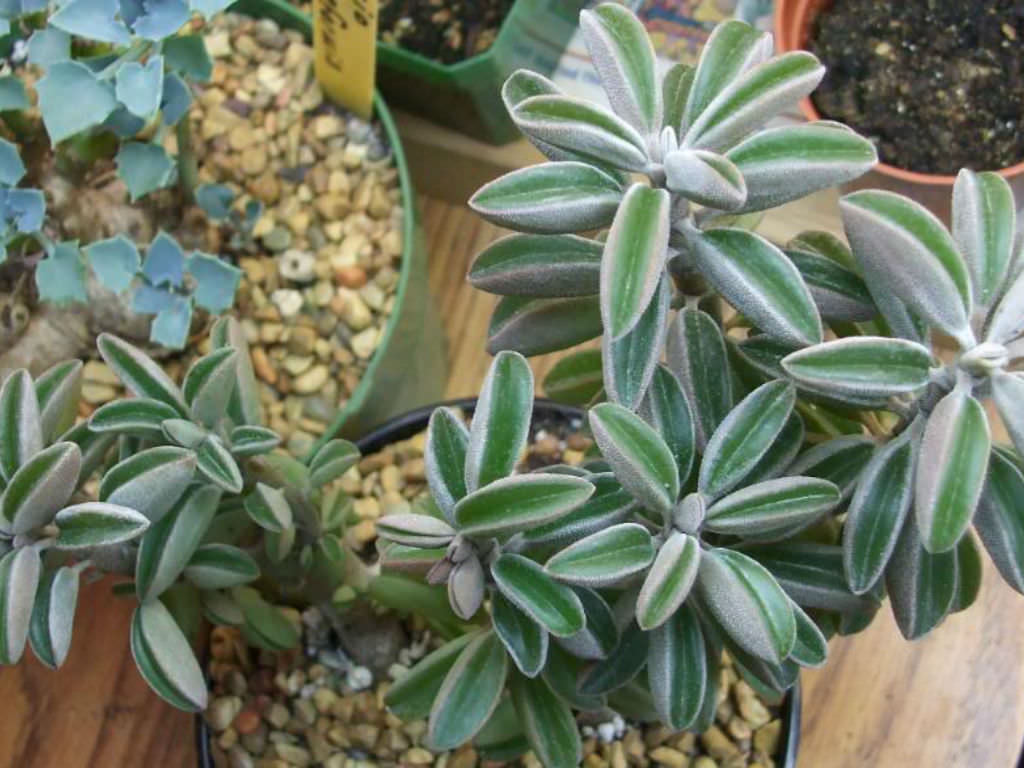
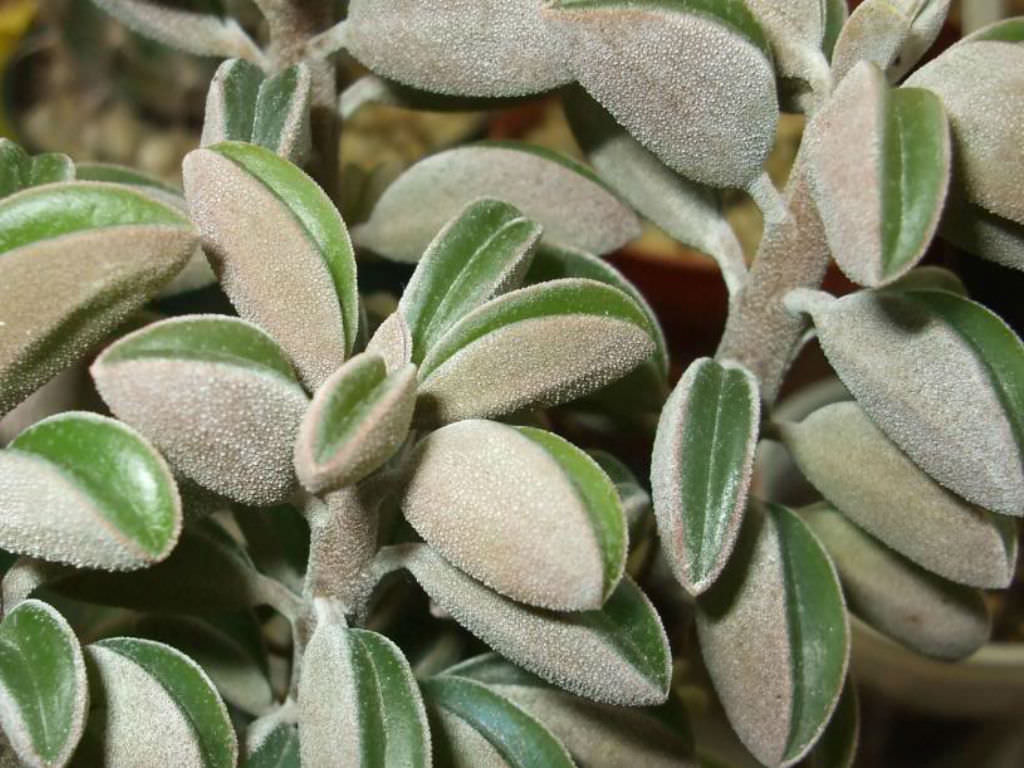
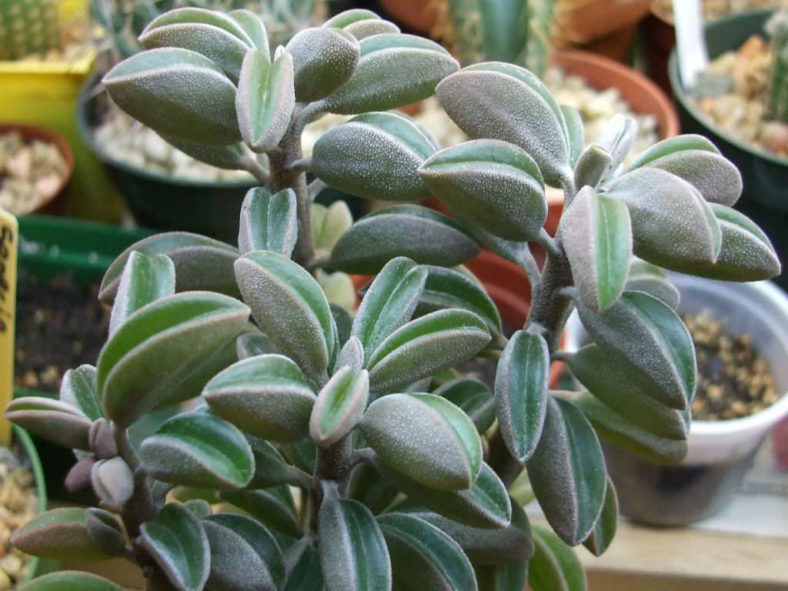
Peperomia dolabriformis var. glaucescens is a shrubby succulent with fleshy stems that become woody with age and bear purse-shaped leaves. It may be rosette-forming or erect and laxly branched, reaching up to 2 feet (60 cm) tall. The fleshy leaves can measure up to 3 inches (7.5 cm) long, 0.5 inches (1.2 cm) wide, and 0.6 inches (1.5 cm) thick. They are whitish to pinkish, folded upward in half, and fused along the dark green margins, creating a narrow dark green window.
The inconspicuous greenish-white flowers appear in summer on green, slender panicles that can grow up to 16 inches (40 cm) long.
Origin
Peperomia dolabriformis var. glaucescens is native to the warm valleys of northern Peru.
How to Grow and Care for Peperomia dolabriformis var. glaucescens
Hardiness: USDA hardiness zones 11a to 11b: from 40°F (4.4°C) to 50°F (10°C).
Peperomias are not particularly hard plants to grow, and their small size and delicate leaves make them perfect for desktops and dish gardens. They will rarely overtake their neighbors or shade them out. In short, they are perfectly mannered and attractive little plants. The biggest problems usually involve watering. They like steadily moist soil but can be very sensitive to overwatering. Overwatered Peperomias tend to wilt or have raised, scab-like protrusions on their leaves. Don't be alarmed if your plant loses a few bottom leaves, but a massive leaf drop usually signals a temperature change or a fertilizer problem. Lastly, Peperomias are susceptible to mealybugs, so watch for cottony white masses on the stems or undersides of leaves. These plants thrive when slightly pot-bound, so do not overpot them.
Repot plants in spring, especially to refresh the existing soil, but place them in the same-size container after root-pruning or in only one pot size. The largest Peperomias remain relatively small, so they will never grow into large specimen plants. Most species can be relatively easily propagated from leaf cuttings.
Learn more in "How to Grow and Care for Peperomia."
Links
- Back to genus Peperomia
- Succupedia: Browse succulents by Scientific Name, Common Name, Genus, Family, USDA Hardiness Zone, Origin, or cacti by Genus
Photo Gallery
Click on a photo to see a larger version.