Scientific Name
Pelecyphora minima (Baird) D.Aquino & Dan.Sánchez
Synonym(s)
Coryphantha minima, Escobaria minima, Neobesseya minima
Common Name(s)
Birdfoot Cactus, Dwarf Cory Cactus, Least Cory Cactus, Nellie Cory Cactus, Nellie's Pincushion Cactus
Scientific Classification
Family: Cactaceae
Subfamily: Cactoideae
Tribe: Cacteae
Genus: Pelecyphora
Etymology
The specific epithet "minima" (pronounced "MIN-eh-muh") means "smallest" or "very small" and refers to the miniature size of the stems of this species.
Description
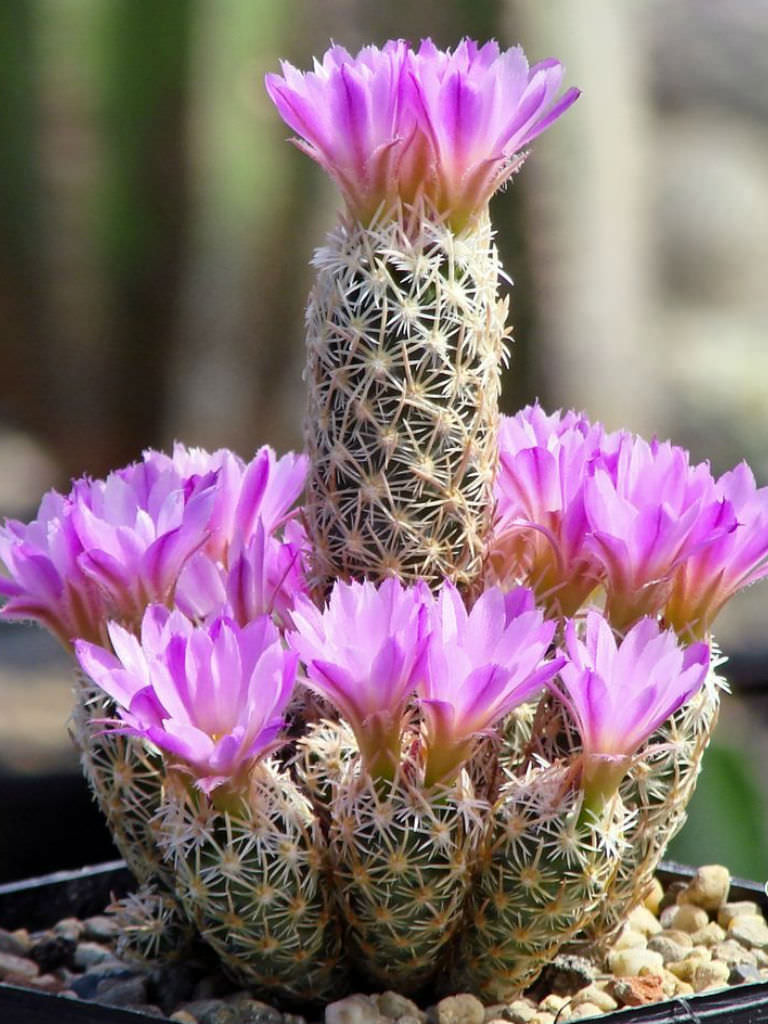
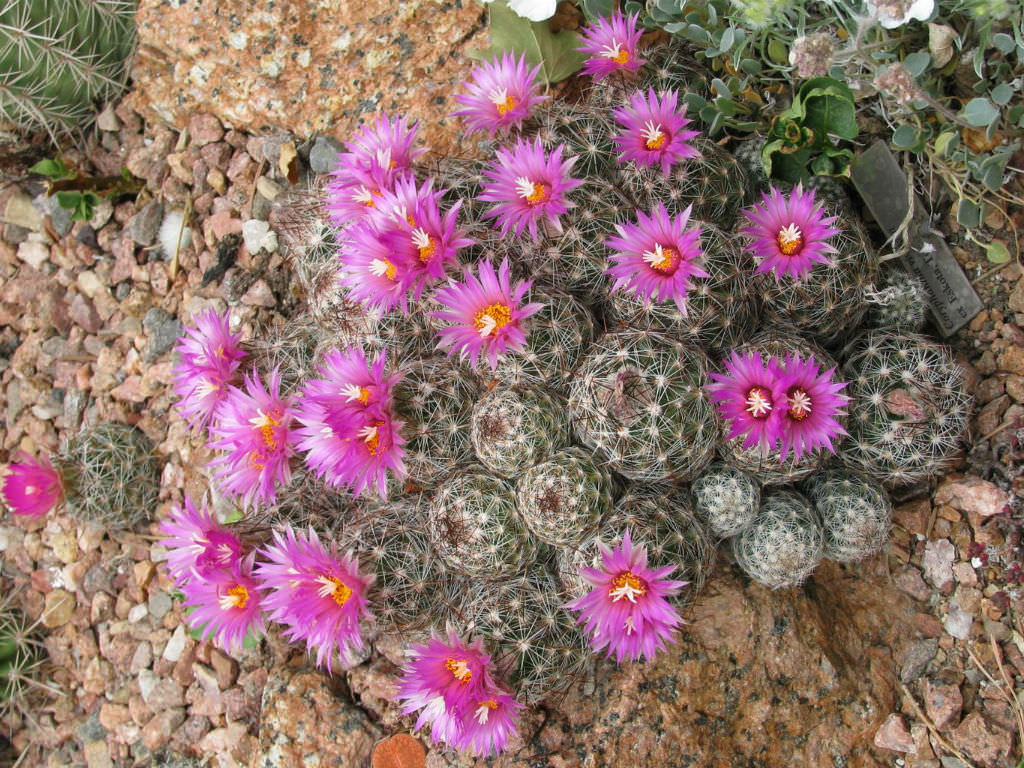
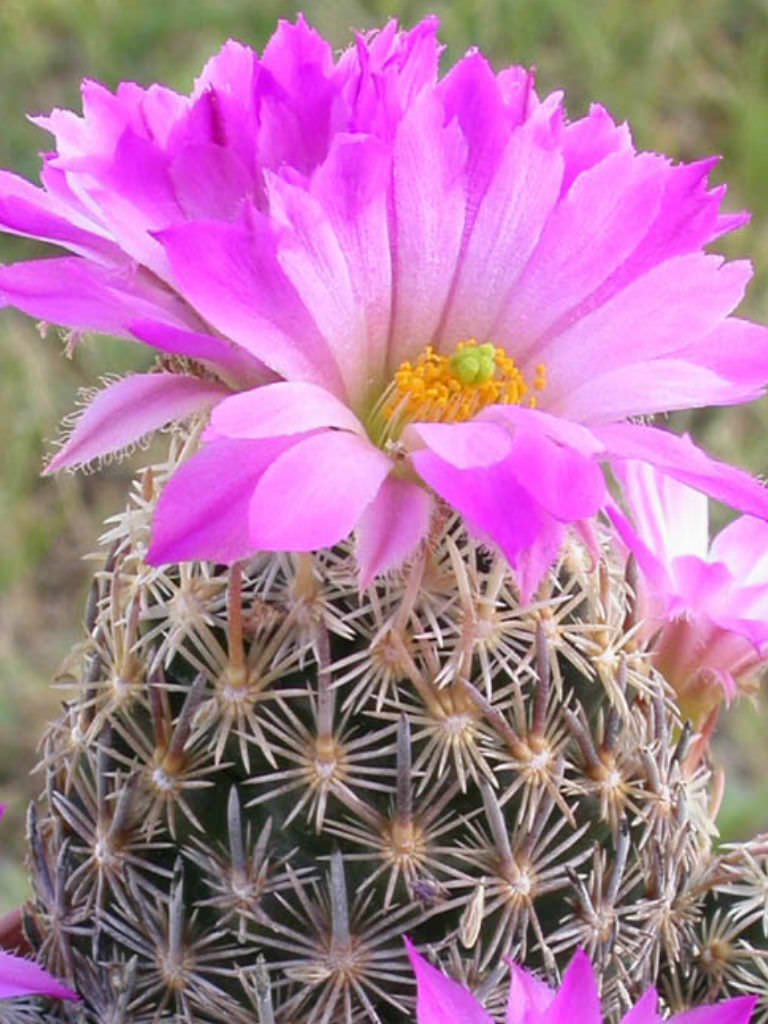
Pelecyphora minima, formerly known as Escobaria minima or Coryphantha minima, is a small cactus with spherical to cylindrical stems that have conical tubercles, each with dense clusters of pale tan to pinkish-gray spines at the tip. In its natural habitat, this species usually grows solitary or in groups of 2 to 3 stems, but is profusely branched in cultivation. The stems can grow up to 1.1 inches (2.7 cm) tall and 1 inch (2.5 cm) in diameter. Each areole bears 1 to 4 central and 13 to 24 radial spines, all about 0.2 inches (0.5 cm) long.
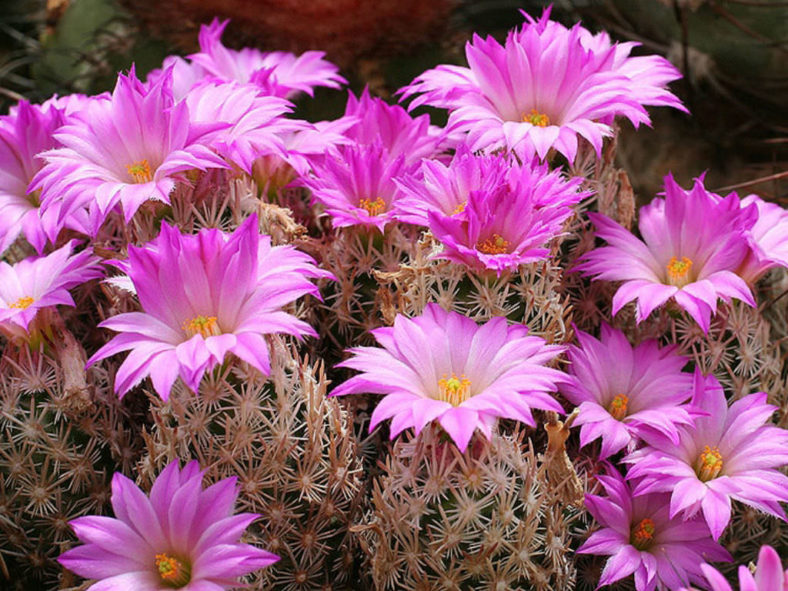
The flowers are pale rose-pink to magenta, gradually shading to paler pink or white basally, sometimes with darker midstripes. They are funnel-shaped and can reach up to 0.6 inches (1.5 cm) long and 1.1 inches (2.7 cm) in diameter. They appear at the top of the stems in several flushes, primarily in mid-spring. The fruits are green, sometimes slightly yellow-tinted, more or less egg-shaped, and can grow up to 0.25 inches (0.6 cm) long and 0.15 inches (0.4 cm) in diameter.
Origin
Pelecyphora minima is native to the Chihuahuan Desert in the United States, where it grows in mats of Selaginella in rock crevices. It is found only in Brewster County, Texas, where three populations remain near Marathon.
How to Grow and Care for Pelecyphora minima
Hardiness: USDA hardiness zones 9a to 11b: from 20°F (6.7°C) to 50°F (10°C).
Escobarias are very susceptible to rot. Therefore, they require well-drained soil without any excess water or stagnation. It has been observed that the plants also suffer from environmental humidity, which should preferably remain very low (30 to 50 %). Avoid watering during the winter, when the plant is dormant. Watering Escobaria in cold conditions will almost certainly kill the plant. During the growing season, plants with typically slow growth prefer a significant temperature difference between night and day.
Experienced growers know the difficulties of keeping members of this genus alive, which is certainly not one of the easiest to grow. The seed germination rate is lower than that of other genera, and other propagation methods, such as offsets or cuttings, are preferable.
Learn more in "How to Grow and Care for Escobaria."
Links
- Back to genus Pelecyphora
- Succupedia: Browse succulents by Scientific Name, Common Name, Genus, Family, USDA Hardiness Zone, Origin, or cacti by Genus
Photo Gallery
Click on a photo to see a larger version.