Scientific Name
Pelecyphora abdita (Řepka & Vaško) D.Aquino & Dan.Sánchez
Synonym(s)
Escobaria abdita, Neobesseya abdita
Scientific Classification
Family: Cactaceae
Subfamily: Cactoideae
Tribe: Cacteae
Genus: Pelecyphora
Etymology
The specific epithet "abdita" (pronounced "AB-dee-tuh") means "hidden" or "concealed" and refers to the growth habit of this species, which typically remains hidden below the soil surface for most of the year in its native habitat.
Description
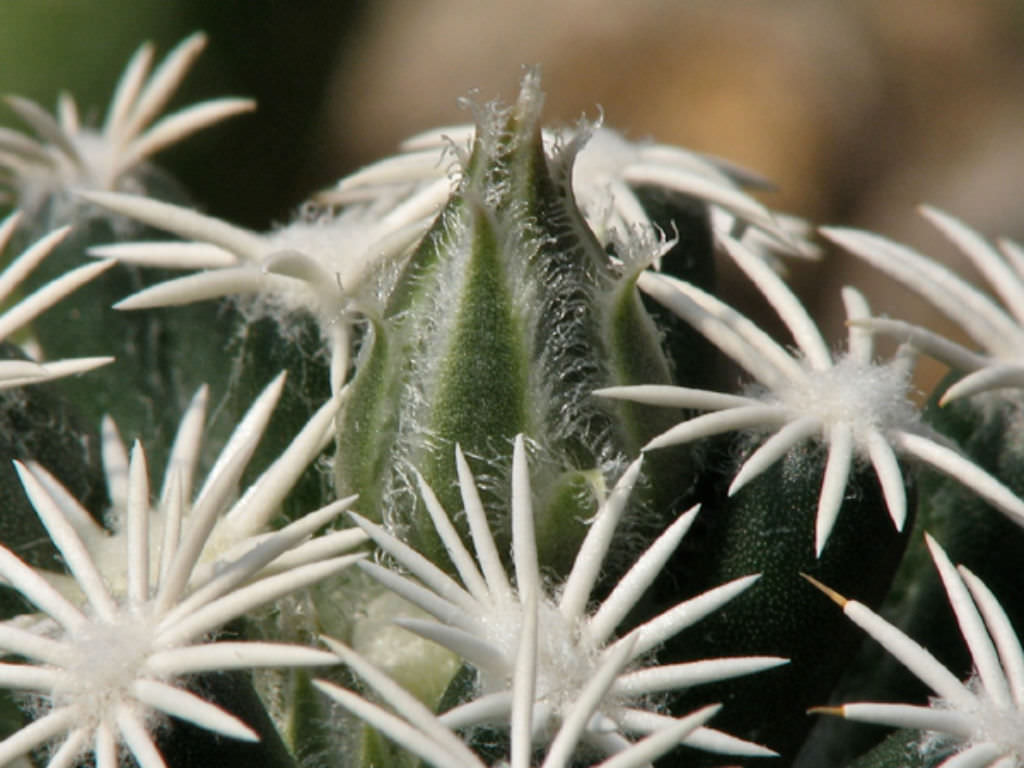
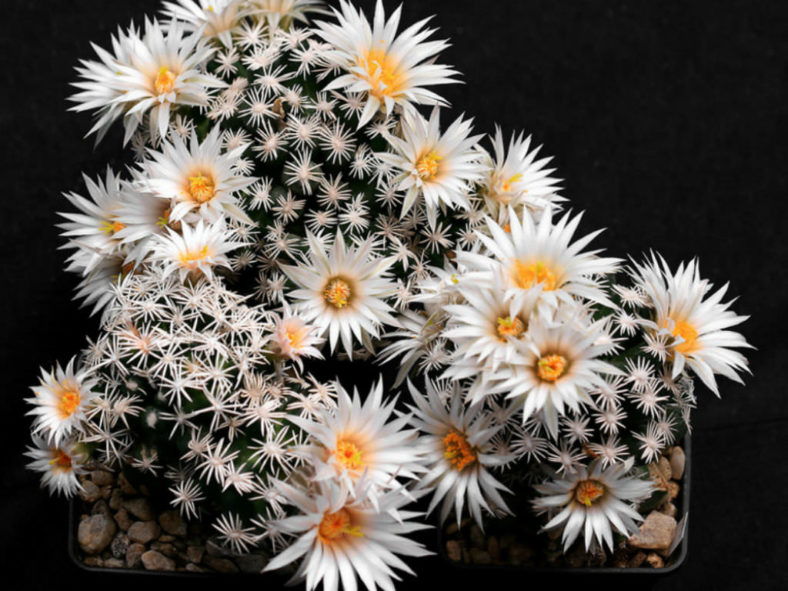
Pelecyphora abdita, formerly known as Escobaria abdita, is an attractive, small, geophytic cactus with a swollen root and dark green stems with tubercles arranged into spirals, each bearing a cluster of short, ivory to chalky white spines at the tip. The stems are subspherical and can grow up to 1 inch (2.5 cm) tall and 0.8 inches (2 cm) in diameter. The swollen root is almost ellipsoidal, measuring up to 2.4 inches (6 cm) in length and 1.2 inches (3 cm) in diameter. The areoles are oval, initially whitish and woolly, becoming gray or dark gray as they age and losing their wool. Each areole typically bears 11 to 15 radial spines, which can grow up to 0.2 inches (0.5 cm) long, while central spines are absent.
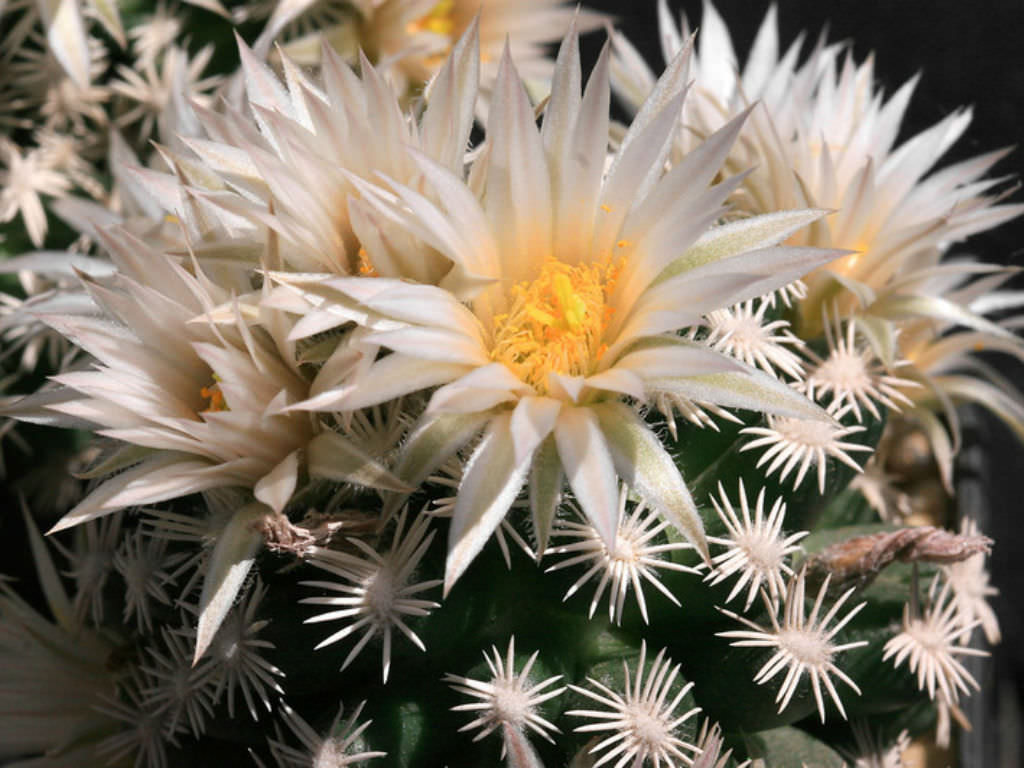
The flowers have white tepals with light pink stripes and yellow anthers. They are funnel-shaped, appear in late spring from the youngest areoles, and can reach a length of 1.8 inches (4.5 cm) and a diameter of 1.4 inches (3.5 cm). The fruits are obovoid, gray-green to brown-green, and can grow up to 0.3 inches (0.8 cm) in length and diameter. Each fruit can contain 5 to 30 light brown seeds.
Origin
Pelecyphora abdita is native to Mexico. It occurs south of El Oro, a small town in Coahuila, in temporarily flooded depressions, immersed in loamy soil for practically the entire year.
Subspecies of Pelecyphora abdita
- Pelecyphora abdita subsp. abdita
- Pelecyphora abdita subsp. tenuispina
How to Grow and Care for Pelecyphora abdita
Hardiness: USDA hardiness zones 9b to 11b: from 25°F (-3.9°C) to 50°F (10°C).
Escobarias are susceptible to rot and require well-drained soil without excess water or stagnation. Plants can also suffer from high humidity, which should preferably remain very low (30% to 50%). Avoid watering during the winter, when the plant is dormant. Watering Escobaria in cold conditions will almost certainly kill the plant. The plants, whose growth is typically quite slow, perceive a significant temperature difference between night and day in the growing season.
The experienced grower knows well the difficulties of survival of the members of this genus, which is certainly not one of the easiest to grow. The seed germination rate is lower than that of other genera, and alternative propagation methods, such as offsets or cuttings, are preferable.
Learn more at How to Grow and Care for Escobaria.
Links
- Back to genus Pelecyphora
- Succupedia: Browse succulents by Scientific Name, Common Name, Genus, Family, USDA Hardiness Zone, Origin, or cacti by Genus
Photo Gallery
Click on a photo to see a larger version.