Scientific Name
Oscularia deltoides (L.) Schwant.
Common Name(s)
Deltoid-leaved Dewplant, Pink Iceplant, Tooth-leaf Rock Vygie
Synonym(s)
Lampranthus deltoides, Mesembryanthemum deltoides
Scientific Classification
Family: Aizoaceae
Genus: Oscularia
Etymology
The specific epithet "deltoides" (pronounced "del-TOY-deez") means "deltoid, triangular" and refers to the leaves of this species, which are triangular in cross-section.
Origin
Oscularia deltoides is native to South Africa. It grows on sandstone rocks in low mountainous regions from Ceres to George, north of the Cape Peninsula, in the Western Cape province.
Description
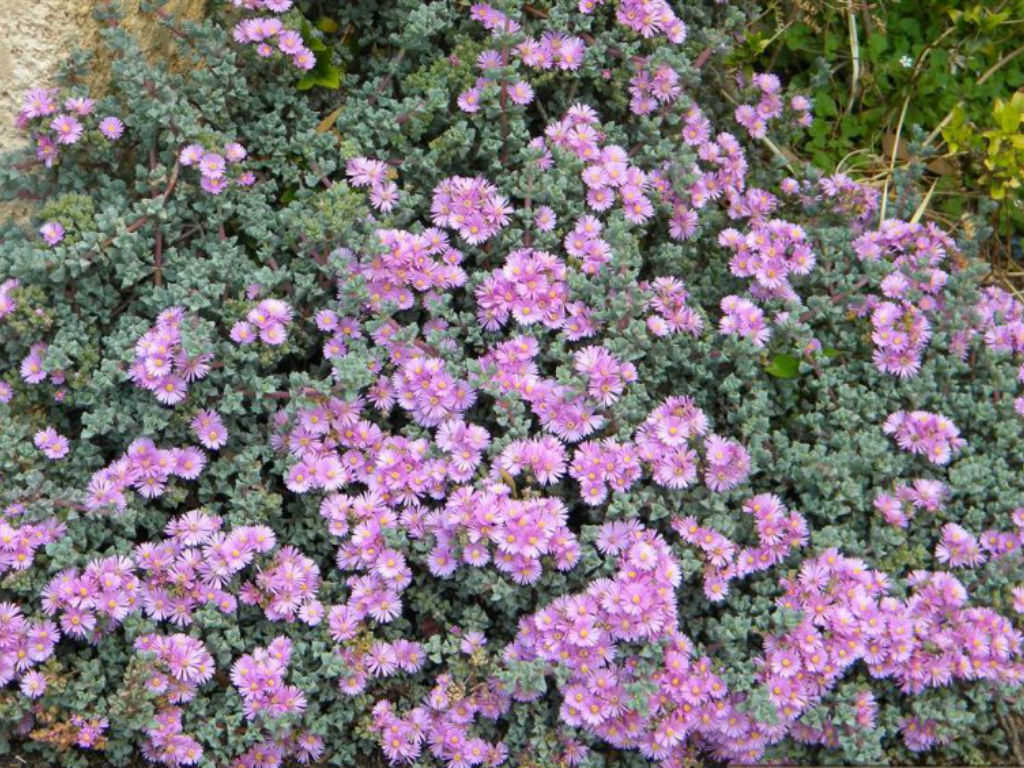
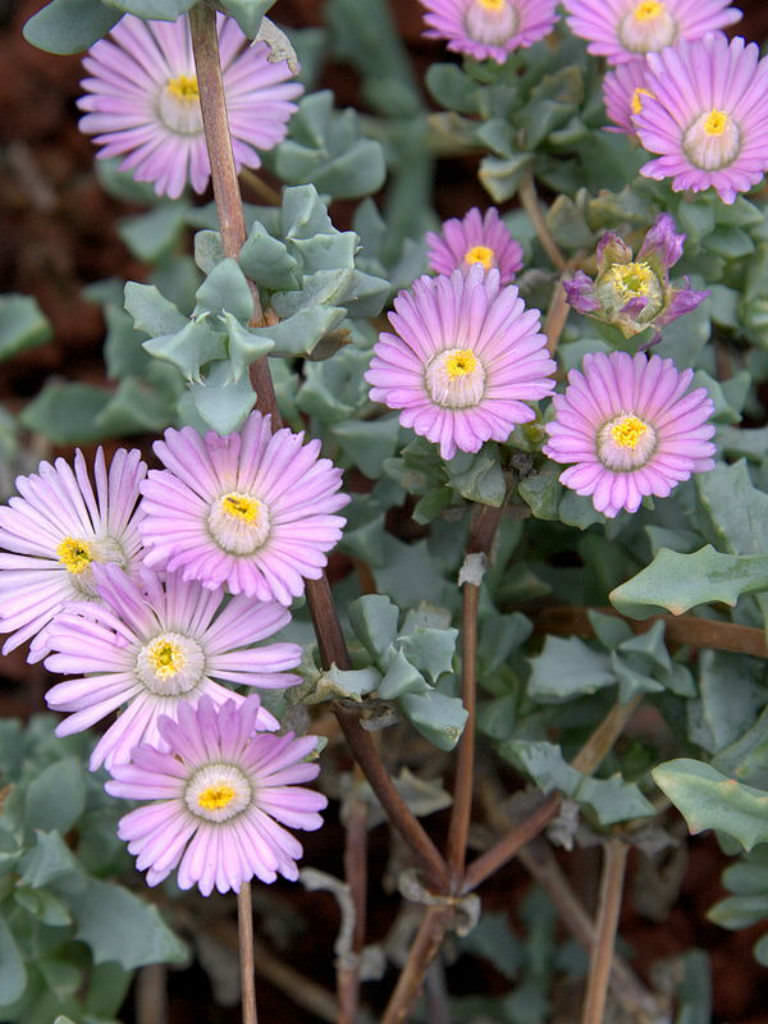
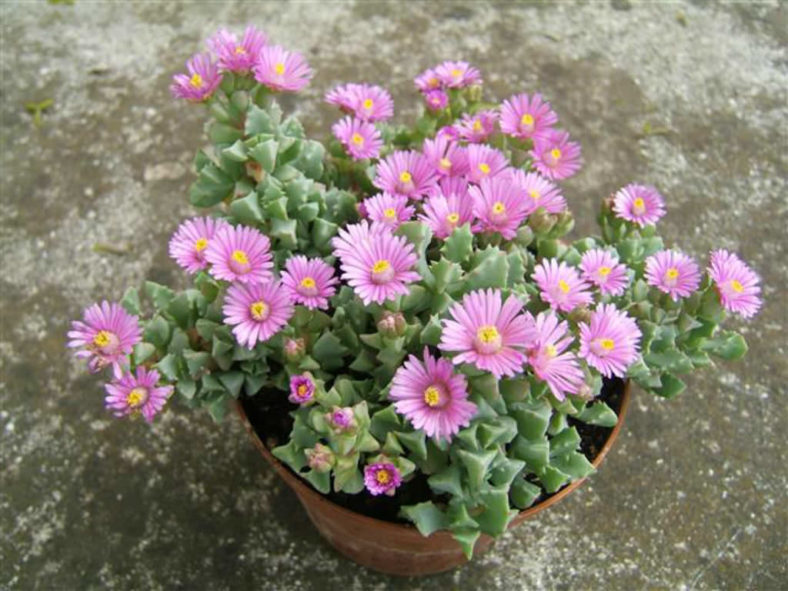
Oscularia deltoides is a low-growing succulent shrub with wiry, decumbent or trailing, grey-green, often purple-tinged stems and blue-green, trigonous leaves with small, usually reddish teeth. It can grow up to 1 foot (30 cm) tall. The leaves are thick and fleshy, measuring up to 0.7 inches (1.8 cm) long and 0.4 inches (1 cm) wide.
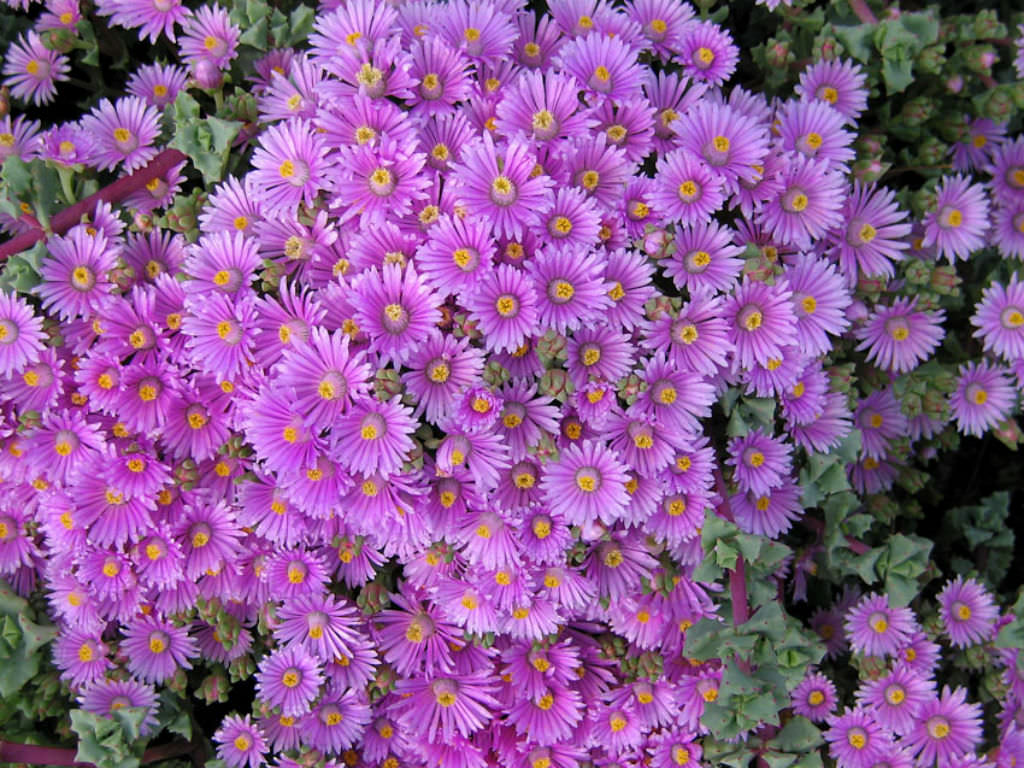
The almond-scented flowers, which range from lavender-pink to purple with a yellow center, appear in spring and summer and can reach a diameter of 0.8 inches (2 cm). They are closed in the morning but open in the afternoon, often covering the plant.
How to Grow and Care for Oscularia deltoides
Hardiness: USDA hardiness zones 8b to 11b: from 15°F (-9.4°C) to 50°F (10°C).
Mesembs mostly adapt to relatively predictable rainfall patterns rather than extreme drought and irregular rainfall. Total rainfall may be extremely low, but water is available at least seasonally or through fog and condensation. This leads to or allows plants that are not especially large and sometimes very small, and affects how they need to be treated in cultivation.
The basics of care are simple: free-draining soil, plenty of sun and ventilation, and regular light watering in the right season. Yet the difficulties are endless: trying to adapt to the Mesembs' adaptability and to follow their growth habits in your particular conditions.
These plants require a loam-based compost with extra drainage material such as horticultural grit or perlite. They all like good light conditions and plenty of ventilation.
Some are relatively cold-hardy and can even survive mild winters outside. Most will survive temperatures down to the freezing point. Some Mesembs begin to grow in the fall as temperatures drop and days get shorter.
See more at How to Grow and Care for Mesembs.
Links
- Back to genus Oscularia
- Succupedia: Browse succulents by Scientific Name, Common Name, Genus, Family, USDA Hardiness Zone, Origin, or cacti by Genus
Photo Gallery
Click on a photo to see a larger version.