Scientific Name
Lithops otzeniana Nel
Common Name(s)
Living Stones
Scientific Classification
Family: Aizoaceae
Subfamily: Ruschioideae
Tribe: Ruschieae
Genus: Lithops
Etymology
The specific epithet "otzeniana" (pronounced "ot-zen-ee-AY-nuh") honors M. Otzen, a German succulent plant enthusiast who invited Professor G.C. Nel on the trip on which he discovered this species.
Description
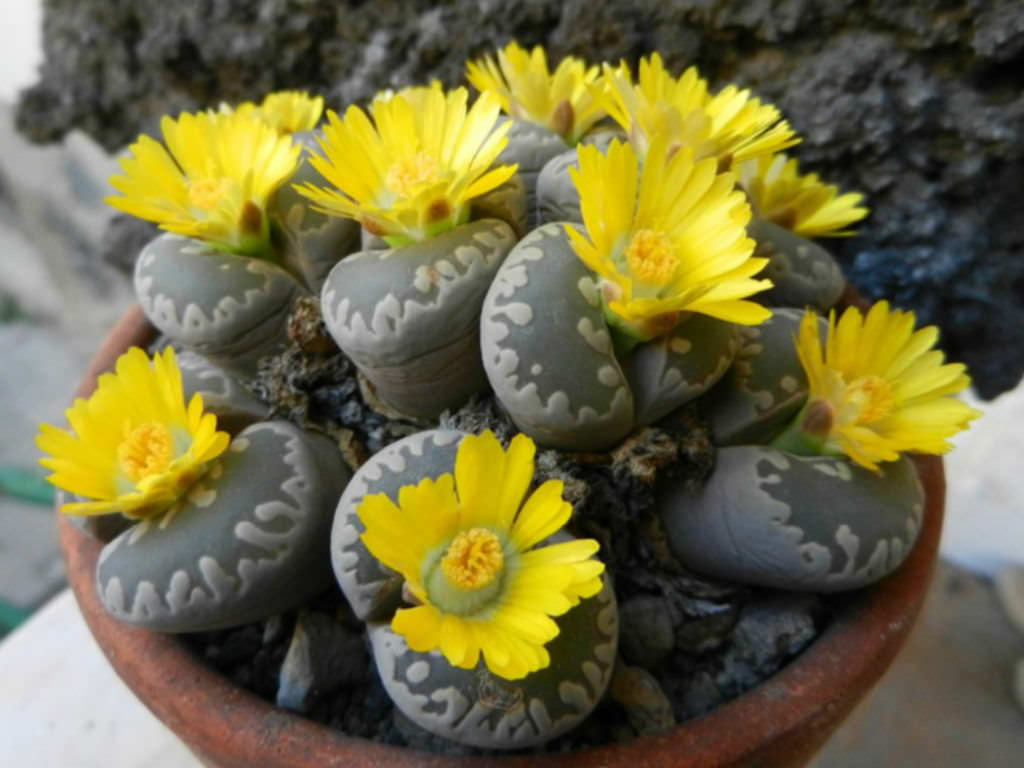
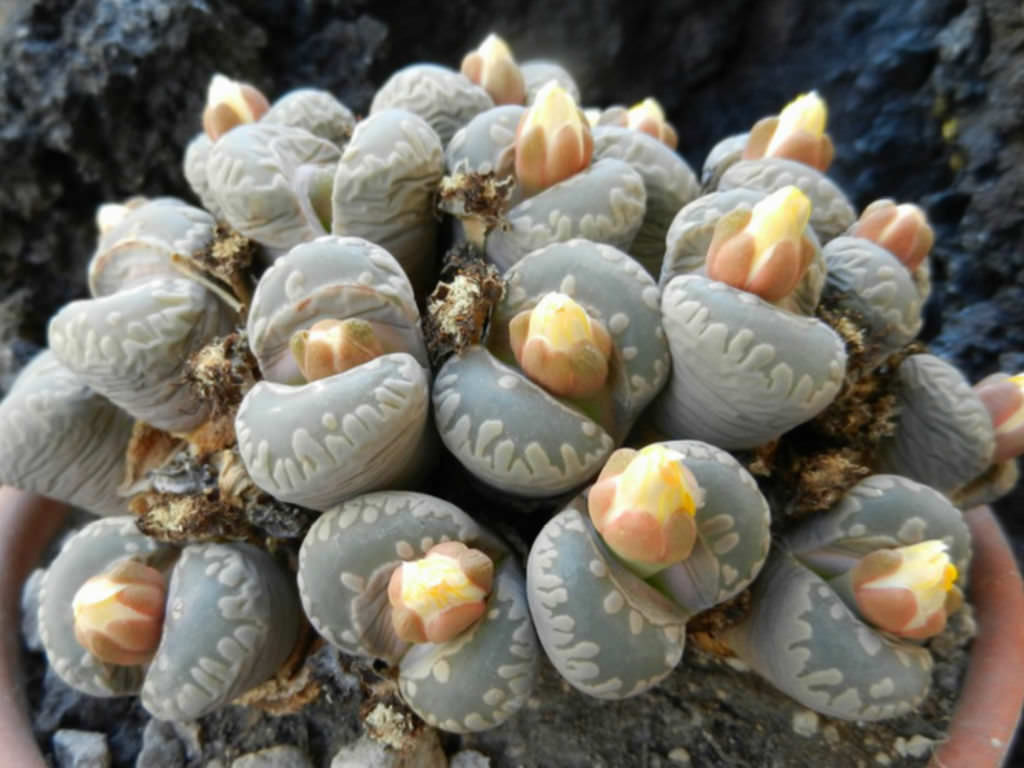
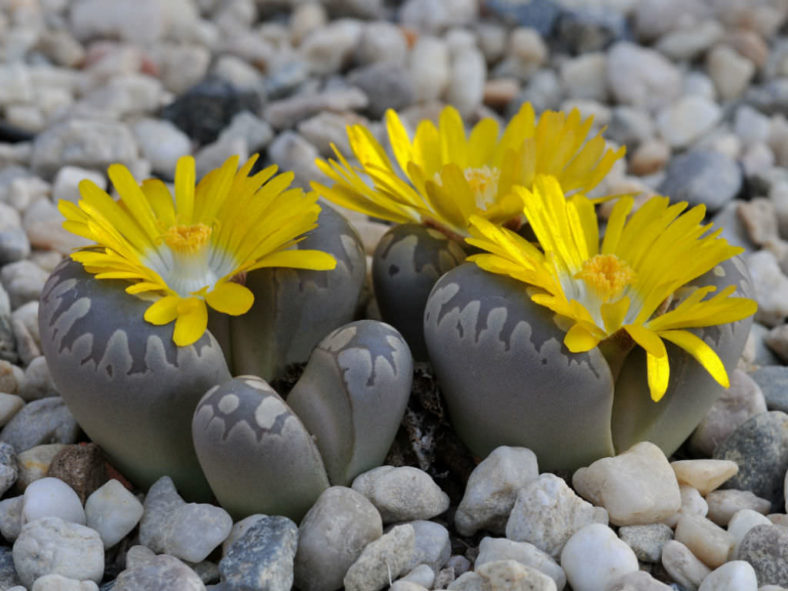
Lithops otzeniana is a dwarf succulent with somewhat heart-shaped bodies of two opposite leaves, separated by a deep fissure. It usually forms small clusters of 2 to 5, occasionally up to 25 bodies. The bodies are elliptical from above and can grow up to 1.2 inches (3 cm) tall. The upper surface is convex, smooth to more or less wrinkled, with boldly scalloped markings on margins, and windows in shades of light grey, usually tinged with pale pink, cream, green, or blue, measuring up to 1.2 inches (3 cm) in length and up to 0.8 inches (2 cm) in width.
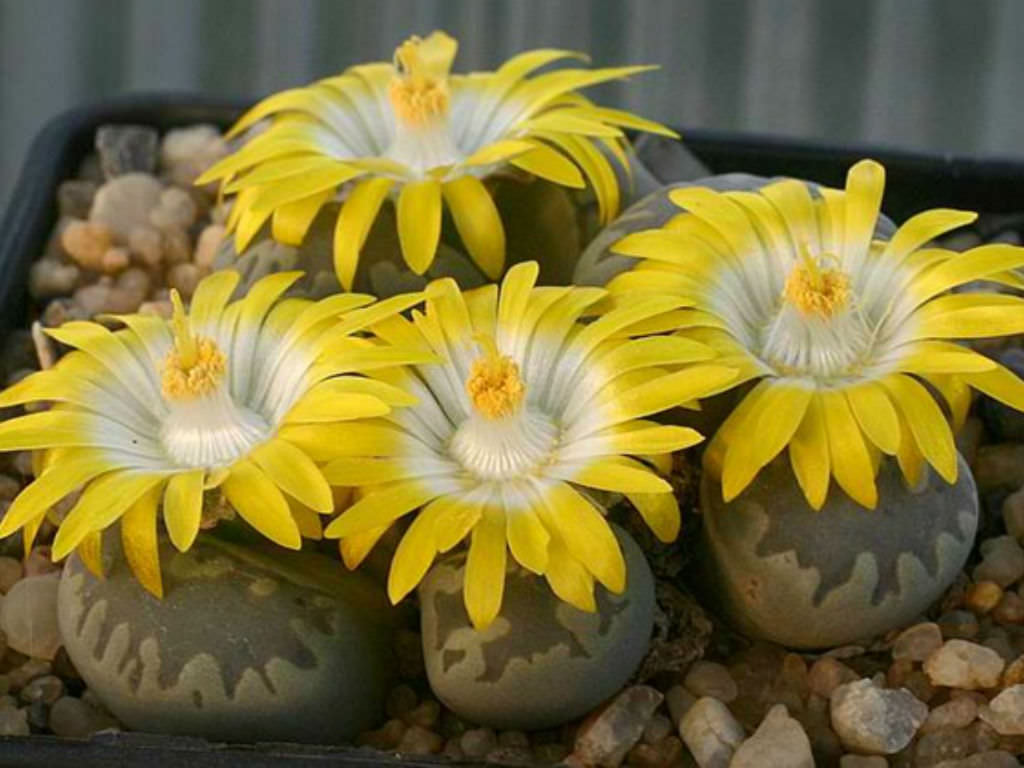
The solitary flowers are yellow with a white center and appear in the fall. They can reach a diameter of 1.2 inches (3 cm). The fruits are usually 5-locular capsules with brown seeds.
Origin
Lithops otzeniana is native to South Africa. It occurs in decomposed granite, often under shrubs, from north and northwest of Loeriesfontein, on the margins of Bushmanland in the Northern Cape province.
How to Grow and Care for Lithops otzeniana
Hardiness: USDA hardiness zones 10a to 11b: from 30°F (-1.1°C) to 50°F (10°C).
These plants develop a new set of leaves every year, with new leaves emerging in the fall and growing through the winter and into the summer. Lithops will go dormant in late summer, and you should severely restrict watering to prevent leaves from bursting. Flowers appear near the end of summer or fall, first as small buds pushing between the leaves, and growth begins again. You can water safely during this period. The leaves will still grow into the winter, but you should stop watering, even as the older leaves shrivel and encase the new growth. In spring, you can start watering lightly again as the plant begins to grow, heading toward its summer dormancy period and the emergence of new leaves in the fall.
Lithops are very slow-growing, small plants, making them ideal as houseplants (once you get the hang of their watering schedule). Older plants form attractive clumps of "pebbles" in their pots, which are highly prized. In general, repot plants only if there are cultural problems (soggy soil) or the plant has outgrown its dish container, which happens only every several years.
Learn more in "How to Grow and Care for Lithops."
Links
- Back to genus Lithops
- Succupedia: Browse succulents by Scientific Name, Common Name, Genus, Family, USDA Hardiness Zone, Origin, or cacti by Genus
Photo Gallery
Click on a photo to see a larger version.