Scientific Name
Jatropha integerrima Jacq.
Synonym(s)
Adenoropium integerrimum
Common Name(s)
Chaya, Cotton-leafed Jatropha, Firecracker, Peregrina, Rose-flowered Jatropha, Spicy Jatropha
Scientific Classification
Family: Euphorbiaceae
Subfamily: Crotonoideae
Tribe: Jatropheae
Genus: Jatropha
Etymology
The specific epithet "integerrima" (pronounced "in-teg-er-EE-muh") means "absolutely entire" and refers to the leaves of this species. Unlike many other Jatropha species that have deeply lobed leaves, the leaves of this species are mostly entire, only occasionally showing a pair of small lobes.
Origin of Jatropha integerrima
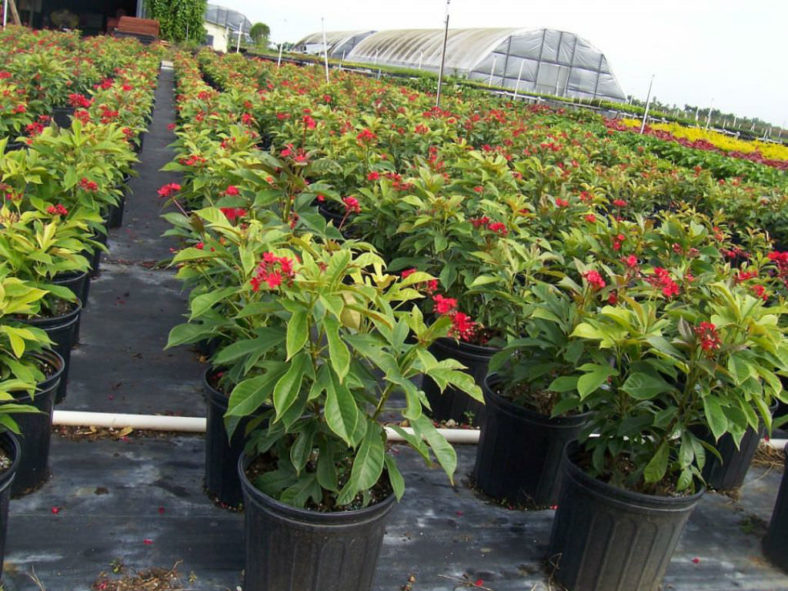
Jatropha integerrima is native to the West Indies, primarily Cuba, and has become naturalized in many tropical and subtropical regions, including Africa, India, and North America.
Description of Jatropha integerrima
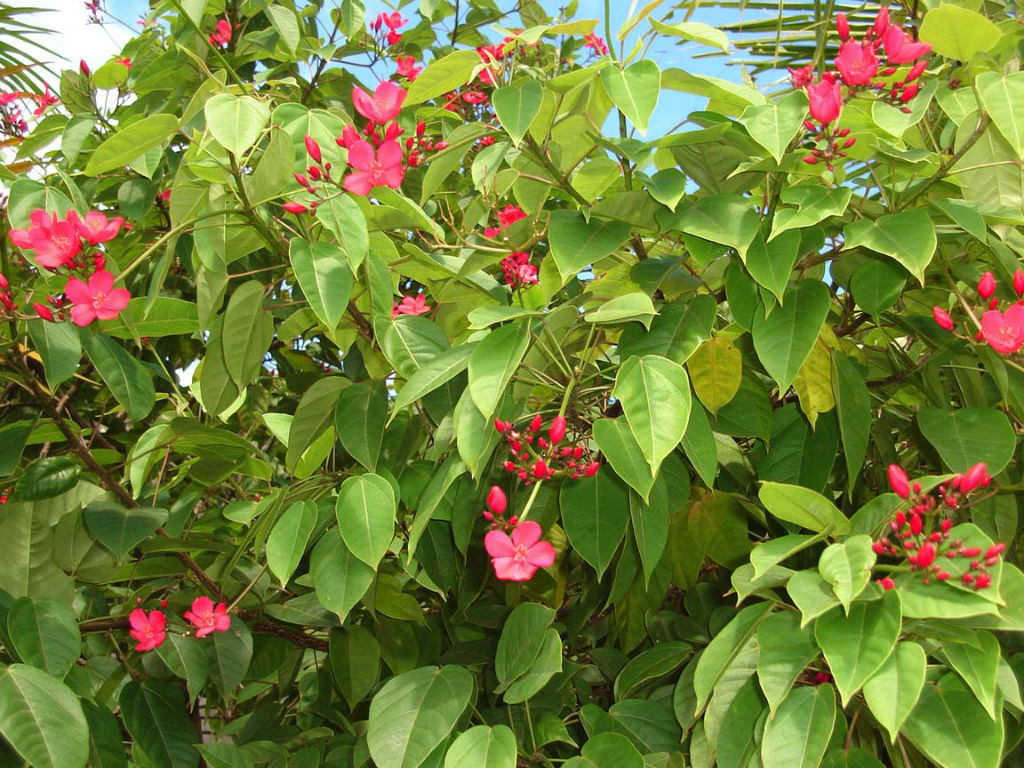
Jatropha integerrima is a dense shrub or small tree with erect, much-branched, dark brown, and somewhat striated stems with oblong to obovate leaves or often with a pair of small, sharp lobes below the middle. It can grow up to 16.4 feet (5 m) tall. The leaves are bronze colored with a brownish underside when young, becoming green and velvety on the upper surface and flecked with purple below. They can measure up to 6.1 inches (15.3 cm) in length and 5 inches (12.5 cm) in width.
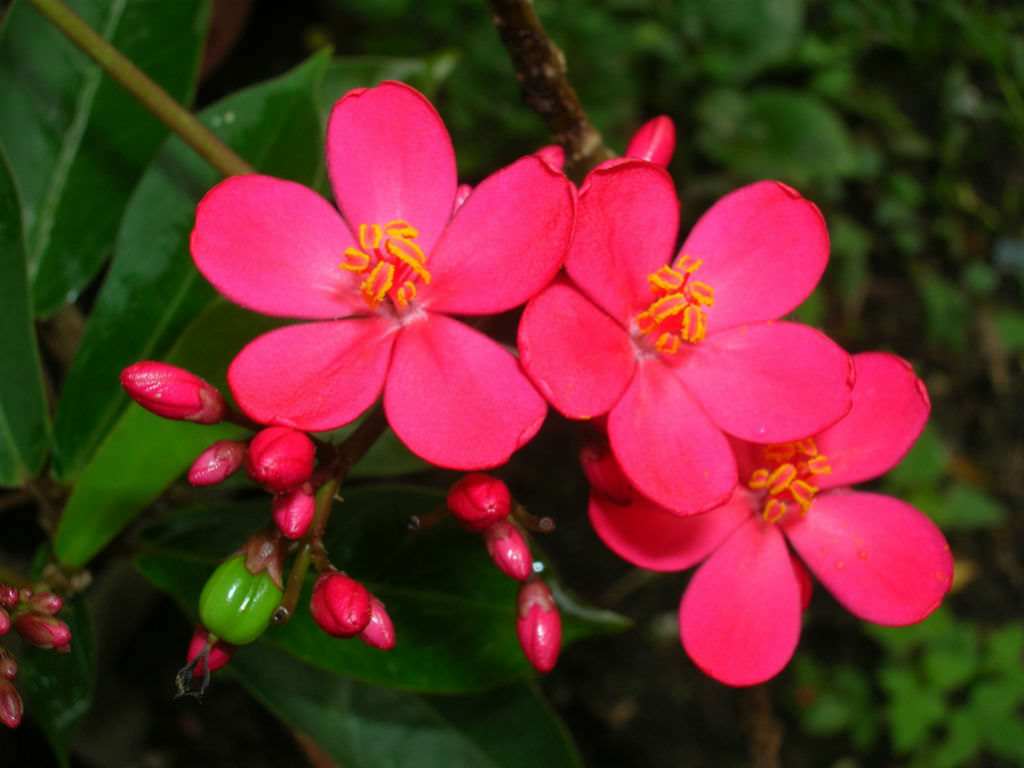
The flowers are star-shaped, five-petaled, deep red with yellow stamens, and appear in many-flowered clusters at the ends of the branches almost all year round. They can reach a diameter of up to 1 inch (2.5 cm). The fruits are greenish-red, egg-shaped, explosively dehiscent capsules with cream seeds, mottled with red and black spots. They can grow up to 0.5 inches (1.3 cm) long and about 0.4 inches (1 cm) in diameter.
How to Grow and Care for Jatropha integerrima
Hardiness: USDA hardiness zones 9b to 11b: from 25°F (-3.9°C) to 45°F (7.2°C).
The key to growing a successful Jatropha is to achieve the proper balance between moisture and drainage. They typically appreciate a steady water supply, but the most popular species cannot tolerate being submerged or soaked and quickly succumb to root rot. Many popular species make excellent small trees for a conservatory or sunny corner. Keep them well-pruned so they don't outgrow their space too soon. Jatropha is vulnerable to pests, including aphids, mealybugs, scales, and whiteflies. If possible, identify the infestation as early as possible and treat it with the least toxic option.
Jatropha can be propagated by seed or by stem cuttings. To take stem cuttings, remove a small piece of stem, dip it in rooting hormone, and place it in a small pot filled with seedling starter soil. Place in a warm, bright place and wait for new growth to emerge.
Repot Jatropha annually at the beginning of the growing season. Many species are naturally small shrubs that grow up to 15 feet (4.5 m) tall. To keep your indoor container plant manageable, trim it to size and, if needed, root-prune older plants. The larger plants should be refreshed occasionally by removing the top several inches of potting soil and replacing it with fresh potting soil.
See more at How to Grow and Care for Jatropha.
Links
- Back to genus Jatropha
- Succupedia: Browse succulents by Scientific Name, Common Name, Genus, Family, USDA Hardiness Zone, Origin, or cacti by Genus
Photo Gallery
Click on a photo to see a larger version.