

Ipomoea is the largest genus in the flowering plant family Convolvulaceae, with over 500 species. It is a large and diverse group with common names such as Morning Glory, Sweet Potato, Bindweed, and Moonflower. The most widespread common name is Morning Glory. The generic name is derived from the Greek words "ips" or "ipos," meaning "worm" or "bindweed," and "homoios," meaning "resembling," and refers to their twining habit.
The genus occurs throughout tropical and subtropical regions worldwide and comprises annual and perennial herbaceous plants, lianas, shrubs, and small trees. Most species are twining climbers.
Most Ipomoeas have spectacular, colorful flowers. People often grow them as ornamentals, and many cultivars have been developed. People use Ipomoea for its medical and psychoactive compounds, mainly alkaloids. Some species are renowned for their properties in folk medicine and herbalism, while others are used as potent entheogens.
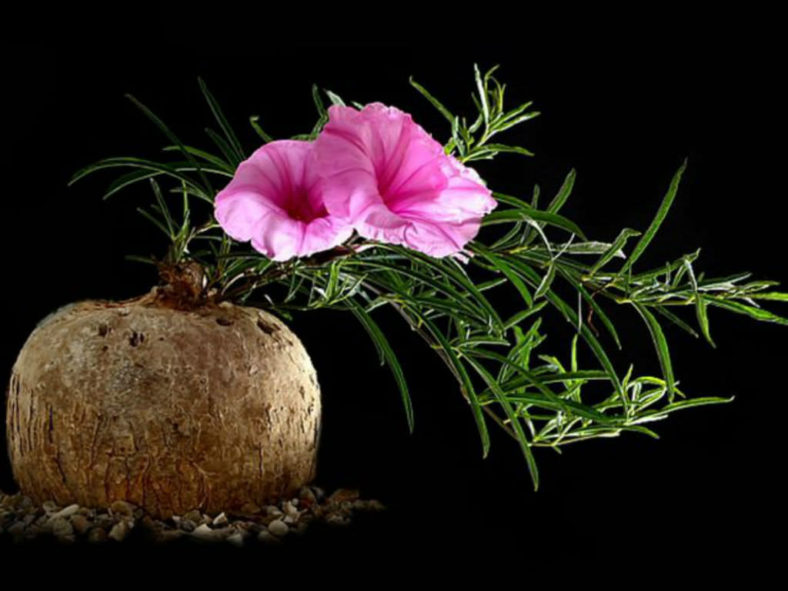
Growing Conditions and General Care
Ipomoeas need full sun and moderately fertile, well-drained soil. Provide shelter from the wind. Prune climbing species in spring. Under glass, give them full sunlight, but protect them from the hottest sun. Water freely and fertilize monthly during the growing season. Water sparingly in winter. Climbers and trailing species need support.
Propagation
Chip seeds with a knife, scrape with sandpaper, or soak in water for 24 hours before sowing at 64 °F (18 °C) in spring. Root softwood cuttings of perennials or shrubs in spring or summer, or take semi-ripe cuttings in summer.
Pests and Problems
White blister, rust, fungal leaf spots, stem rot, thread blight, charcoal rot, and wilt can occur.
Links
- Back to genus Ipomoea
- Succupedia: Browse succulents by Scientific Name, Common Name, Genus, Family, USDA Hardiness Zone, Origin, or cacti by Genus