

Scientific Name
Rhipsalidopsis × graeseri (Barthlott ex D.R.Hunt) P.V.Heath
Synonym(s)
Hatiora × graeseri, Schlumbergera × graeseri
Common Name(s)
Easter Cactus, Whitsun Cactus, Holiday Cactus
Scientific Classification
Family: Cactaceae
Subfamily: Cactoideae
Tribe: Rhipsalideae
Genus: Rhipsalidopsis
Etymology
The generic name "Rhipsalidopsis" (pronounced "lap-ih-DAY-ree-uh") means "resembling Rhipsalis" and refers to the perceived similarity between the two genera.
The specific epithet "graeseri" (pronounced "GRAY-seh-ree") honors Alfred Gräser (1895–1973), a well-known German horticulturist and nursery owner in Nuremberg.
Description
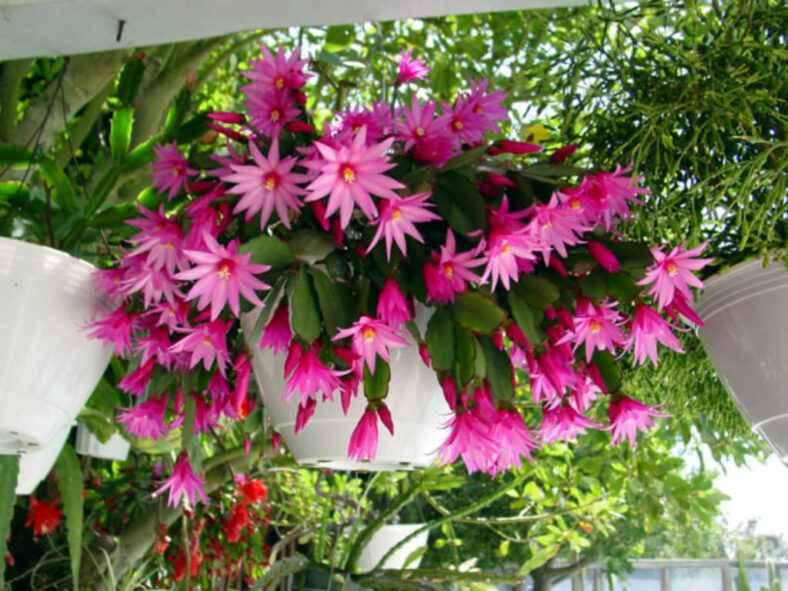
Rhipsalidopsis × graeseri, also known as Hatiora × graeseri or Schlumbergera × graeseri, is a freely branching shrub with pendent stems that consist of flattened, mid-green segments with scalloped margins. The stem segments can grow up to 3.2 inches (8 cm) long and 1.2 inches (3 cm) wide.
Rhipsalidopsis gaertneri has been artificially crossed with Rhipsalidopsis rosea to create a hybrid that produces flowers in various colors, including red, pink, and white. The flowers have elliptical tepals and can reach a diameter of 2.8 inches (7 cm).
Origin
Rhipsalidopsis × graeseri is a hybrid created from a cross between Rhipsalidopsis gaertneri and Rhipsalidopsis rosea. Alfred Gräser first crossed Rhipsalidopsis gaertneri and Rhipsalidopsis rosea in 1932, resulting in several hybrids collectively named Rhipsalidopsis × graeseri.
How to Grow and Care for Rhipsalidopsis × graeseri
Hardiness: USDA hardiness zones 10b to 11b: from 35°F (1.7°C) to 50°F (10°C).
Hatiora grows wild in the tropical rainforests of South-Eastern Brazil, as far south as Paraná, along the border with Paraguay. Although they grow primarily on tree trunks, you can sometimes find them on rocky ground. In the wild, Hatiora bloom in spring and will sometimes flower twice in one year.
These cacti thrive best in indirect light with morning and evening sun exposure. They prefer well-draining soil. Cactus or epiphytic compost works well. Hatiora can be easily propagated through cuttings that root immediately in soil. It likes long nights of about 14 hours. Cover the plant with a paper bag to shut out sunlight. Do not reposition the plant once flower buds appear, as these could fall off during movement. It needs a month's rest after flowering, so water sparingly during this period.
Learn more at How to Grow and Care for Hatiora.
Links
- Back to genus Rhipsalidopsis
- Succupedia: Browse succulents by Scientific Name, Common Name, Genus, Family, USDA Hardiness Zone, Origin, or cacti by Genus
Photo Gallery
Click on a photo to see a larger version.


