Scientific Name
Graptopetalum pentandrum Moran
Common Name(s)
Five-stamened Graptopetalum
Scientific Classification
Family: Crassulaceae
Subfamily: Sedoideae
Tribe: Sedeae
Subtribe: Sedinae
Genus: Graptopetalum
Etymology
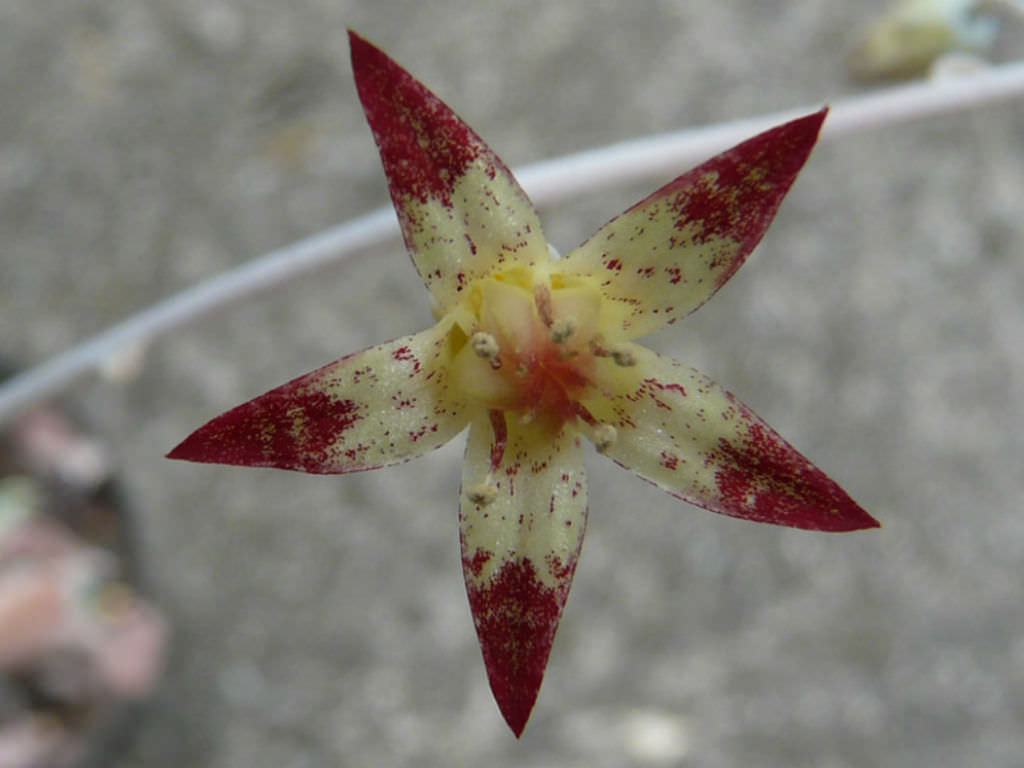
The specific epithet "pentandrum" (pronounced "pen-TAN-drum") means "five-stamened; having five stamens" and refers to the flowers having only five stamens in clear contrast to the ten stamens of the other species of the genus Graptopetalum.
Origin
This species is native to Mexico. It grows on shady rock cliffs in Michoacán at 3,940 feet (1,200 m) above sea level. Graptopetalum pentandrum was described by Reid Moran in 1971 from material obtained by Myron Kimnach and Fred Boutin, purchased in January 1970 at a nursery in Guadalajara, Jalisco, from unknown provenance. In May 1973, Alfred B. Lau found the first wild population at El Salto, a waterfall 4 km north of Aguililla in Michoacan.
Description
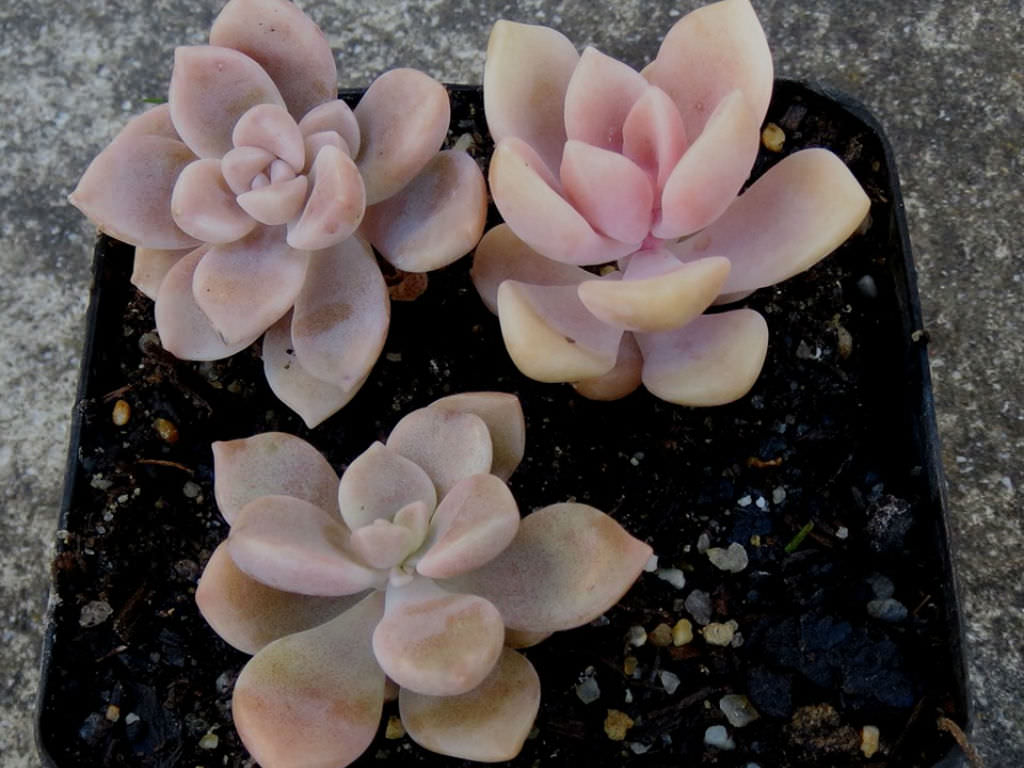
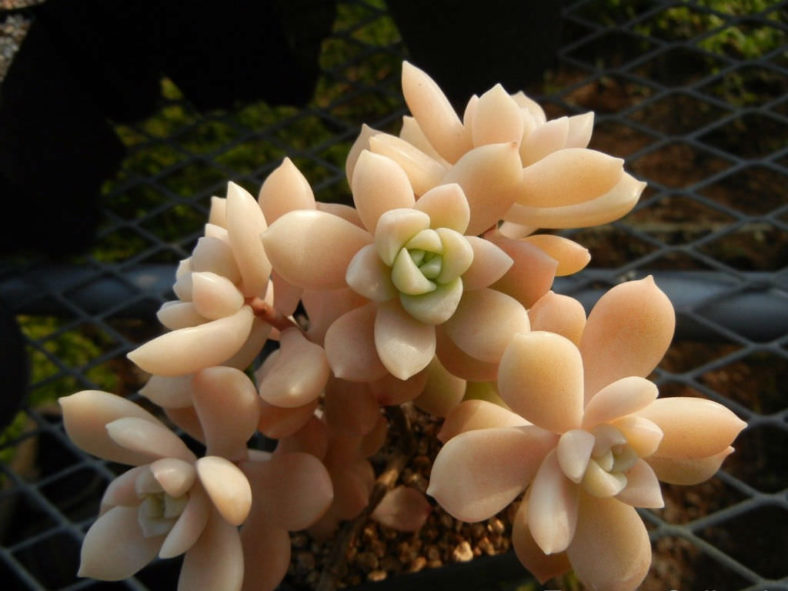
Graptopetalum pentandrum is a succulent shrublet that forms rosettes of fleshy, pointed leaves at the ends of dull green, strongly woody stems that branch mainly from the base. The rosettes can reach a diameter of 3.2 inches (8 cm). The stems are erect at first, later slightly decumbent, and can grow up to 6 inches (15 cm) long and 0.25 inches (0.6 cm) in diameter. The leaves are bluish-green, becoming yellowish-grey, with a predominantly lavender hue. They can measure up to 2.2 inches (5.5 cm) long and 0.8 inches (2 cm) wide.
The flowers are star-shaped, 5-merous, with yellowish-white petals, basally marked with dark red, and the upper half is almost entirely dark red. They appear in thyrses with 3 to 4 slender, spreading, simple or scorpioid branches with 7 to 10 flowers each from late winter to early spring.
How to Grow and Care
Hardiness: USDA hardiness zones 9b to 11b: from 25°F (-3.9°C) to 50°F (10°C).
The rules for Graptopetalum care are similar to those for most succulents. All require lots of sunlight to look their best. They require gritty, porous soil with excellent drainage. Water regularly during the summer, allowing the soil to dry out between waterings. Minimal water is required over winter. Overwatering is a cause of root rots, and the plant can be subject to several pest infestations. Fertilize once during the growing season with a balanced fertilizer diluted to 1/4 strength.
Graptopetalums are generally easily propagated by seeds, leaf cuttings, or offsets. Any rosette that breaks off can root and start a new plant. Even a leaf that drops off will quickly root below the parent plant and produce a new rosette. The new plant feeds off the leaf until it shrivels and falls off. By then, the new little plant had rooted and sprouted new leaves.
Learn more at How to Grow and Care for Graptopetalum.
Links
- Back to genus Graptopetalum
- Succupedia: Browse succulents by Scientific Name, Common Name, Genus, Family, USDA Hardiness Zone, Origin, or cacti by Genus
Photo Gallery
Click on a photo to see a larger version.