Scientific Name
Graptopetalum macdougallii Alexander
Scientific Classification
Family: Crassulaceae
Subfamily: Sedoideae
Tribe: Sedeae
Subtribe: Sedinae
Genus: Graptopetalum
Etymology
The specific epithet "macdougallii" (pronounced "mak-doo-GALL-ee-eye") honors Thomas Baillie MacDougall (1895-1973), a Scottish horticulturist, botanist, and anthropologist with a passion for nature.
Origin
Graptopetalum macdougallii is native to Mexico. It occurs in Oaxaca on somewhat shady rocks, rarely epiphytic at elevations between 3,940 and 6,890 feet (1,200 to 2,100 m).
Description
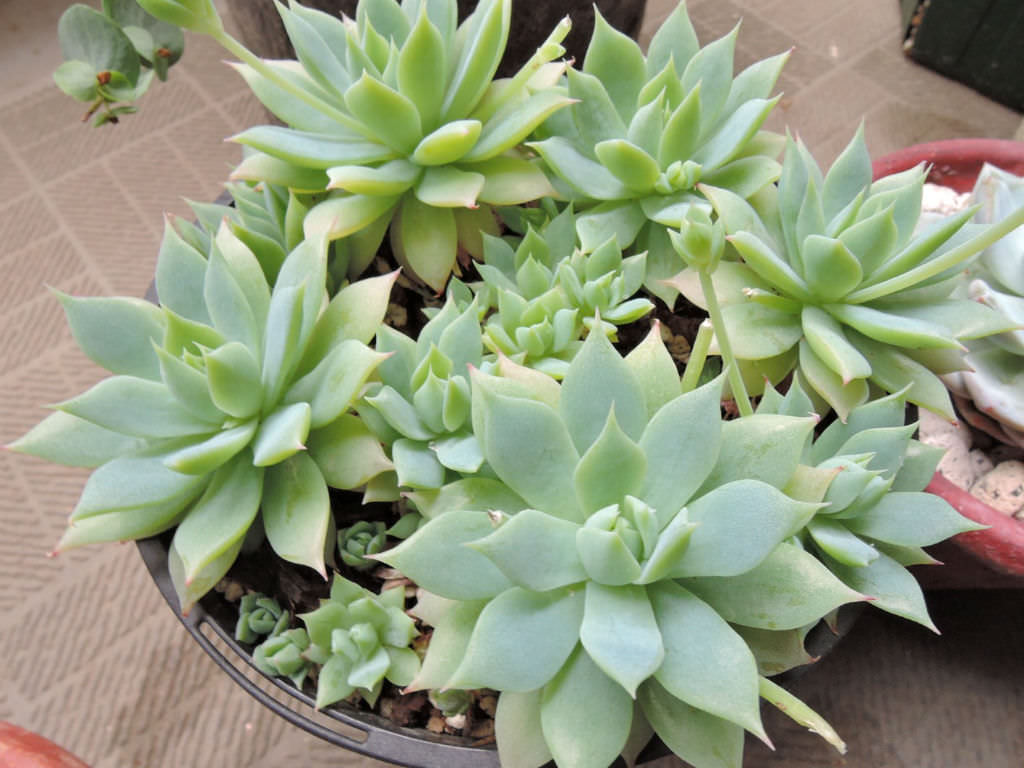
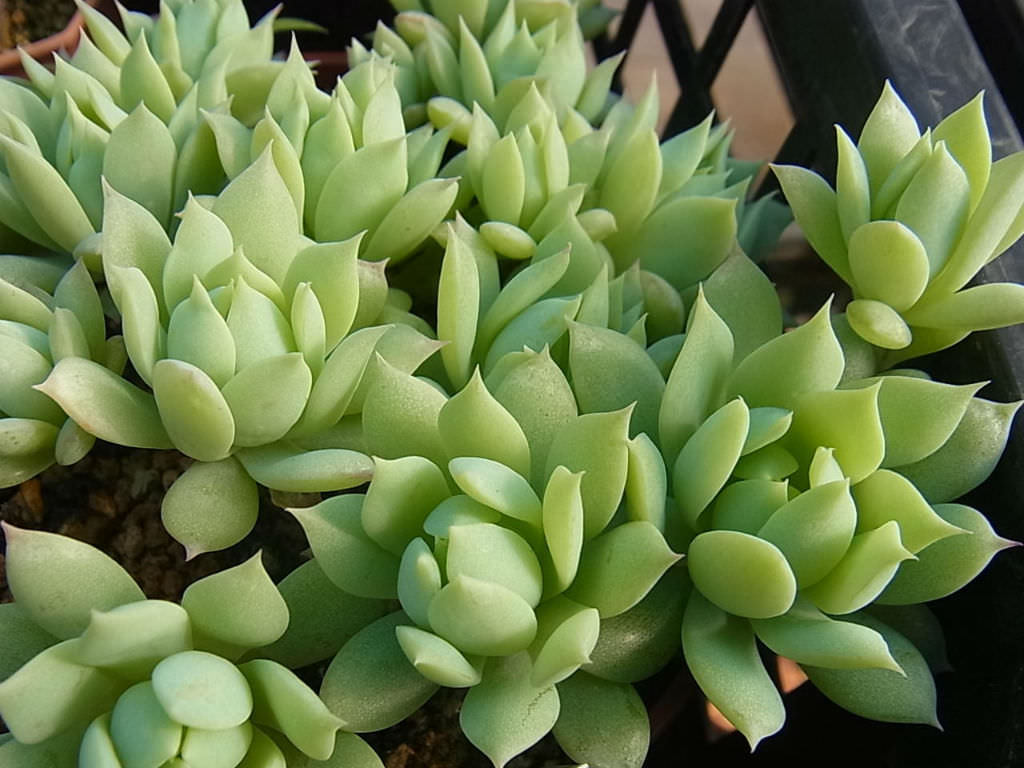
Graptopetalum macdougallii is an attractive, more or less mat-forming succulent with bright bluish to greenish leaves arranged in rosettes. The rosettes can grow up to 3 inches (7.5 cm) in diameter and produce offsets on long stolons. The leaves are tongue-shaped, sharply pointed at the apex, and can measure up to 1.4 inches (3.5 cm) long and 0.6 inches (1.5 cm) wide. They are spreading during the growth season and connivent during the dormancy.
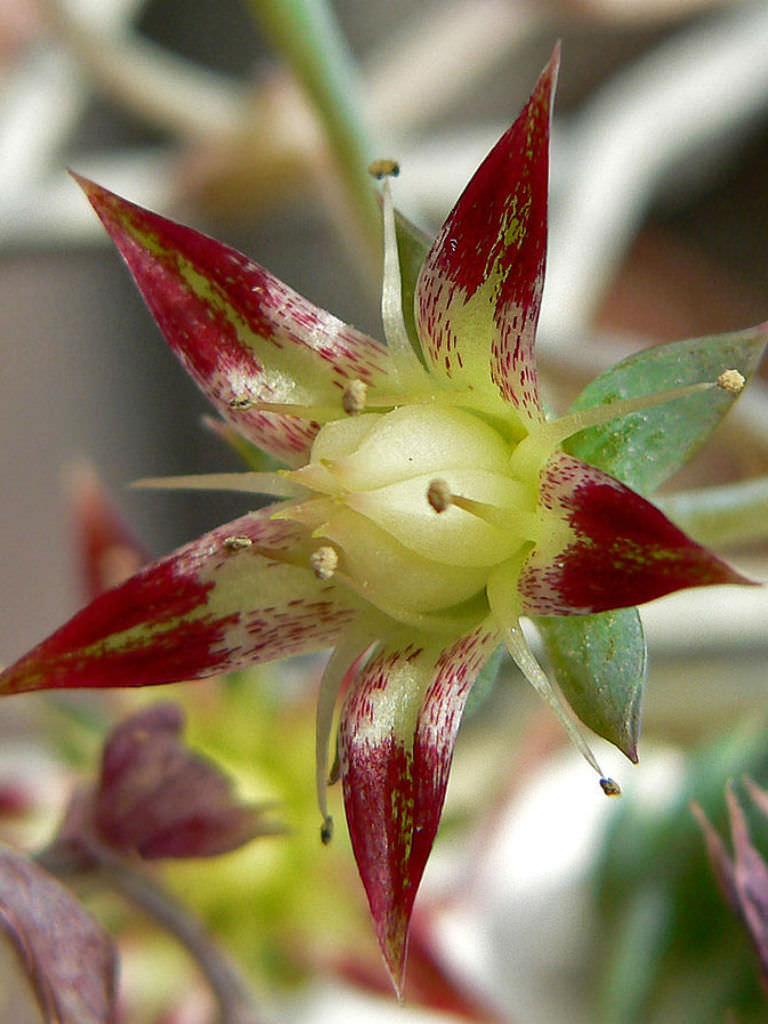
The flowers are star-shaped, 5-merous, and appear in late winter and early spring. They can reach a diameter of up to 0.8 inches (2 cm). The petals are whitish-yellow-green, with scattered brown blotches and stripes at the base, and almost solid brown towards the tips.
How to Grow and Care for Graptopetalum macdougallii
Hardiness: USDA hardiness zones 9a to 11b: from 20°F (-6.7°C) to 50°F (10°C).
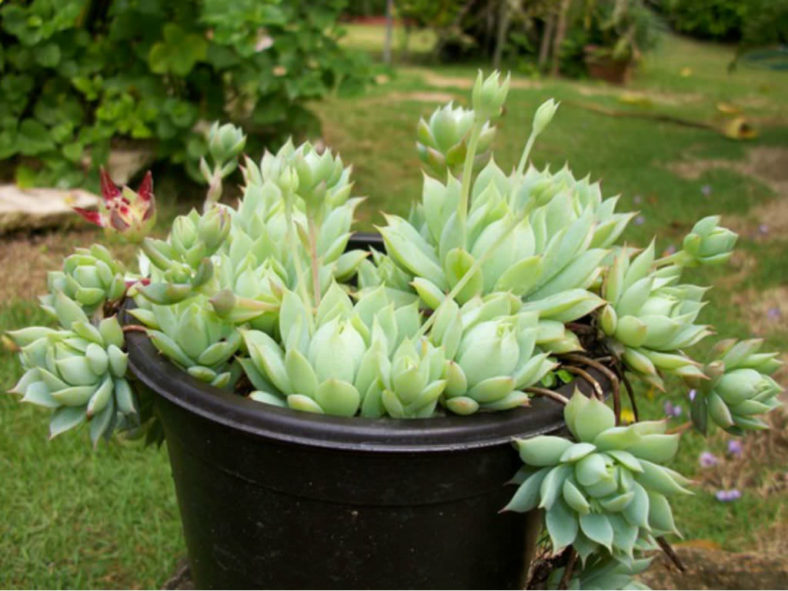
When planting your Ghost Plant in a container, choose a well-drained potting mix and a container with drainage holes.
Try mixing Ghost Plant with other succulents for an interesting yet low-maintenance planting. Or you can incorporate your Ghost Plant into a rock garden. You can create a rock garden by piling large rocks, such as limestone, as the base and filling in the gaps with smaller stones, gravel, and soil pockets for planting.
Ghost Plant thrives in sunlight, so choose a location to receive full- or half-day sun. When grown as a houseplant, keep it near a bright window.
Some prefer to keep their Ghost Plant trimmed to create a fuller shape. For a different look, you can allow it to get a little "leggy." This allows the twisting stems to climb out of the pot, cascading down gently. Be sure to let the soil almost completely dry between waterings.
Learn more at How to Grow and Care for Graptopetalum.
Links
- Back to genus Graptopetalum
- Succupedia: Browse succulents by Scientific Name, Common Name, Genus, Family, USDA Hardiness Zone, Origin, or cacti by Genus
Photo Gallery
Click on a photo to see a larger version.