Scientific Name
Boucerosia frerei (G.D.Rowley) Meve & Liede
Synonym(s)
Ceropegia frerei, Caralluma frerea, Caralluma frerei, Desmidorchis dalzellii, Frerea indica
Common Name(s)
Indian Frerea
Scientific Classification
Family: Apocynaceae
Subfamily: Asclepiadoideae
Tribe: Ceropegieae
Subtribe: Stapeliinae
Genus: Boucerosia
Etymology
The specific epithet "frerei" (pronounced "FRER-ee-eye") honors Henry Bartle Frere (1815–1884), a British colonial administrator who served as the Governor of Bombay from 1862 to 1867.
Origin of Boucerosia frerei
The native range of Boucerosia frerei is restricted to only six areas in the state of Maharashtra, India. It occurs on rock crevices and exposed hill slopes at elevations between 2,800 and 4,600 feet (850 to 1,400 m).
Description of Boucerosia frerei
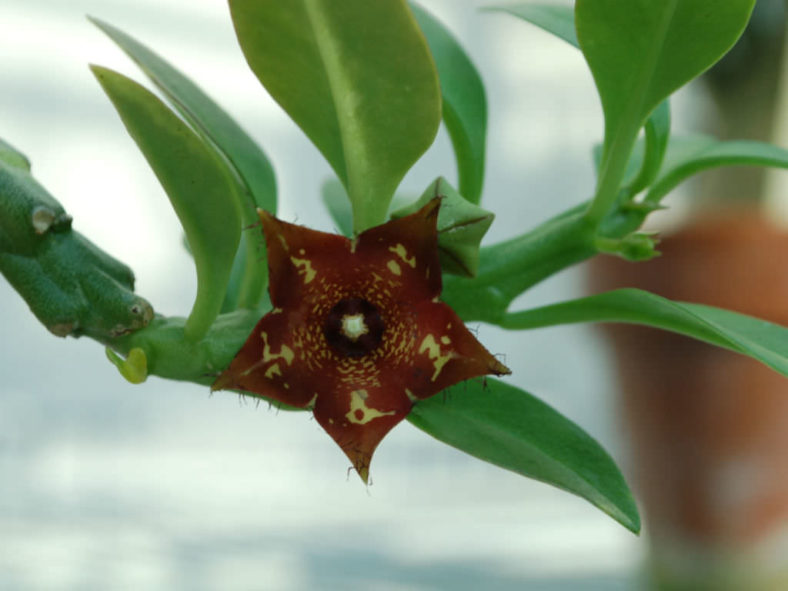
Boucerosia frerei, also known as Frerea indica or Ceropegia frerei, is a succulent plant with trailing or pendulous stems and large, oblong leaves, which are unusual compared to its close relatives. The thick, fleshy stems are pale green with scars of fallen leaves. They are branched, cylindrical to somewhat 4-angled with slightly swollen nodes, and can grow up to 20 inches (50 cm) long. The opposite leaves are fleshy and shiny green, measuring up to 2 inches (5 cm) long and 1 inch (2.5 cm) wide, tapering to a petiole up to 0.4 inches (1 cm) long. In the plant's native habitat, the leaves grow during the monsoon season, and during dry seasons, the plant drops the leaves to conserve moisture.
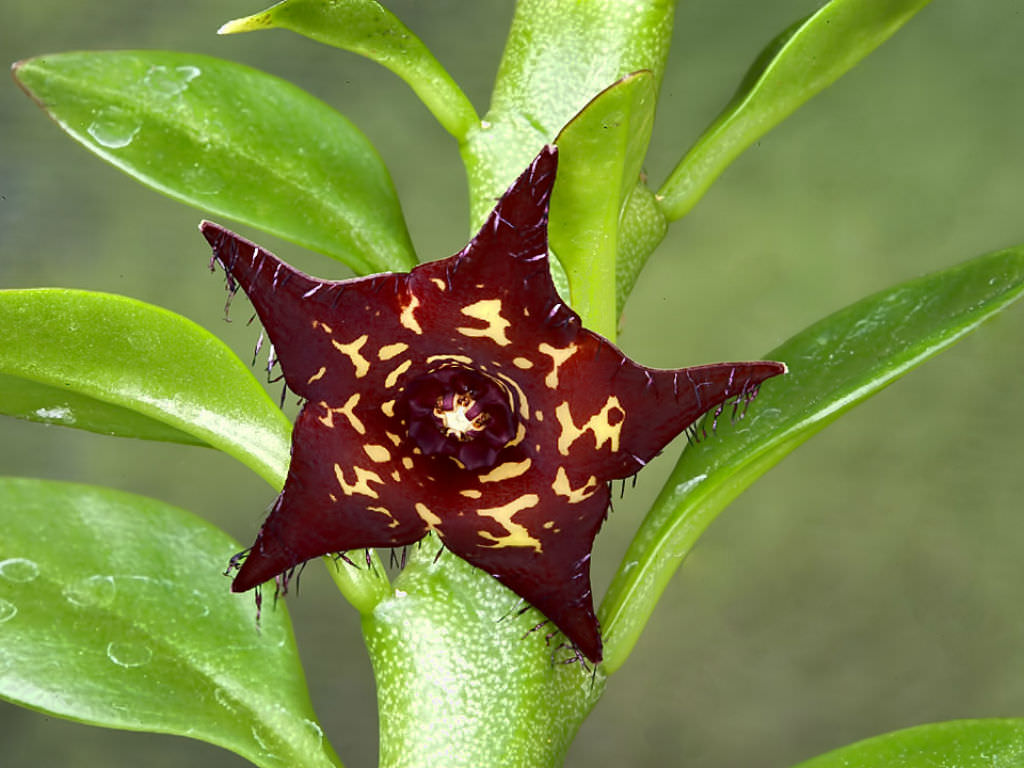
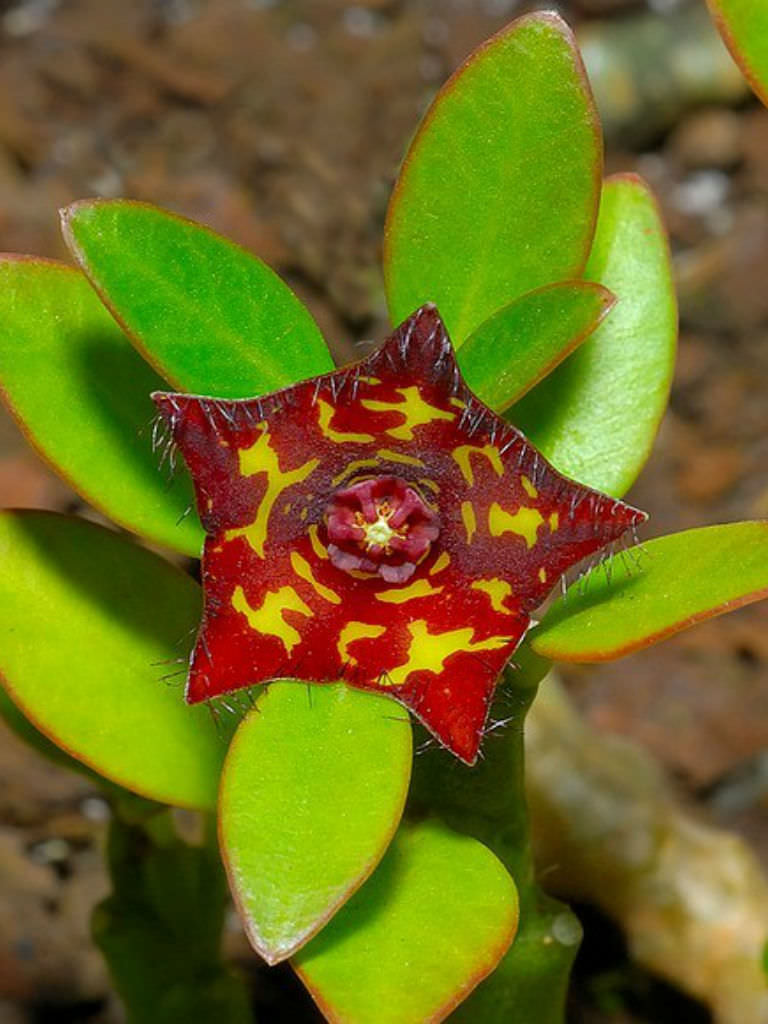
The star-shaped flowers are crimson to cherry-red with yellow markings and appear solitary or in pairs in summer.
How to Grow and Care for Boucerosia frerei
Hardiness: USDA hardiness zones 10b to 11b: from 35°F (1.7°C) to 50°F (10°C).
Stapeliads are relatively easy to grow. However, they should be treated as outdoor plants as they will easily rot indoors and cannot flower without exposure to outdoor temperature fluctuations. They should be grown under cover so that watering can be controlled. Stapeliads require a reasonable amount of sunlight to promote flowering and maintain a well-shaped plant. Very shady positions will produce very poor flowering.
These plants come from climates where they survive extremely high summer temperatures, so most growth occurs in spring and fall, with flowering in fall as temperatures cool. In the growing season, water in moderation, ensuring the soil is fairly dry out between waterings. Do not water between late fall and early spring.
The easiest and best way to propagate Stapeliads is by taking stem cuttings, which can be taken virtually year-round. They can also be propagated by seeds.
Learn more in "How to Grow and Care for Stapeliads."
Links
- Back to genus Boucerosia
- Succupedia: Browse succulents by Scientific Name, Common Name, Genus, Family, USDA Hardiness Zone, Origin, or cacti by Genus
Photo Gallery
Click on a photo to see a larger version.