Scientific Name
Euphorbia roseana (Marn.-Lap. ex Demoly) J.-P.Castillon & J.-B.Castillon
Synonym(s)
Euphorbia milii var. roseana
Common Name(s)
Crown of Thorns
Scientific Classification
Family: Euphorbiaceae
Subfamily: Euphorbioideae
Tribe: Euphorbieae
Subtribe: Euphorbiinae
Genus: Euphorbia
Etymology
The specific epithet "roseana" (pronounced "roh-seh-AH-nah") means "rosy; rose-colored" and refers to the color of the bracts of this species.
Origin
Euphorbia roseana is native to Madagascar. It is found in the Zombitsy forest near Sakaraha.
Description
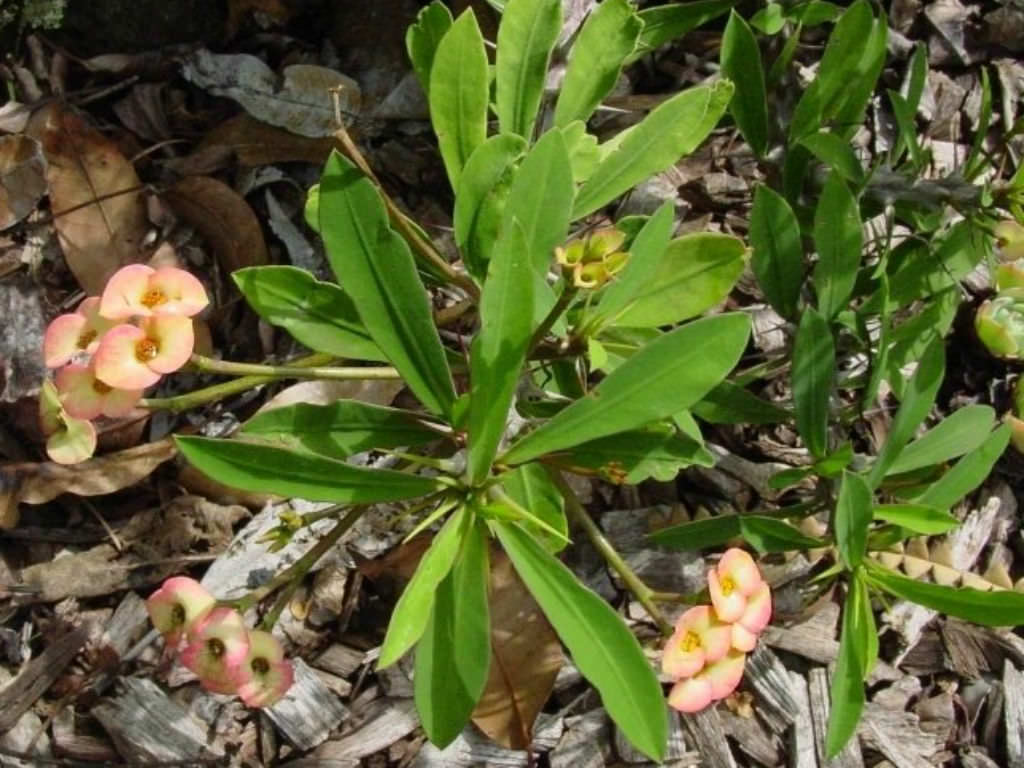
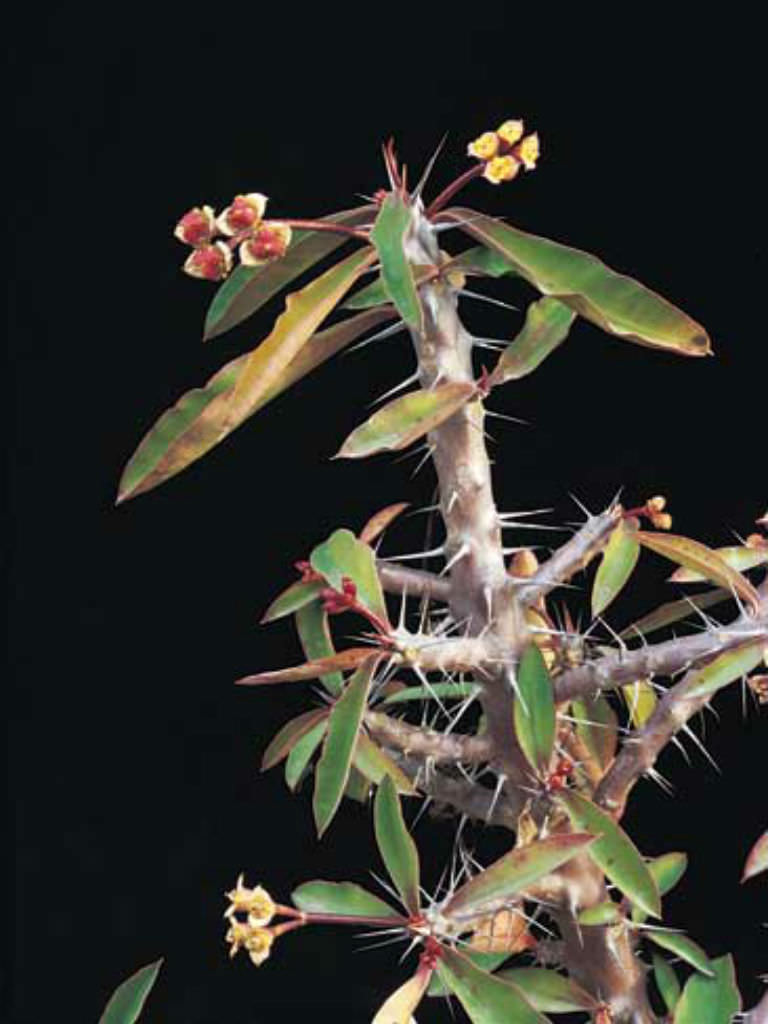
Euphorbia roseana, formerly known as Euphorbia milii var. roseana, is a deciduous succulent shrub with upright, spiny branches and bright green, inversely lance-shaped leaves found mainly on the new growth. It can grow up to 3 feet (90 cm) tall. The leaves can measure up to 3.6 inches (9 cm) long and 1 inch (2.5 cm) wide.
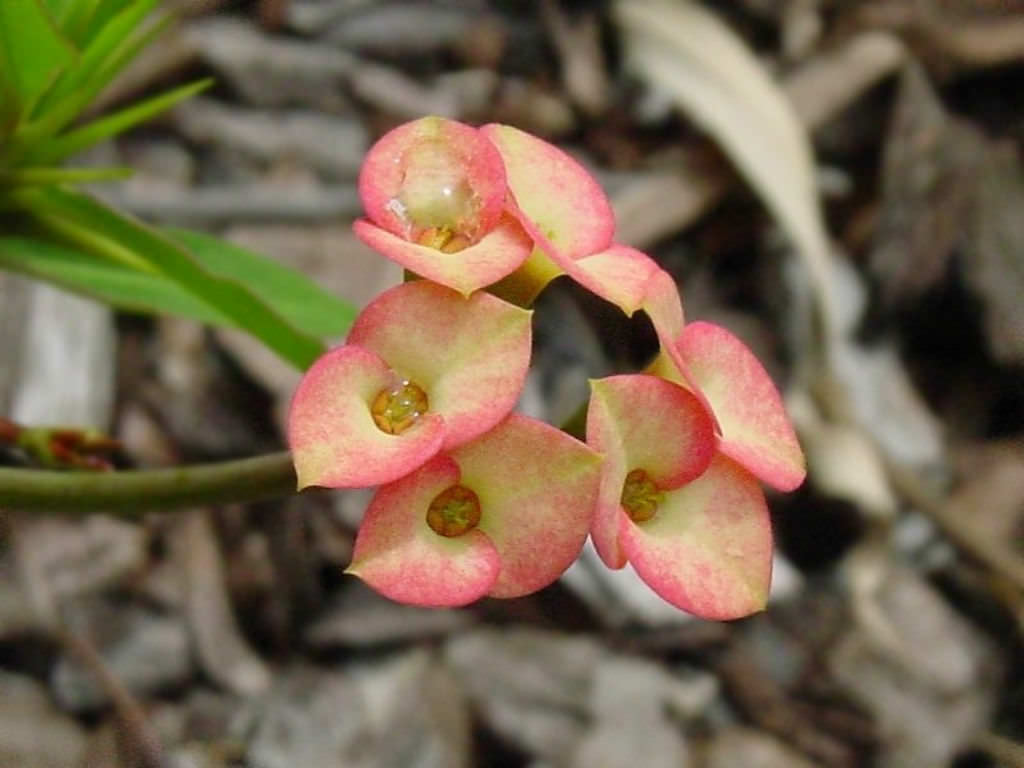
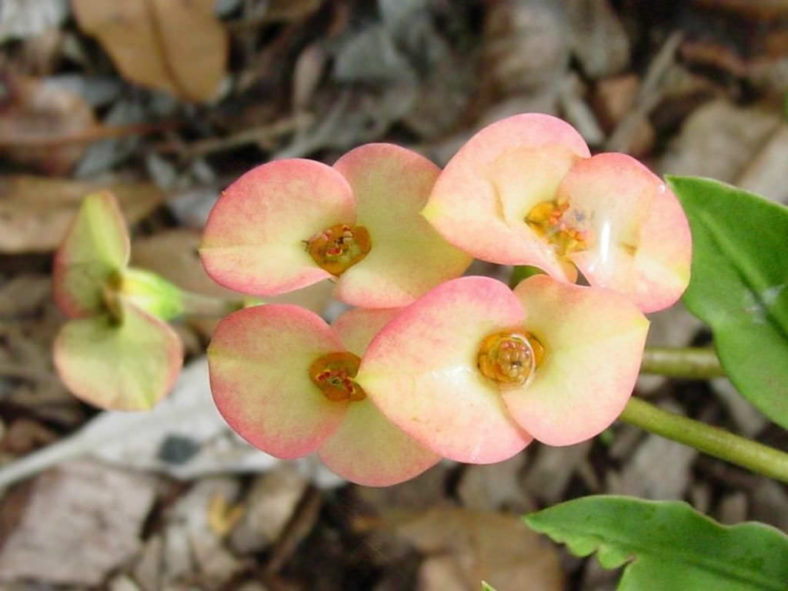
This species is distinguished from Euphorbia milii by its creamy-yellow to pink-flushed, petal-like bracts. The flowers appear year-round, but primarily in spring and summer.
How to Grow and Care for Euphorbia roseana
Hardiness: USDA hardiness zones 10a to 11b: from 30°F (-1.1°C) to 50°F (10°C).
Crown of Thorns does well in even the poorest soil, provided it is well-drained and does not remain moist. It prefers full sun but will tolerate some shade for part of the day. A tough plant, Crown of Thorns, is a good choice for a seaside location with salt spray or high-salt soil. If you grow your Crown of Thorns as a houseplant, place it in an uncovered window to ensure it receives maximum sunlight. Although drought-tolerant, you can encourage your plant to retain its leaves and bloom more frequently by watering it regularly and giving it an occasional dose of fertilizer. Check fertilizer labels and choose a basic, balanced formula without added micro-nutrients since the plant is sensitive to boron.
This plant benefits from some light pruning as it matures. Remove some older, leafless branches at the end of each growing season to stimulate new growth in spring. Clear away dead leaves and any dropped, matted flowers to allow the soil to dry well and reduce the likelihood of fungal disease. If you notice any brown stems or leaves on your plant, cut them back to healthy tissue to prevent rot from spreading. If you grow your plant indoors and wish to move it outside in warmer weather, keep it in partial shade for a week or two until it acclimates to bright sunlight.
Learn more at How to Grow and Care for Euphorbia.
Links
- Back to genus Euphorbia
- Succupedia: Browse succulents by Scientific Name, Common Name, Genus, Family, USDA Hardiness Zone, Origin, or cacti by Genus
Photo Gallery
Click on a photo to see a larger version.