Scientific Name
Euphorbia flanaganii f. cristata (informal name)
Accepted Scientific Name
Euphorbia flanaganii N. E. Br.
Common Name(s)
Green Coral
Scientific Classification
Family: Euphorbiaceae
Subfamily: Euphorbioideae
Tribe: Euphorbieae
Subtribe: Euphorbiinae
Genus: Euphorbia
Etymology
The specific epithet "flanaganii" (pronounced "flan-uh-GAN-ee-eye") honors Henry George Flanagan🡕 (1861–1919), a South African-born plant collector, traveler, botanist, and farmer.
The formal epithet "cristata" (pronounced "kris-TAY-tuh") means "crested" or "tufted" and refers to the crested (fasciated) growth of the plant.
Description
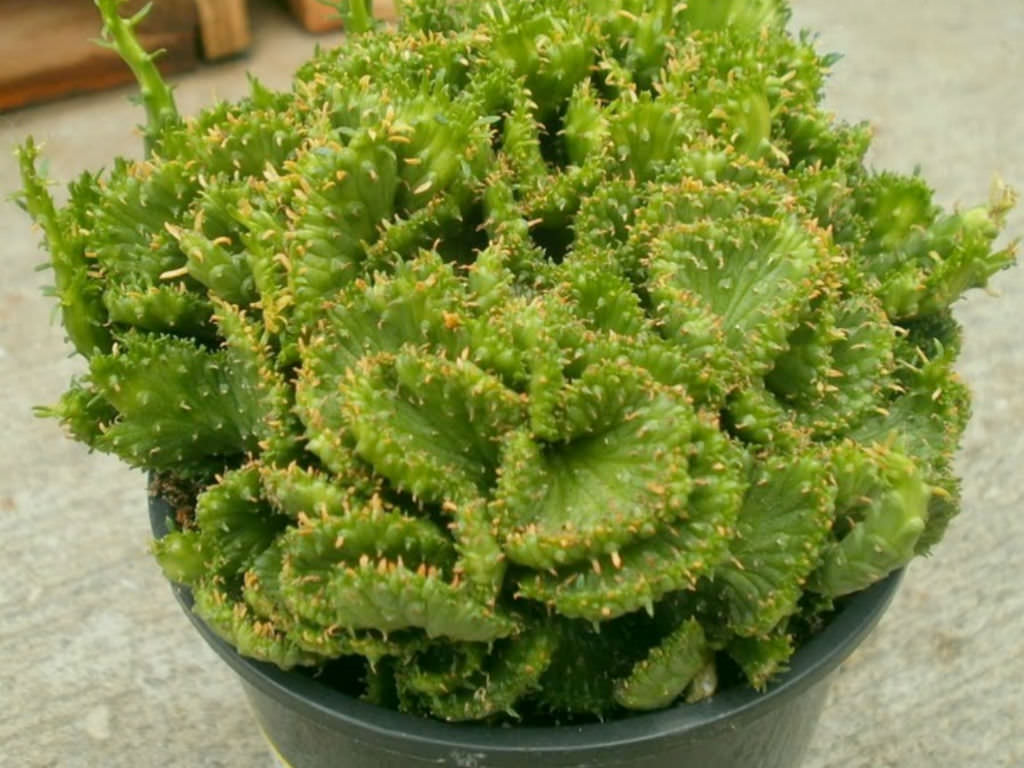
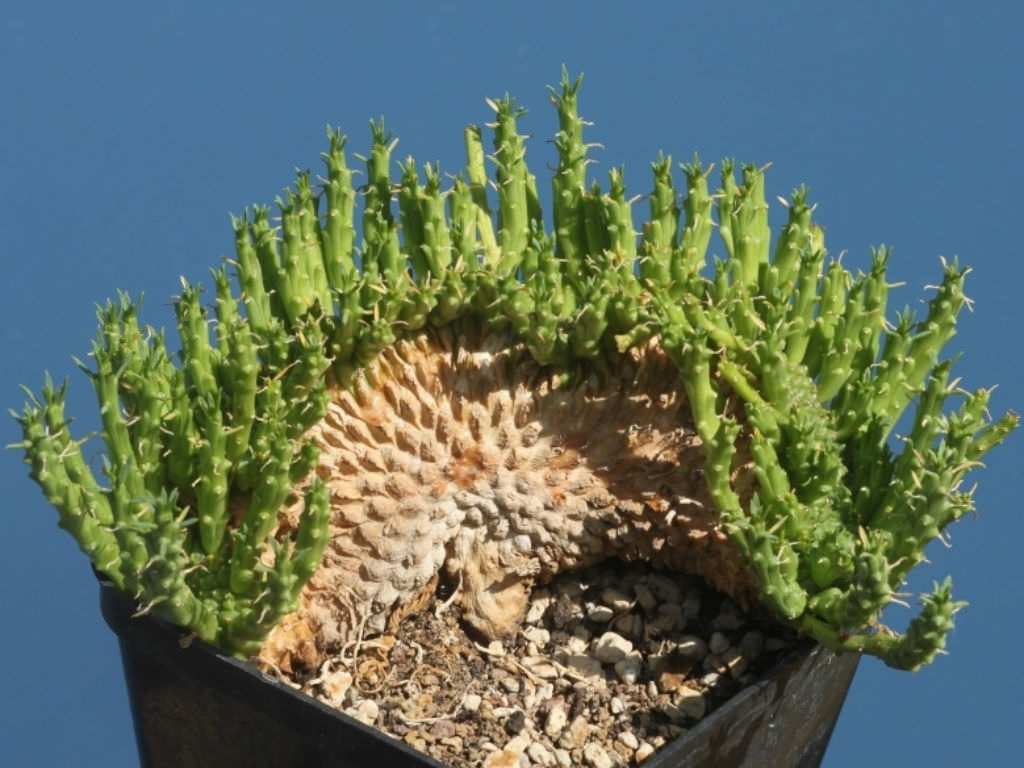
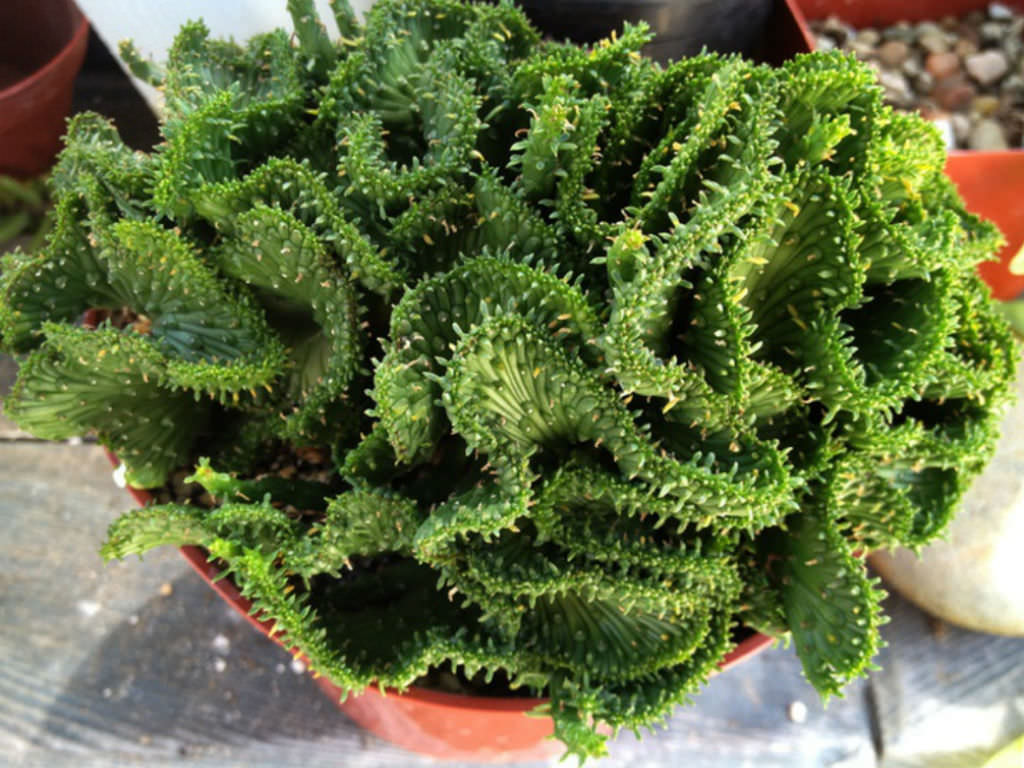
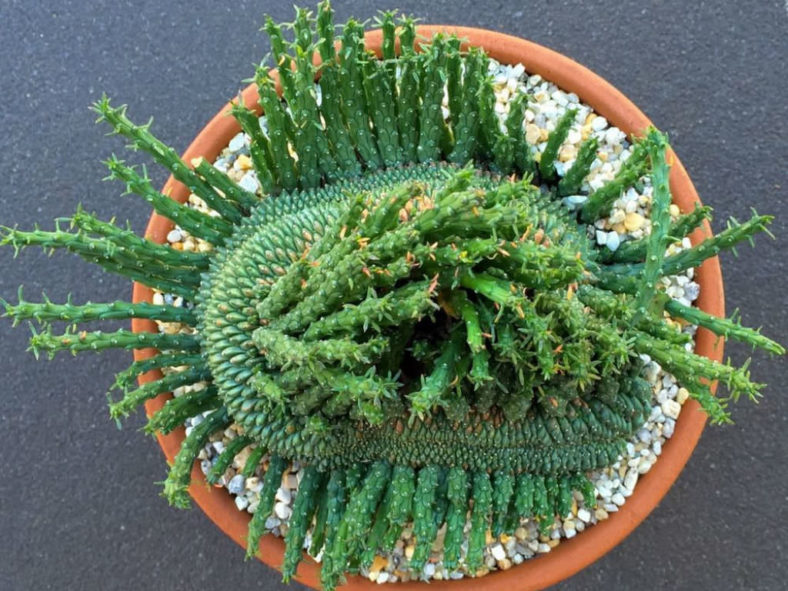
Euphorbia flanaganii f. cristata is a succulent plant that can have either a mutated caudex with normal cylindrical branches or mutated branches with a normal swollen, partially underground stem. It can grow up to 6 inches (15 cm) tall and 12 inches (30 cm) wide, forming a clump of fan-shaped branches that resemble a wavy, emerald green coral. The form with mutated branches is more common in cultivation.
Origin
Euphorbia flanaganii f. cristata is a crested form of Euphorbia flanaganii. Although typically selected in cultivation, crested specimens of Euphorbia flanaganii can occasionally be found in their natural habitat in central and northern Mexico.
How to Grow and Care for Euphorbia flanaganii f. cristata
Hardiness: USDA hardiness zones 9b to 11b: from 25°F (-3.9°C) to 50°F (10°C).
Unlike most succulents, Medusa's Head does not handle prolonged drought well. As a result, it may need weekly watering during the summer. Water whenever the soil is dry several inches below the surface. It warns of a water shortage by gradually curling its arms toward the center. Water deeply, but don't let it sit in wet soil, which can cause root rot.
It thrives in direct sun and needs at least 6 hours of it per day for good health and growth. On brighter subjects, Medusa's Head makes an exceptional container plant that can also be put into gardens, so long as it is protected from freezes.
Once it reaches a certain size, a mother plant will produce pups on the ends of older arms. The growth starts as a swelling at the end of an arm, and the caudex and arms rapidly grow. After a time, if they don't root on their own, the arm shrivels, allowing the pup to roll away, where it rapidly grows if given access to soil and water. If you're not careful, you can end up with a whole greenhouse full of them.
Learn more at How to Grow and Care for Euphorbia.
Links
- Back to genus Euphorbia
- Succupedia: Browse succulents by Scientific Name, Common Name, Genus, Family, USDA Hardiness Zone, Origin, or cacti by Genus
Photo Gallery
Click on a photo to see a larger version.