Scientific Name
Pelecyphora vivipara (Nutt.) D.Aquino & Dan.Sánchez
Synonym(s)
Cactus viviparus, Coryphantha vivipara, Echinocactus viviparus, Escobaria vivipara, Mammillaria radiosa var. vivipara, Mammillaria vivipara, Neomammillaria vivipara
Common Name(s)
Beehive Cactus, Pincushion Cactus, Pink Pincushion Cactus, Purple Ball Cactus, Spinystar, Spinystar Cactus, Viviparous Foxtail Cactus
Scientific Classification
Family: Cactaceae
Subfamily: Cactoideae
Tribe: Cacteae
Genus: Escobaria
Etymology
The specific epithet "vivipara" (pronounced "vy-VIP-ar-uh") means "viviparous; producing plantlets while still attached to the parent plant" and likely refers to this species' proliferating habit (producing offsets), as understood in early botanical usage. However, in the strict modern sense, it denotes vivipary (seeds germinating while still within the fleshy fruit of the parent plant).
Description
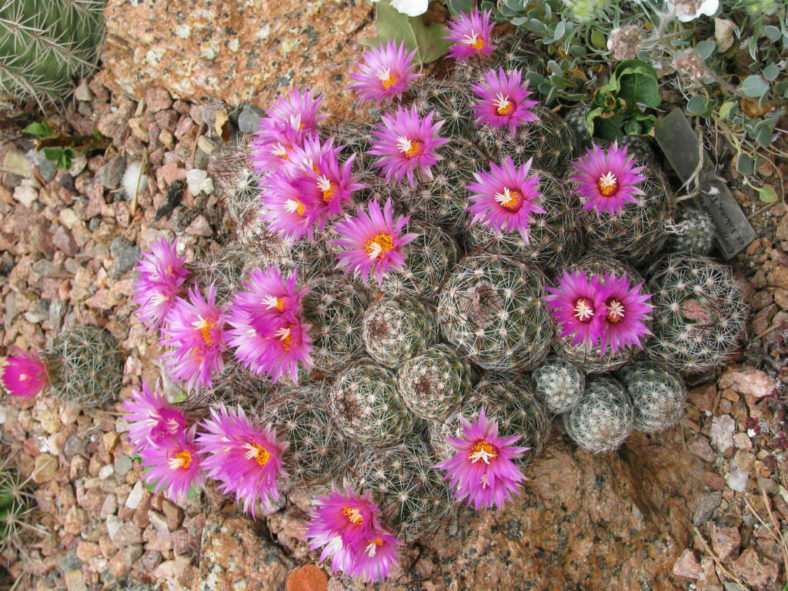
Pelecyphora vivipara, formerly known as Escobaria vivipara, is a small cactus with spherical to short, cylindrical stems with slightly grooved tubercles, each tipped with a moderately woolly areole from which the spines emerge. It can grow solitary or in clumps of up to 30 stems. Stems can reach up to 8 inches (20 cm) tall and 4.4 inches (11 cm) in diameter. Each areole bears 3 to 14 central and 10 to 40 radial spines. The central spines are red or basally white and can measure up to 1 inch (2.5 cm) long, while the radial spines are white and can grow up to 0.9 inches (2.2 cm).
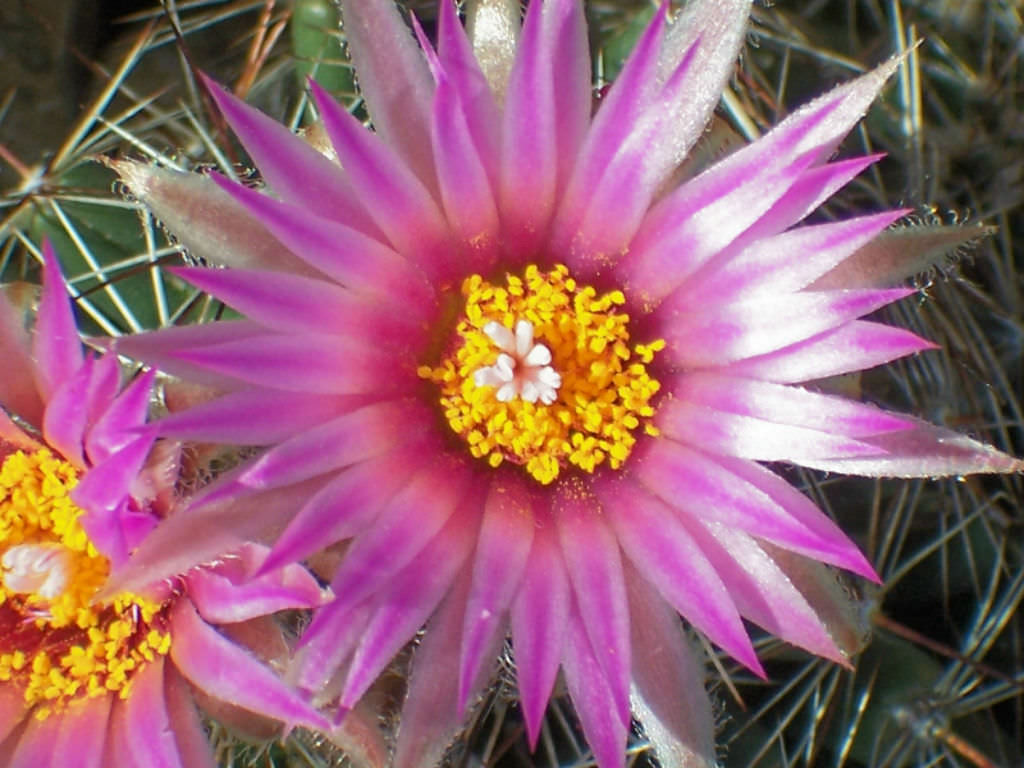
The flowers are pale rose-pink to reddish pink or magenta, sometimes with darker midstripes or shading to white or pale greenish. They are funnel-shaped, appear in the axils of tubercles near the top of the stems in summer, and can reach up to 2.2 inches (5.5 cm) long and 2.7 inches (6.7 cm) in diameter. The fruits are green, with exposed portions slowly turning dull brownish-red. They are ovoid to obovoid, and contain bright reddish-brown seeds, measuring up to 1.1 inches (2.8 cm) long and up to 0.8 inches (2 cm) in diameter.
Origin
The native range of Pelecyphora vivipara extends from northern Mexico to the Canadian prairies.
How to Grow and Care for Pelecyphora vivipara
Hardiness: USDA hardiness zones 4a to 10b: from -30°F (-34.4°C) to 40°F (4.4°C).
Escobarias are very susceptible to rot and therefore require well-drained soil without excess water or stagnation; they also suffer from high humidity, which should preferably remain very low (30-50%). Avoid watering during winter, when the plant is dormant; watering Escobaria in cold conditions will almost certainly kill the plant. The plants, whose growth is typically quite slow, perceive a significant temperature difference between night and day in the growing season. The average winter minimum temperature should generally not fall below 42°F to 46°F (6°C to 8°C), except in individual cases; adult plants can withstand very intense frosts, but only if the temperature rises again quickly.
Experienced growers know the difficulties of survival in this genus, which is certainly not one of the easiest to grow. Seed germination is lower than in other genera. Other propagation methods are preferable, such as offsets or cuttings.
See more at How to Grow and Care for Escobaria.
Links
- Back to genus Escobaria
- Succupedia: Browse succulents by Scientific Name, Common Name, Genus, Family, USDA Hardiness Zone, Origin, or cacti by Genus
Photo Gallery
Click on a photo to see a larger version.