Scientific Name
Echinopsis mamillosa Gürke
Synonym(s)
Lobivia mamillosa
Scientific Classification
Family: Cactaceae
Subfamily: Cactoideae
Tribe: Trichocereeae
Genus: Echinopsis
Etymology
The specific epithet "mamillosa" (pronounced "mam-il-LOH-suh") means "densely mammillate; bearing many nipple-like projections" and refers to the mammillate ribs on the stems of this species.
Description
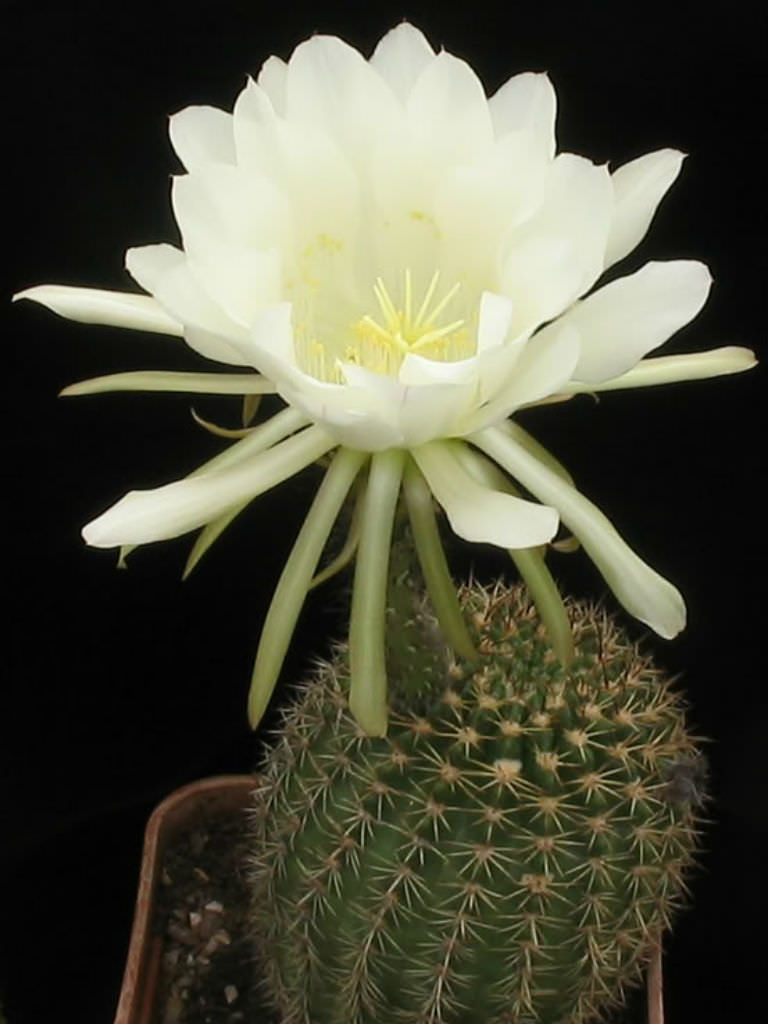
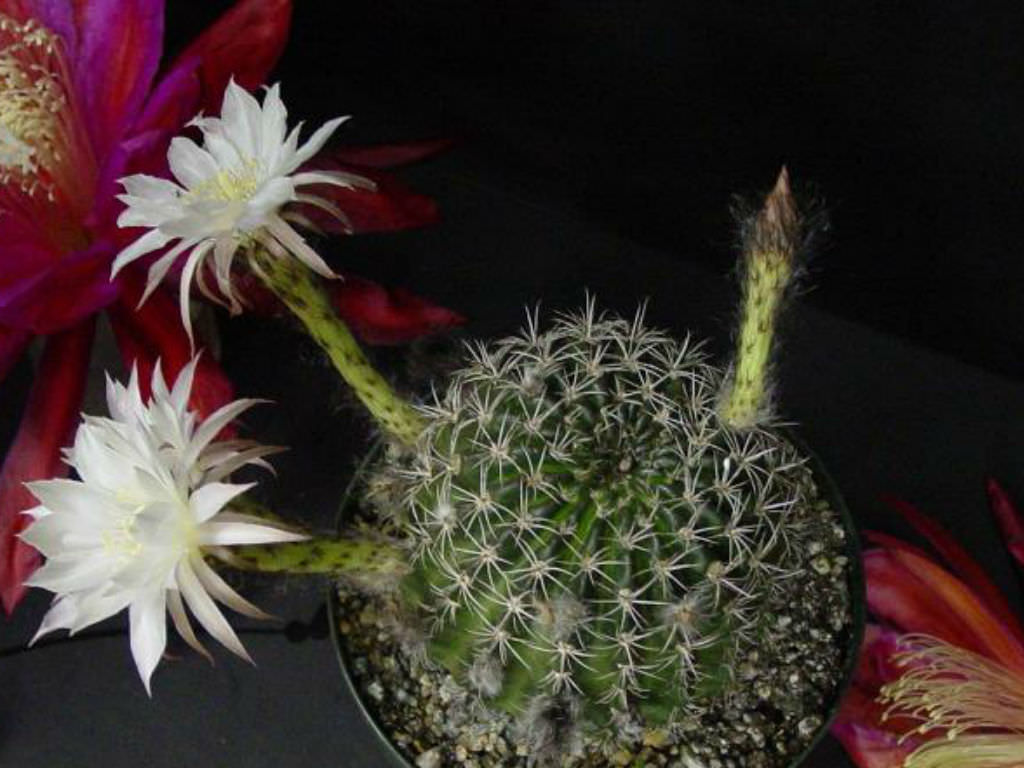
Echinopsis mamillosa, also known as Lobivia mamillosa, is a small cactus with a solitary, spherical stem that has 13 to 17 deep ribs divided into tubercles. The stem can grow up to 12 inches (30 cm) tall and 10 inches (25 cm) in diameter. Each tubercle has a rounded areole at its tip, which bears a cluster of 1 to 4 central and 8 to 12 radial spines, yellowish with brown tips. The areoles are spaces up to 0.5 inches (1.2 cm) apart.
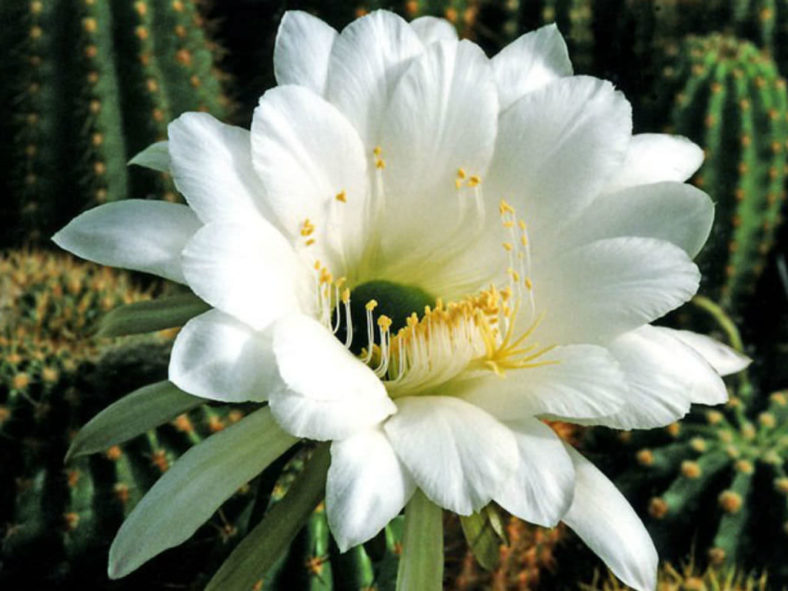
In summer, Lobivia mamillosa produces large flowers that can be white with rose tips, purple, or deep red. They open at night and last about 24 hours, reaching up to 7.2 inches (18 cm) long and 3.2 inches (8 cm) in diameter.
Origin
Echinopsis mamillosa is native to Argentina (Jujuy, Salta) and Bolivia (Chuquisaca, Tarija).
Forms of Echinopsis mamillosa
- Echinopsis mamillosa var. kermesina (not accepted as a separate variety and is treated as a synonym of Echinopsis mamillosa)
How to Grow and Care for Echinopsis mamillosa
Hardiness: USDA hardiness zone 8b to 11b: from 15°F (-9.4°C) to 50°F (10°C).
If you can grow cacti and succulents successfully, you can likely grow the Echinopsis species without too much trouble. Like many cacti, they prefer a drying period between waterings, even when slightly wilted. When you do water, water deeply. The plant will noticeably plump up. The cactus mustn't be exposed to prolonged dampness or standing water. Never let your cactus sit in a dish of water. Lastly, fertilize during the growing season for the best results.
Echinopsis can be easily rooted from offsets that tend to cluster around the base of the mother plant. Cut offsets close to the stem, as close as possible. When rooting cacti from cuttings, let the fresh cutting dry slightly on a paper towel, then cut the cactus as close to the stem as possible. After a few days to a few weeks, depending on the size of the cut surface, it should have dried out and formed a callous or a slightly rough opening. Once the callous has formed, place the cutting in a rooting mixture of fast-draining cacti soil.
See more at How to Grow and Care for Echinopsis.
Links
- Back to genus Echinopsis
- Succupedia: Browse succulents by Scientific Name, Common Name, Genus, Family, USDA Hardiness Zone, Origin, or cacti by Genus
Photo Gallery
Click on a photo to see a larger version.