Scientific Name
Echinopsis lageniformis f. monstruosa 'Clone A'
Accepted Scientific Name
Echinopsis lageniformis (C.F.Först.) Friedrich & G.D.Rowley
Synonym(s)
Echinopsis lageniformis f. monstruosa 'Long Joined Clone', Echinopsis lageniformis 'Penis Cactus', Trichocereus bridgesii f. monstruosus 'Clone A', Trichocereus bridgesii f. monstruosus 'Long Joined Clone'
Common Name(s)
Ornamental Penis Plant, Penis Cactus, Penis Plant, San Pedro Penis, The More Sensual of Cacti
Scientific Classification
Family: Cactaceae
Subfamily: Cactoideae
Tribe: Trichocereeae
Genus: Echinopsis
Origin
Echinopsis lageniformis f. monstruosa 'Clone A' is one of the two forms of Echinopsis lageniformis selected for its mutated growth.
Description
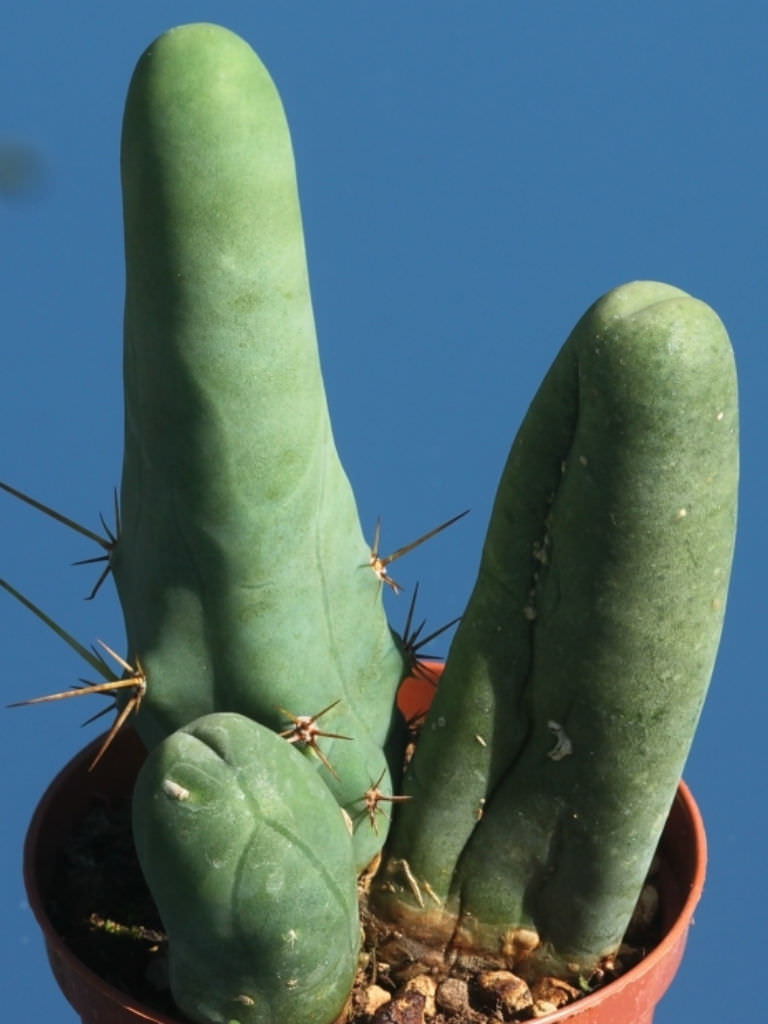
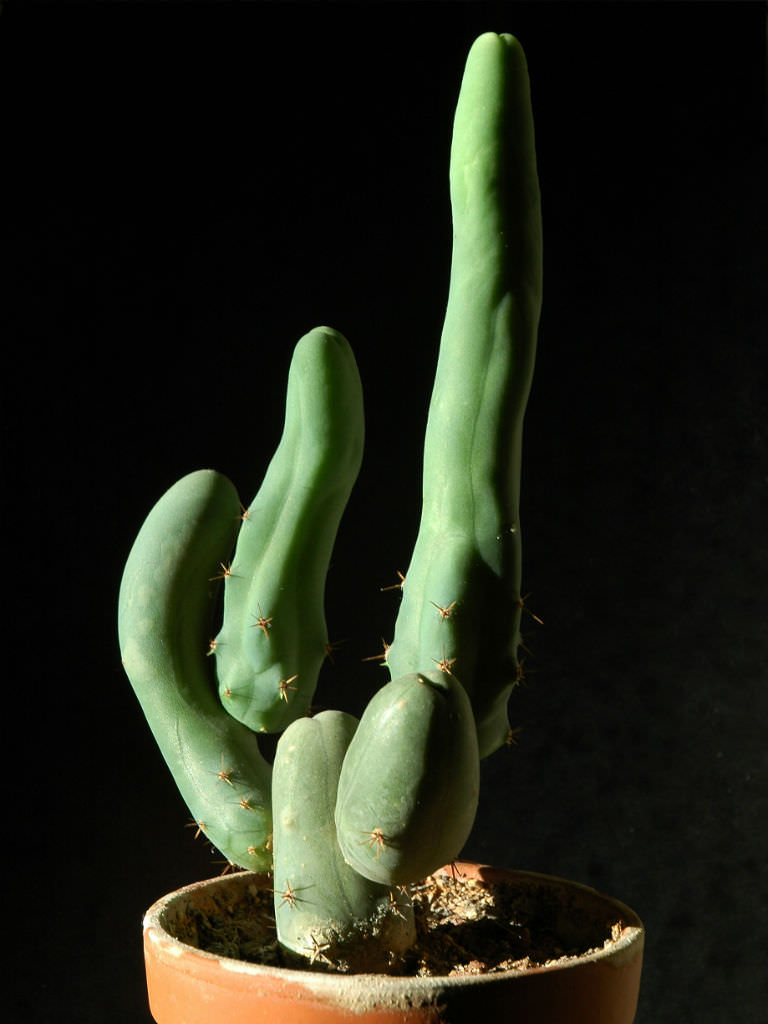
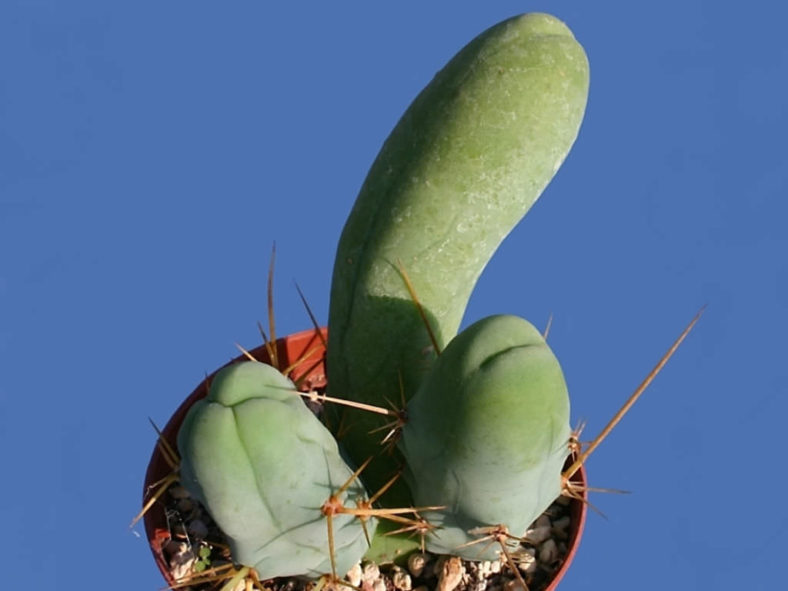
Echinopsis lageniformis f. monstruosa 'Clone A', also known as Trichocereus bridgesii f. monstruosus 'Clone A', is a highly sought-after among cactus collectors due to its unique phallic shape, resulting from a stable genetic mutation that alters its typical columnar growth of Echinopsis lageniformis. Although it grows slowly, it can reach a height of up to 2 feet (60 cm), and the short stem segments branch profusely, forming a low, spiny bush over time. The stem segments are light green and can grow up to 14 inches (35 cm) long, with a diameter of about 2 inches (5 cm). The lower part of the stem segments is spiny and tends to form ribs, while the upper part is smooth and spineless, resembling a penis, hence the common name.
This form is often confused with the smaller Echinopsis lageniformis f. monstruosa 'Clone B', and both are also often labeled as Echinopsis lageniformis 'Penis Cactus'.
How to Grow and Care for Echinopsis lageniformis f. monstruosa 'Clone A'
Hardiness: USDA hardiness zones 10a to 11b: from 30°F (-1.1°C) to 50°F (10°C).
If you can grow cacti and succulents successfully, you can likely grow the Echinopsis species without much trouble. Like many cacti, they prefer a drying period between waterings, even when slightly wilted. When you water, however, you should water deeply. The plant will noticeably plump up. The cactus mustn't be exposed to prolonged dampness and standing water. Never let your cactus sit in a dish of water. Lastly, ensure to fertilize during the growing season for the best results.
Echinopsis can be easily rooted from offsets, which cluster around the mother plant's base. Cut offsets close to the stem at the narrowest possible place. When rooting cacti from cuttings, let the fresh cuttings dry out slightly on a paper towel, and cut the cacti at the narrowest point possible. After a few days to a few weeks, depending on the size of the cut surface, it should have dried out and formed a callous or slightly rough opening. Once the callous has formed, place the cutting in a rooting mixture of fast-draining cacti soil.
See more at How to Grow and Care for Echinopsis.
Links
- Back to genus Echinopsis
- Succupedia: Browse succulents by Scientific Name, Common Name, Genus, Family, USDA Hardiness Zone, Origin, or cacti by Genus
Photo Gallery
Click on a photo to see a larger version.