Scientific Name
Echinoagave stricta (Salm-Dyck) A.Vázquez, Rosales & García-Mor.
Synonym(s)
Agave striata f. stricta, Agave striata subsp. stricta, Agave striata var. stricta, Agave stricta, Bonapartea stricta
Common Name(s)
Globe Agave, Hedgehog Agave, Hedgehog Century Plant, Needle Agave, Needle-leaf Agave
Scientific Classification
Family: Asparagaceae
Subfamily: Agavoideae
Genus: Agave
Etymology
The specific epithet "stricta" (pronounced "STRIK-tuh") means "upright; rigid; tightly packed" and likely refers to the plant's stiff, rigid, and tightly packed rosette of narrow leaves, giving it a compact, upright appearance.
Description
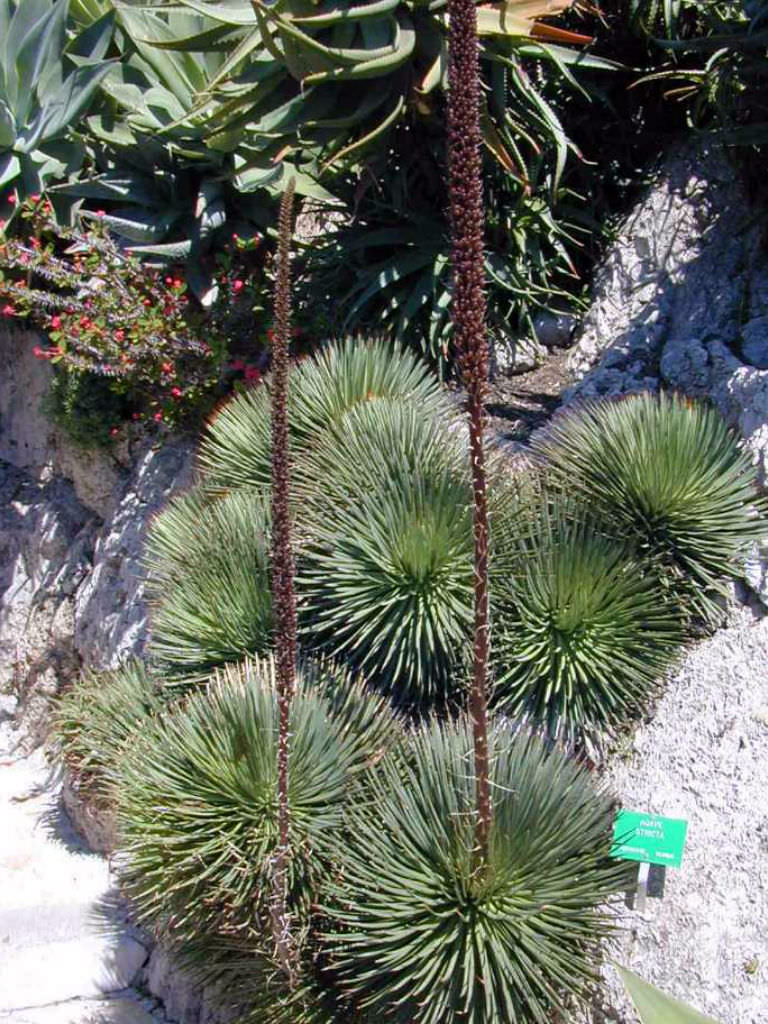
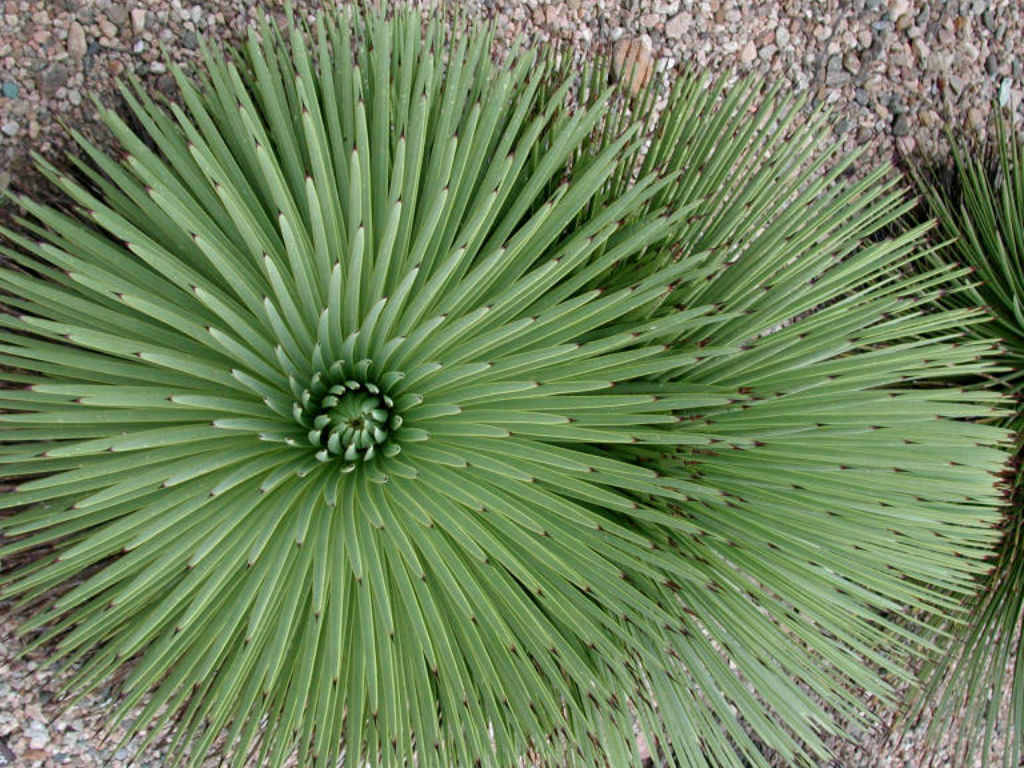
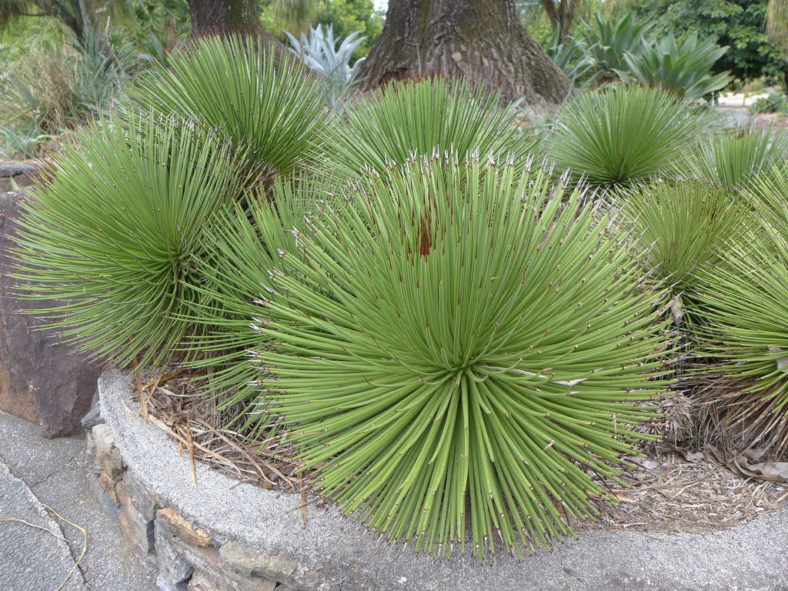
Echinoagave stricta, formerly known as Agave stricta, is a slow-growing succulent that forms dense, spherical rosettes of narrow, dark green leaves with tiny teeth along the margins and a sharp terminal spine. The rosettes can reach a diameter of 20 inches (50 cm) and produce numerous offsets, resulting in a sizable colony over time. The leaves are square to nearly round in cross-section. The marginal teeth are rougher than sharp to the touch.
The mature rosettes, which are 8 to 10 years old, usually produce an erect raceme of small, green-to-reddish-brown or purple flowers in the summer. The raceme can grow up to 7 feet (2.1 m) tall. Most Agaves are monocarpic, but Agave stricta is polycarpic, meaning the rosette can flower several times.
Origin
Echinoagave stricta is native to Mexico. It occurs in the Tehuacán Valley in the states of Puebla and Oaxaca.
Cultivars of Agave stricta
How to Grow and Care for Echinoagave stricta
Hardiness: USDA hardiness zones 9a to 11b: from 20°F (-6.7°C) to 50°F (10°C).
Agaves are not difficult plants to grow. They are slow-growing and dramatic and will even thrive on a bit of neglect. If you are the type of person who likes to fuss with houseplants and water a lot, Agave is probably not the plant for you. On the other hand, if you are the type of person who likes to set it and forget it, and you have a sunny window, Agave might be the way to go. Be aware that some large varieties will eventually outgrow your room (unless you have a large greenhouse), and Agave can be aggressive. They have irritating sap and sometimes very sharp thorns that can cause injuries to small children and even pets.
Generally, Agaves do not require repotting every year. Most species commonly found in cultivation grow very slowly and will take considerable time to outgrow their pots. It is also best to handle your plants as little as possible, since they do not like being disturbed. When you repot, refresh the spent potting mix with fresh potting mix and ensure the plant is firmly anchored in its pot. However, be careful not to pot the Agave too deeply, as that will encourage stem rot during the growing season.
Learn more at How to Grow and Care for Agave.
Links
- Back to genus Agave
- Succupedia: Browse succulents by Scientific Name, Common Name, Genus, Family, USDA Hardiness Zone, Origin, or cacti by Genus
Photo Gallery
Click on a photo to see a larger version.