

Echeveria 'Lola' is a stunning, slow-growing hybrid created in 1980 by the renowned breeder Dick Wright. It is known for its symmetrical rosettes of pale bluish-green leaves that take on lavender, pink, or lilac hues in sunlight. Echeveria 'Lola' is often confused with Echeveria 'Derenceana', particularly in young specimens where their differences are not easily noticeable. Both hybrids also produce identical flowers. However, as they mature, you can distinguish them by size: Echeveria 'Lola' tends to have larger, more open rosettes than Echeveria 'Derenceana'.
Taxonomy of Echeveria 'Lola'
Scientific Name
Echeveria 'Lola'
Scientific Classification
Family: Crassulaceae
Subfamily: Sempervivoideae
Tribe: Sedeae
Genus: Echeveria
The generic name "Echeveria" (pronounced "ech-eh-VER-ee-a") honors Atanasio Echeverría y Godoy🡕 (fl.1771–1803), an 18th-century botanical artist and naturalist from New Spain who trained at the Royal Art Academy in Mexico City.
The cultivar epithet 'Lola' is a personal name, apparently chosen to honor someone associated with the hybridizer Dick Wright, although the identity of the person commemorated remains uncertain. Some identify Wright's wife, while others identify his aunt.
Description
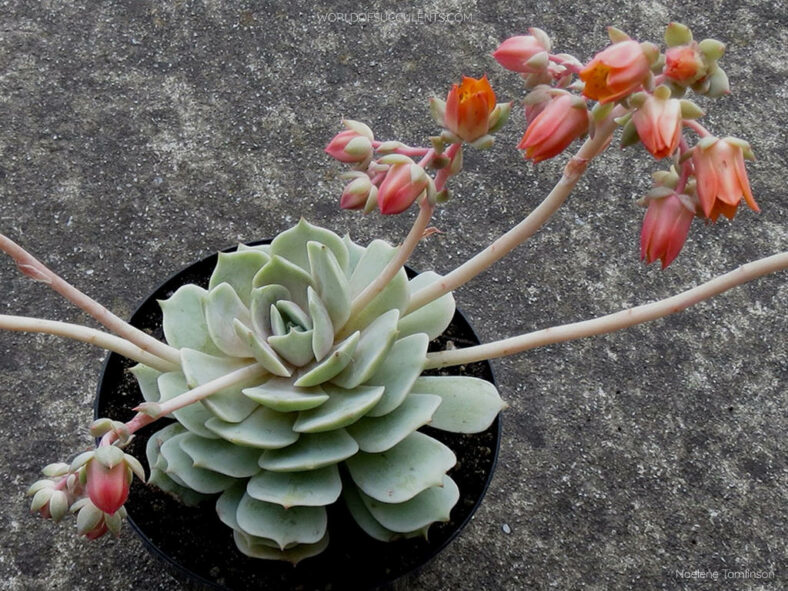
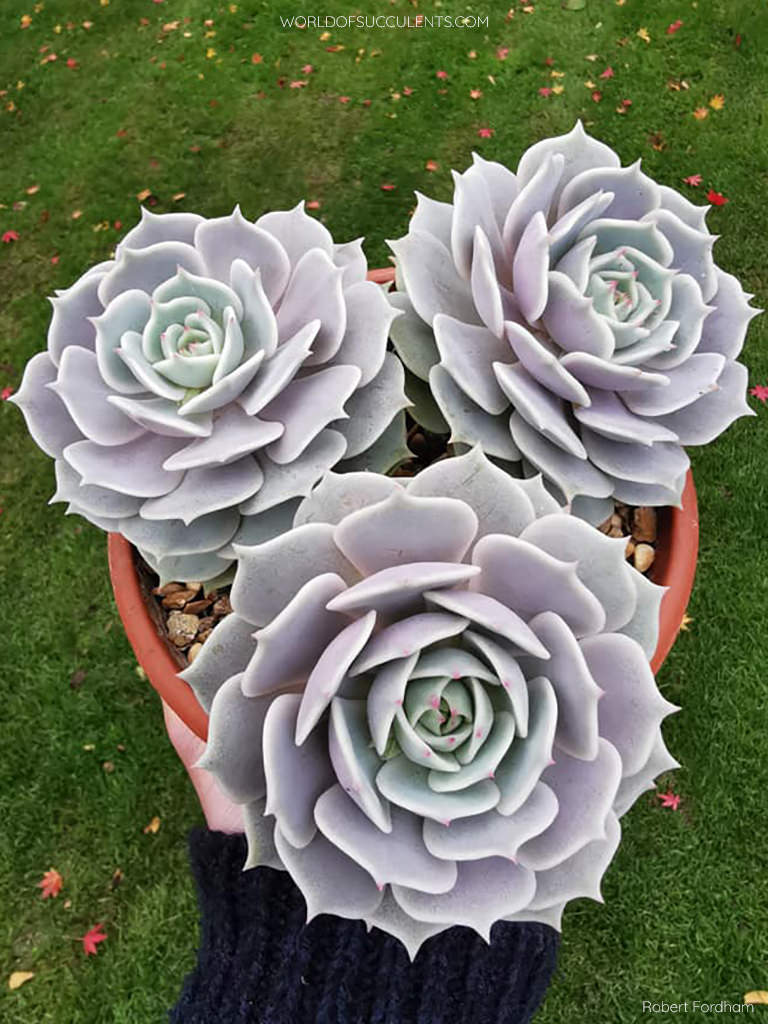
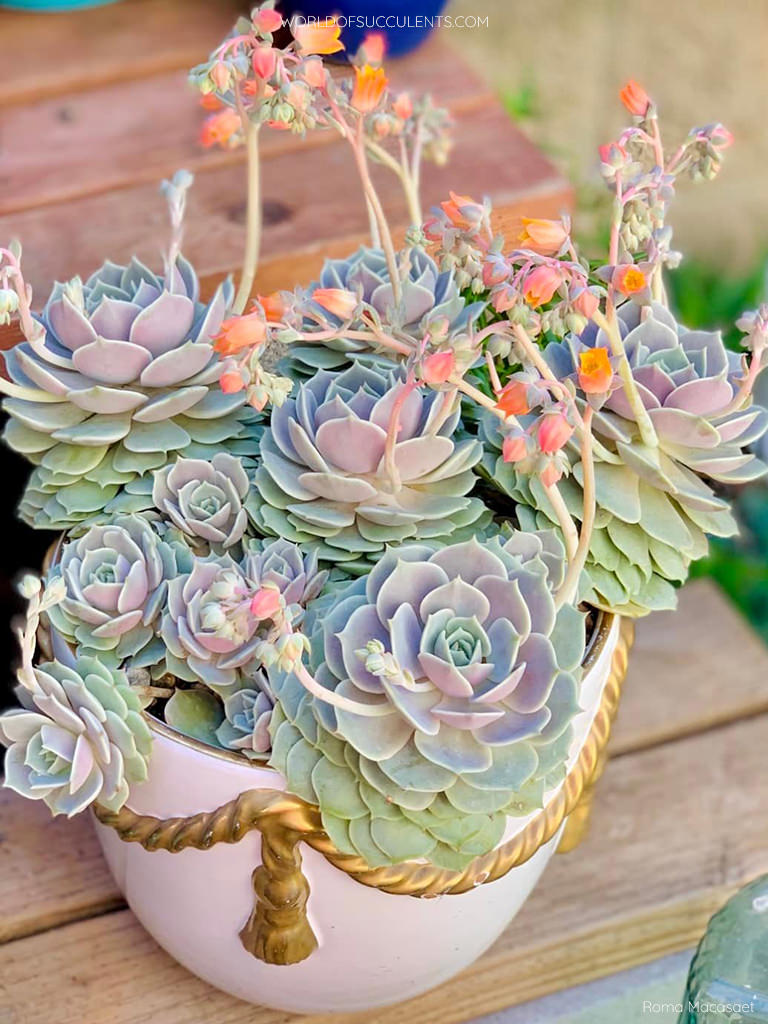
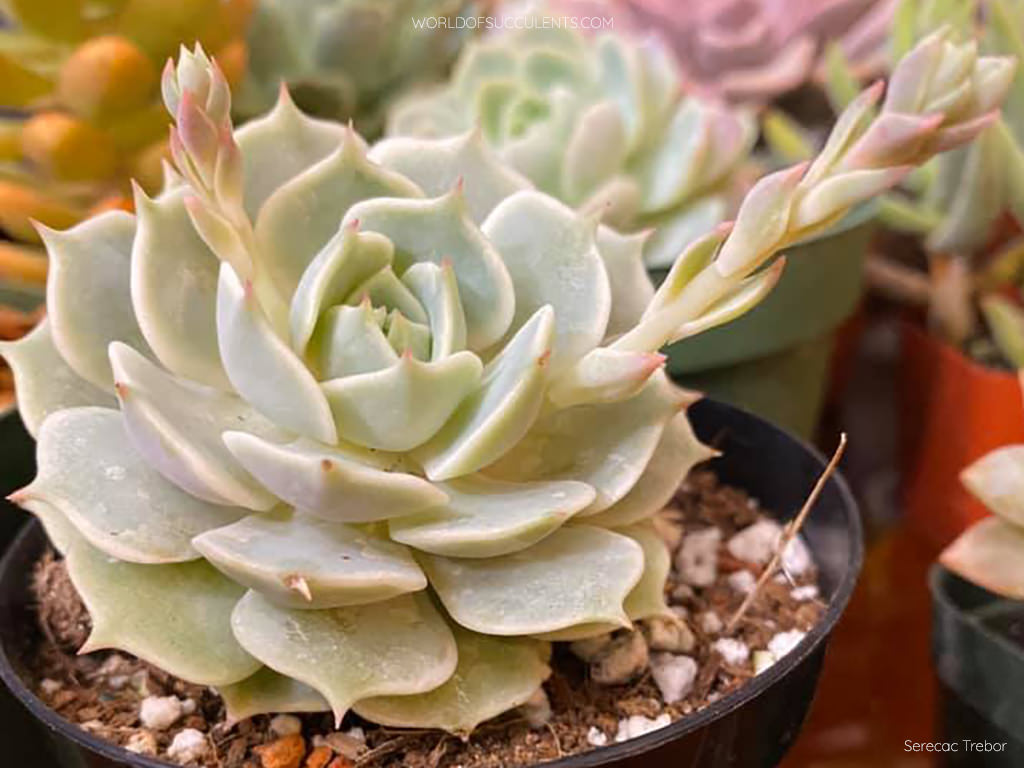
Echeveria 'Lola' is a stunning succulent that forms small, compact rosettes of pointed, spoon-shaped leaves with beautiful pastel colors. The rosettes can reach a diameter of 4 inches (10 cm) and readily produce offsets, forming a dense clump as it ages. The leaves are pale, bluish-green, with a delicate blush of pink to violet, and rose at the tips. A fine, waxy bloom covers them, giving them a pearlescent, marble-like appearance.
During winter and spring, Echeveria 'Lola' produces peach, bell-shaped flowers on short, branched stalks.
Origin
Echeveria 'Lola' is a hybrid that was created in 1980 by Dick Wright in California, United States. It may be the result of a cross between Echeveria lilacina and Echeveria 'Deresina'. However, the information in the book Echeveria Cultivars claiming that Echeveria 'Lola' is a hybrid resulting from a cross between Echeveria lilacina and Echeveria 'Tippy' is incorrect.
Hybrids of Echeveria 'Lola'
How to Grow and Care for Echeveria 'Lola'
Light: Echeveria 'Lola' grows best in full sun to partial shade for optimal growth. Therefore, place it near the brightest window in your home. Additionally, if you plan to move the plant outside in the spring, do so gradually and avoid exposing it to intense afternoon sunlight.
Soil: Fast-draining soil is most important for growing a healthy succulent. While many growers prefer to create their own soil mix, commercial mixes formulated for succulents will work fine.
Temperature: High temperatures are not a problem as long as there is plenty of fresh air. However, Echeveria 'Lola' is a tender succulent that must be brought indoors if there is a risk of freezing temperatures. It grows best in USDA Plant Hardiness Zones 10a to 11b, with average minimum winter temperatures ranging from 30°F to 50°F (- 1.1°C to 10°C).
Watering: This plant prefers the "soak and dry" method during the growing season. Water deeply and then let the soil dry out completely before watering again. Water sparingly during the winter, only enough to keep the plant from shriveling. Above all, if you have a saucer under the pot, empty any excess water that accumulates.
Fertilizing: Although it can grow well without fertilizer, Echeveria 'Lola' may benefit from extra nutrients. Feed only during the growing season, and use a water-soluble fertilizer diluted to half strength.
Repotting: If growing in a container, repot as needed in spring or early summer. Ensure the soil is dry before starting. Also, always use a container with drainage holes.
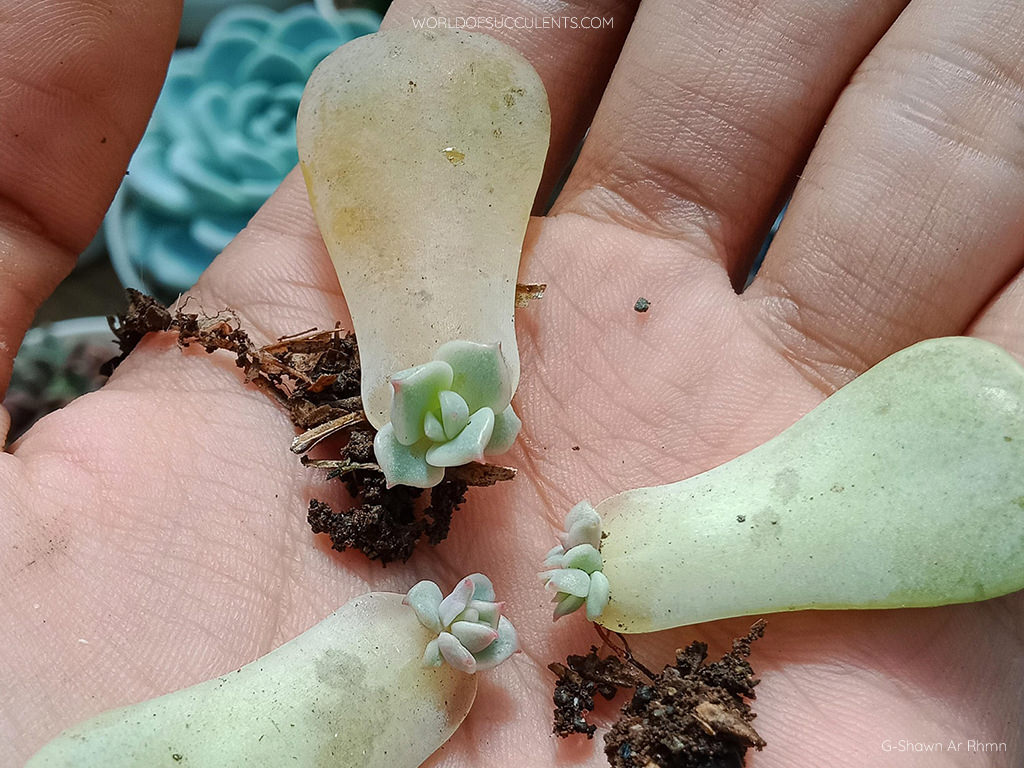
Propagation: You can propagate Echeveria 'Lola' in spring from leaves or offsets.
Learn more at How to Grow and Care for Echeveria.
Toxicity of Echeveria 'Lola'
Echeveria 'Lola' has no reported toxic effects and is safe for growing around children and pets.
Photo Gallery
Click on a photo to see a larger version.


Internal Links
- Explore all plants within the genus Echeveria.
- Explore all plants within the family Crassulaceae.