Scientific Name
Echeveria 'Water Lily'
Synonym(s)
Echeveria agavoides 'Water Lily'
Scientific Classification
Family: Crassulaceae
Subfamily: Sempervivoideae
Tribe: Sedeae
Genus: Echeveria
Origin
Echeveria 'Water Lily' is one of the many Echeveria agavoides hybrids, often sold as Echeveria agavoides 'Water Lily'. It should not be confused with ×Graptoveria 'Waterlily', often sold as Echeveria 'Waterlily'.
Description
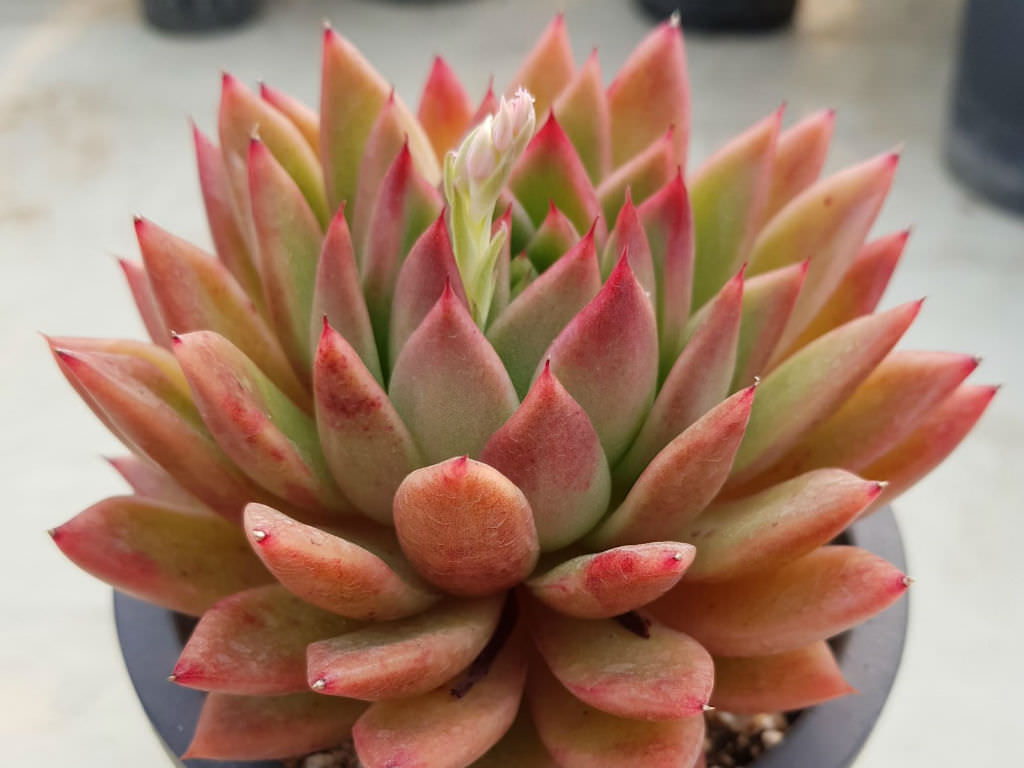
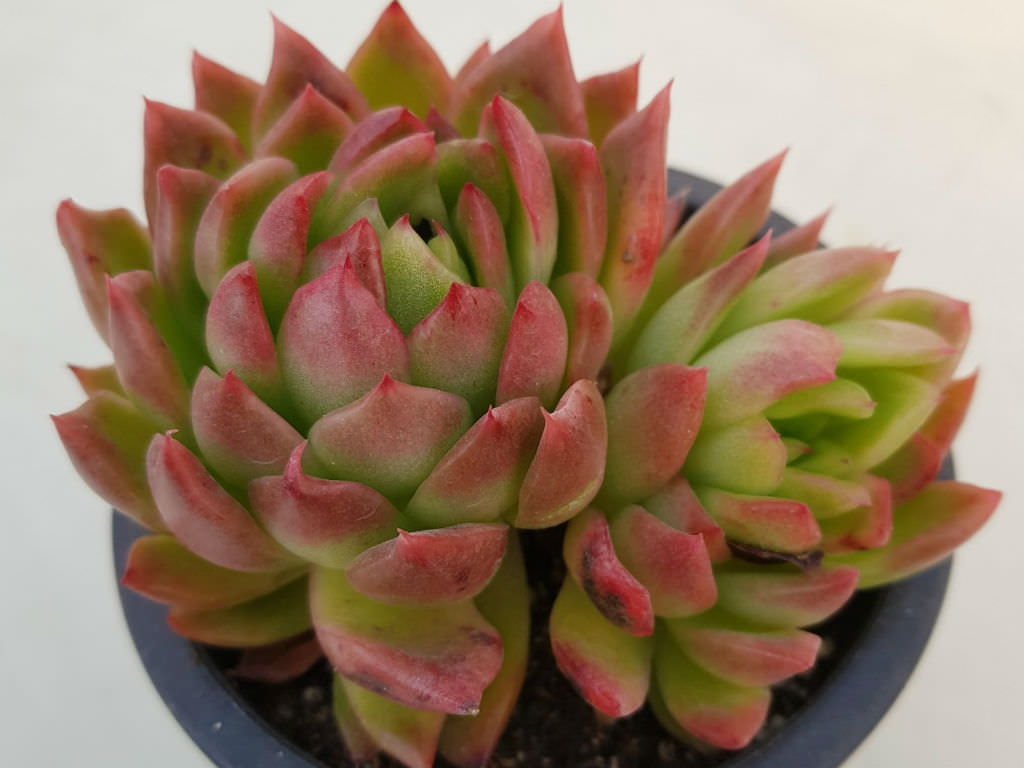
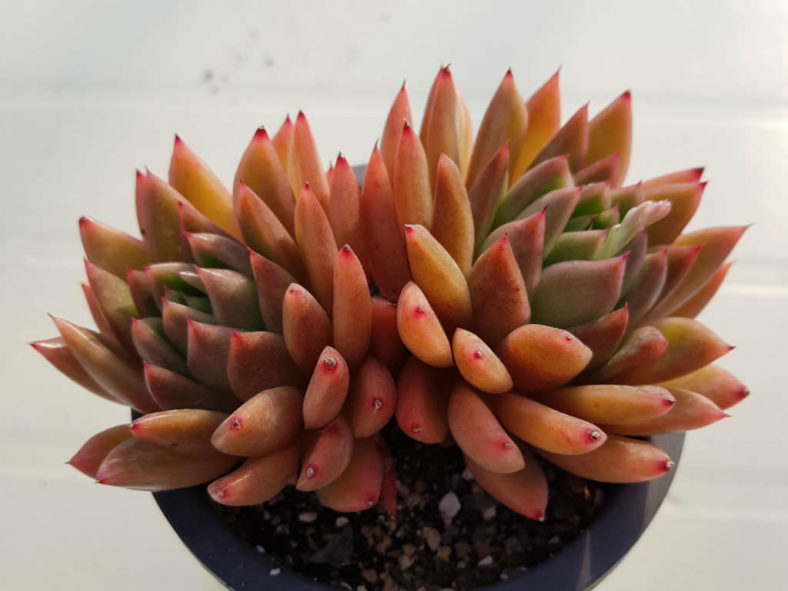
Echeveria 'Water Lily' is an attractive succulent that forms dense rosettes of numerous light green to pale bluish-green leaves. The leaves are thick, elliptical, and taper to a point, with their tips flushed rich pink.
When inflorescence is produced, the center of the rosette changes considerably, and the leaves become smaller and finer, thus resembling a water lily flower, hence the cultivar name.
How to Grow and Care for Echeveria 'Water Lily'
Hardiness: USDA hardiness zones 9b to 11b: from 25°F (-3.9°C) to 50°F (10°C).
Most common Echeveria species are not complicated succulents to grow, provided you follow a few basic rules. First, be careful never to let water sit in the rosette, as it can cause rot or fungal diseases that will kill the plant. Additionally, remove dead leaves from the bottom of the plant as it grows. These dead leaves provide a haven for pests, and Echeverias are susceptible to mealybugs. As with all succulents, careful watering habits and plenty of light will help ensure success.
Repot as needed, preferably during the warm season. To repot a succulent, ensure the soil is dry, then gently remove the pot. Knock away the old soil from the roots, removing any rotted or dead roots. Treat any cuts with a fungicide.
Most Echeverias can be easily propagated from leaf cuttings, although some are better propagated from seeds or stem cuttings. To propagate a leaf cutting, place the individual leaf in a potting mix specifically designed for succulents and cover the dish until the new plant sprouts.
Learn more at How to Grow and Care for Echeveria.
Links
- Back to genus Echeveria
- Succupedia: Browse succulents by Scientific Name, Common Name, Genus, Family, USDA Hardiness Zone, Origin, or cacti by Genus
Photo Gallery
Click on a photo to see a larger version.