Scientific Name
Dracaena parva (N.E.Br.) Byng & Christenh.
Synonym(s)
Sansevieria bequaertii, Sansevieria parva
Common Name(s)
Kenya Hyacinth
Scientific Classification
Family: Asparagaceae
Subfamily: Nolinoideae
Genus: Dracaena
Etymology
The specific epithet "parva" (pronounced "PAR-vuh") means "small" or "little" and refers to the relatively small size of this species compared to other members of the former genus Sansevieria.
Origin
Dracaena parva is native to eastern Africa (Burundi, Kenya).
Description
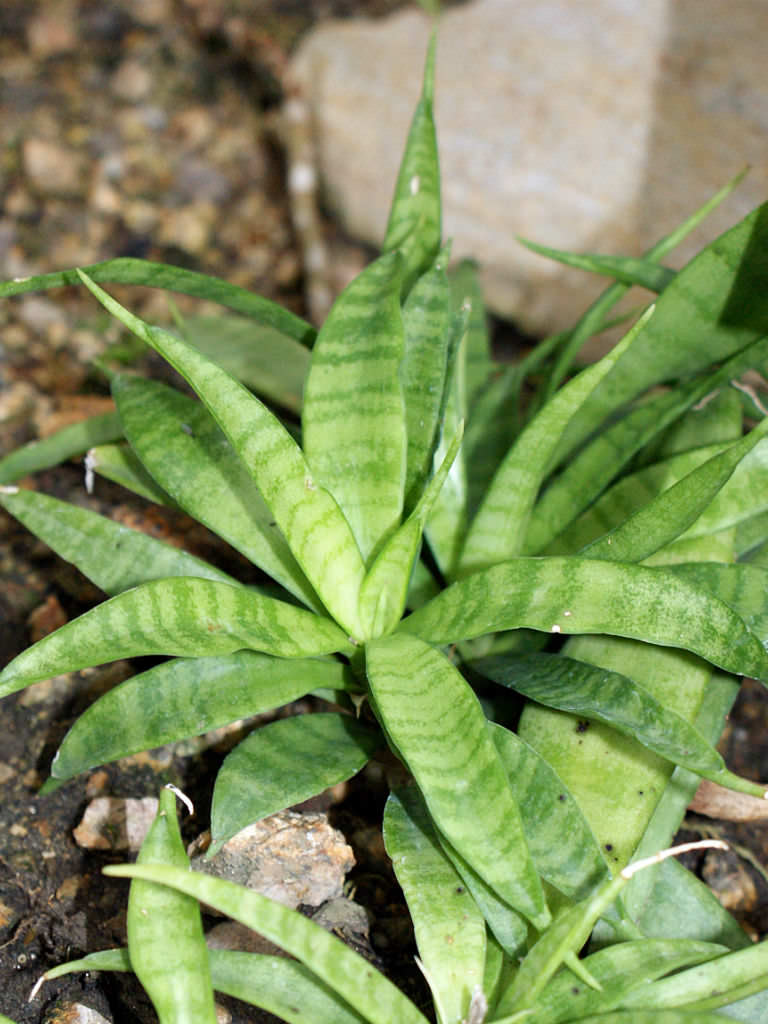
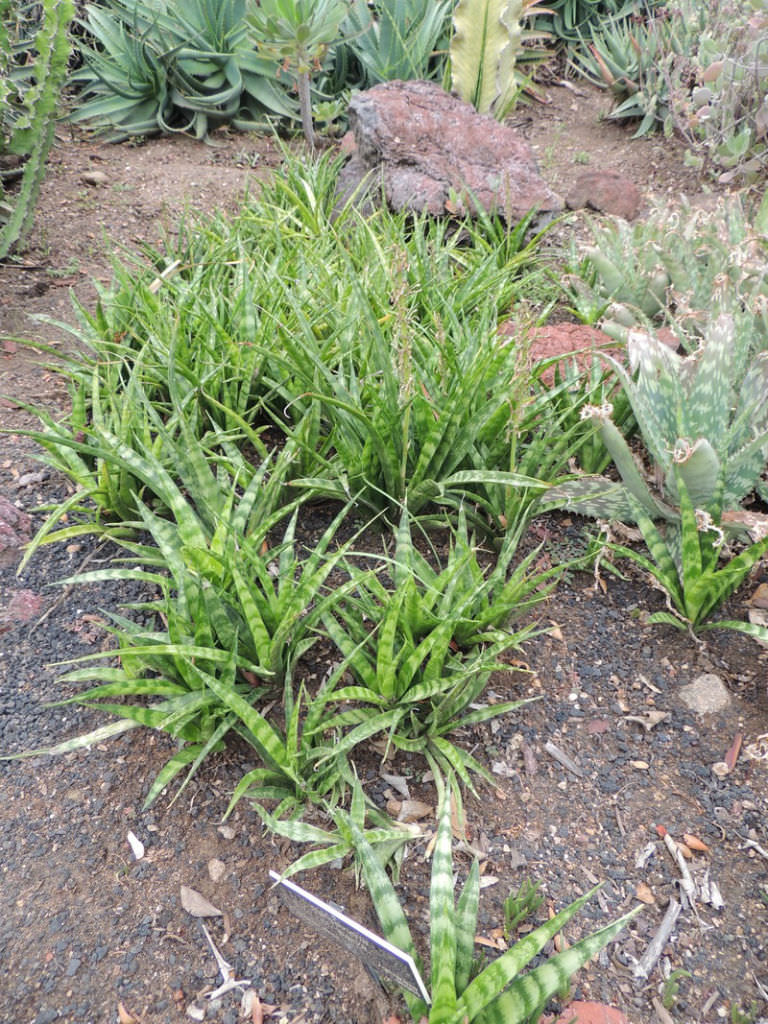
Dracaena parva, formerly known as Sansevieria parva, is a slow-growing succulent that forms rosettes of 6 to 12 narrow, medium-green leaves with dark green cross-bands. It can grow up to 18 inches (45 cm) tall, while the leaves can measure up to 16 inches (40 cm) long and 1 inch (2.5 cm) wide.
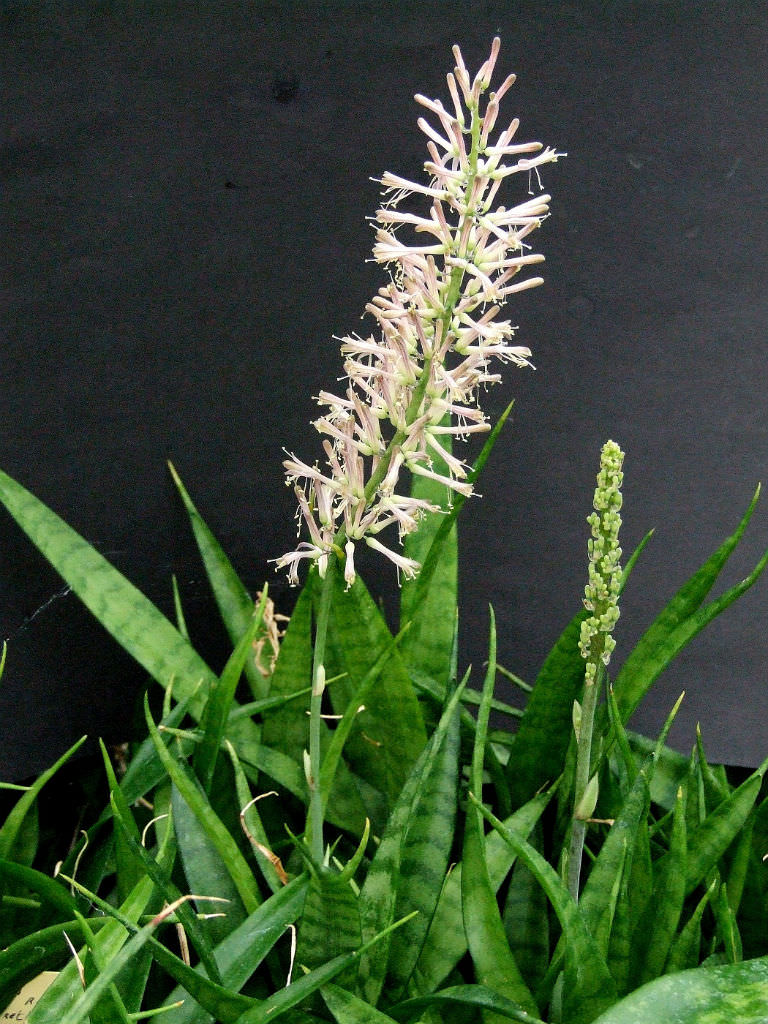
The small flowers are pinkish-white and appear on short spikes that arise just above the foliage. They have a pleasant hyacinth-like smell at night.
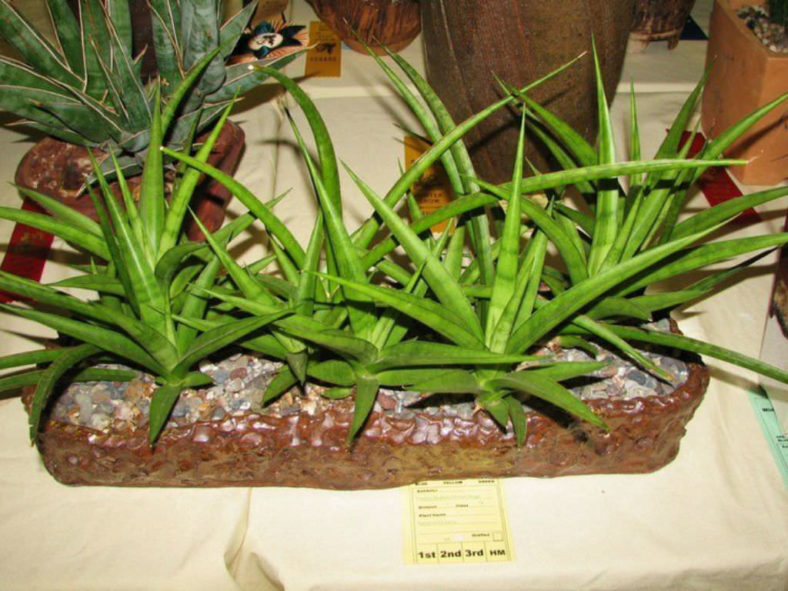
Cultivars of Dracaena parva
How to Grow and Care for Dracaena parva
Hardiness: USDA hardiness zones 10b to 11b: from 35°F (1.7°C) to 50°F (10°C).
Place Sansevierias in moderately bright or filtered light. Good locations include a spot in front of a north-facing window or the front of a bright, sunny window covered by a sheer curtain. Although the plant tolerates low light, bright light brings out the colors in the leaves. However, intense light may cause the edges of the leaves to turn yellow.
Allow the soil to dry completely before watering, then water deeply until water drips out of the drainage hole. Allow the pot to drain, then discard any remaining water in the saucer. Never allow the soil to become soggy, and never let the pot stand in water. Water sparingly throughout the winter. Like most succulent plants that store water in their leaves, Sansevieria rots quickly in excessively wet soil.
Place Sansevieria in average room temperatures. Protect the plant from drafts and cold temperatures, as it is damaged at or below 50°F (10°C).
Feed the plant once every three weeks throughout the summer. Use a general-purpose fertilizer for houseplants diluted to one-half the strength suggested on the container. Sansevieria is a light feeder, and too much fertilizer makes the leaves fall over.
Learn more in "How to Grow and Care for Sansevieria."
Links
- Back to genus Dracaena
- Succupedia: Browse succulents by Scientific Name, Common Name, Genus, Family, USDA Hardiness Zone, Origin, or cacti by Genus
Photo Gallery
Click on a photo to see a larger version.