

If you are looking for a visually appealing plant for hanging baskets, Dischidia nummularia, commonly known as the String of Nickels, is an excellent choice. This plant features round, green leaves that grow on gracefully cascading or trailing stems, bringing a touch of beauty to any space.
Taxonomy of Dischidia nummularia
Scientific Name
Dischidia nummularia R.Br.
Synonym(s)
Dischidia glaucescens, Dischidia pubicaulis, Leptostemma truncatum
Common Name(s)
Button Orchid, String of Nickels
Scientific Classification
Family: Apocynaceae
Subfamily: Asclepiadoideae
Genus: Dischidia
Etymology
The specific epithet "nummularia" (pronounced "num-ew-LAH-ree-uh") means "coin-shaped" or "disc-like" and refers to the shape of the leaves of this species.
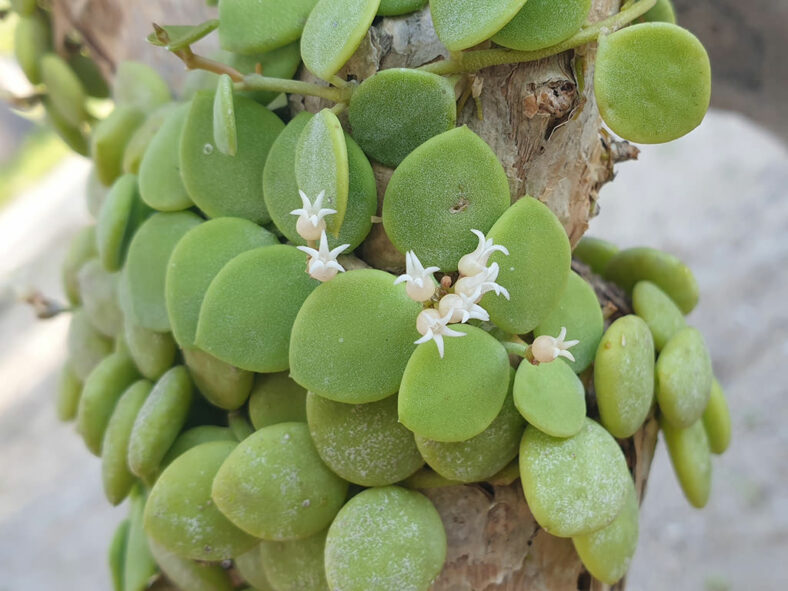
Origin of Dischidia nummularia
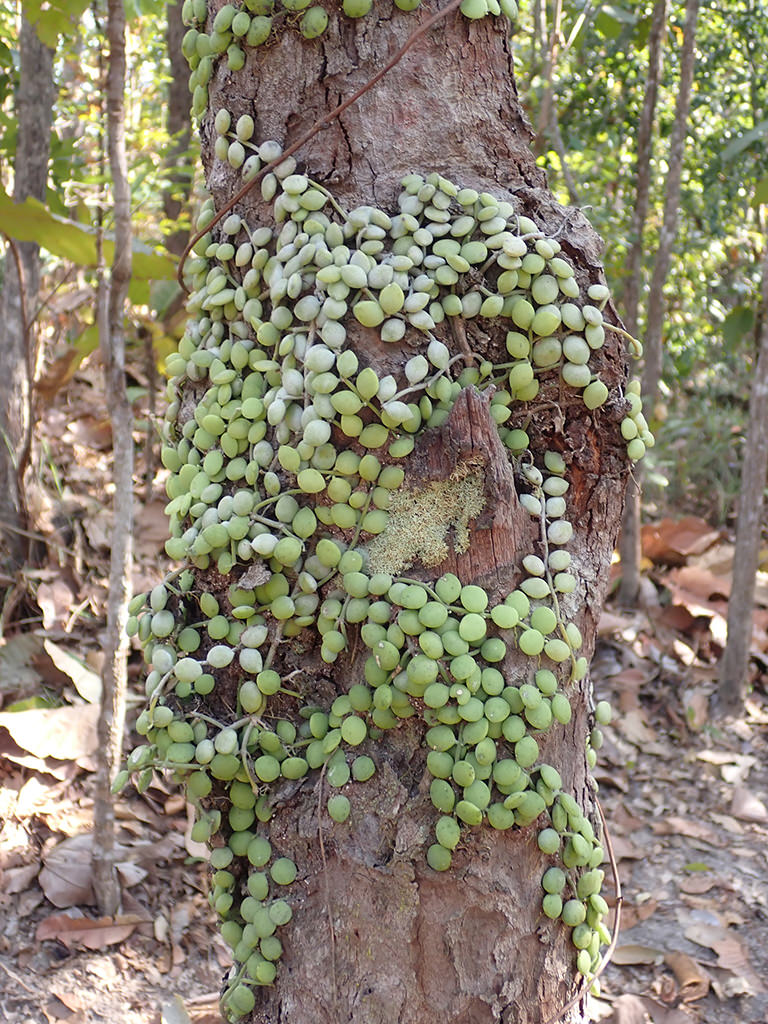
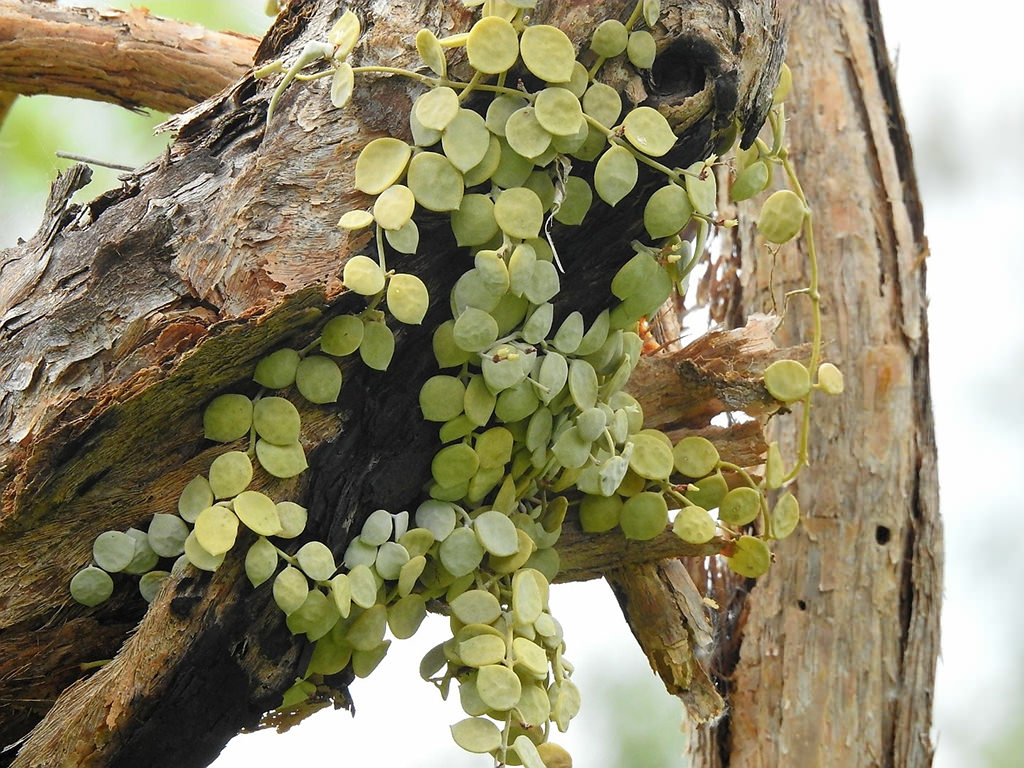
The native range of Dischidia nummularia extends from southern China to Tropical Asia and northeastern Australia, including India, Indonesia, Laos, Thailand, Vietnam, Myanmar, and Malaysia. It is an epiphyte frequently found on tree trunks, forming dense masses.
Description of Dischidia nummularia
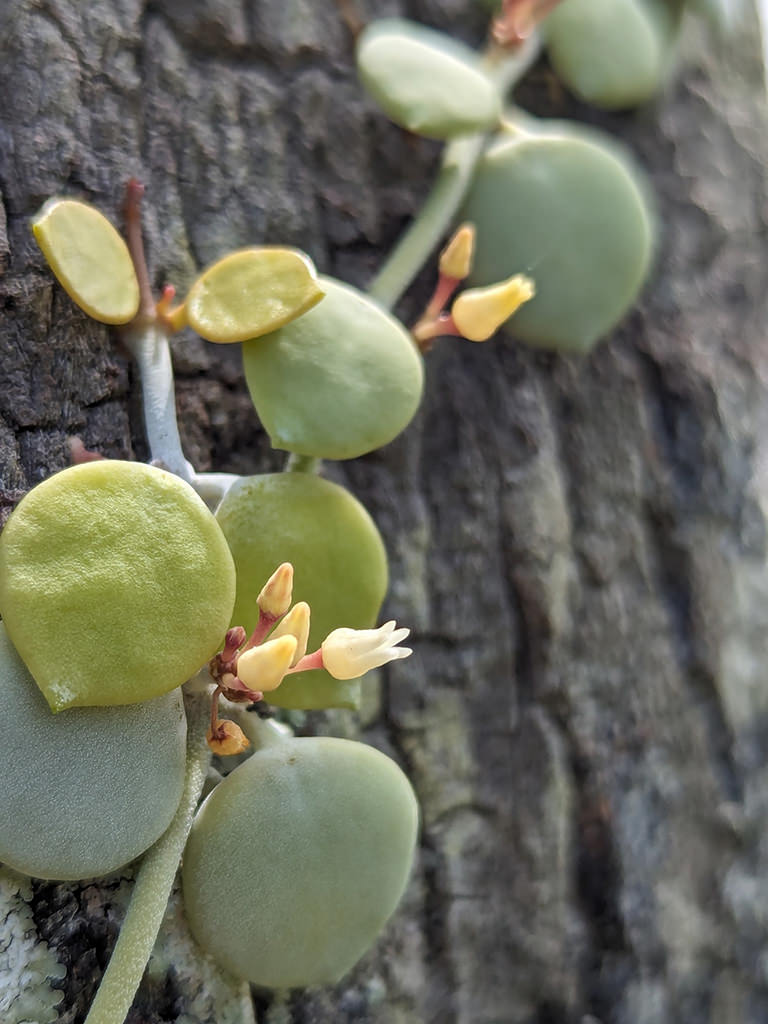
Dischidia nummularia is a creeping plant with slender, twining stems and disk-shaped leaves with a tiny, sharp point. The stems can grow up to 5 feet (1.5 m) long. The succulent leaves are opposite and have a tiny petiole attaching them to the stem. They can reach up to 0.4 inches (1 cm) in diameter and vary in color from dull green to greenish-yellow and brownish. Sometimes, the young leaves have a powdery coating.
During the spring, Dischidia nummularia produces small white or yellowish-white flowers in clusters of 1 to 5. The fruits are smooth, lance-shaped follicles that are pale green or yellow. The follicles can grow up to 1.6 inches (4 cm) long and 0.2 inches (0.5 cm) wide, and split open on one side when mature to discharge tightly packed seeds.
How to Grow and Care for Dischidia nummularia
Light: Growing Dischidia nummularia indoors is easy because it requires low light. It thrives in a humid and well-ventilated location that receives at least half a day of filtered sunlight. Although it can tolerate a couple of hours of direct sunlight, it must be well-watered under such conditions.
Soil: This plant grows best in moist, well-drained soil. Therefore, instead of standard potting soil, use a light potting medium, like orchid mix or shredded bark.
Temperature: Dischidia nummularia is a tropical plant not tolerant of frost. It grows best in USDA Plant Hardiness Zones 10a to 11b, with average minimum winter temperatures ranging from 30 to 50 °F (-1.1 to 10 °C).
Watering: To keep this plant healthy, mist the foliage daily, as it thrives in high humidity. Water it when the soil surface starts to dry. It is advisable to keep the soil evenly moist but avoid overwatering.
Fertilizing: Although Dischidia nummularia does not really need fertilizer, you can apply a liquid plant food diluted to half when you water it from spring to early fall.
Repotting: A deep container is unnecessary, as it has a shallow root system. Repot it annually.
Propagation: The best way to propagate Dischidia nummularia is by taking stem cuttings during the growing season. After snipping, let the stem cuttings dry for a day or two. Alternatively, it can also be grown from seeds.
Learn more in "How to Grow and Care for Dischidia."
Toxicity of Dischidia nummularia
The sap of Dischidia nummularia may cause skin irritation and could be toxic to children and pets if ingested.
Photo Gallery
Click on a photo to see a larger version.
Internal Links
- Explore all plants within the genus Dischidia.
- Explore all plants within the family Apocynaceae.