Scientific Name
Cussonia paniculata Eckl. & Zeyh.
Synonym(s)
Cussonia paniculata subsp. paniculata
Common Name(s)
Mountain Cabbage Tree
Scientific Classification
Family: Araliaceae
Subfamily: Aralioideae
Genus: Cussonia
Etymology
The specific epithet "paniculata" (pronounced "pan-ick-yoo-LAY-tuh") means "paniculate; arranged in panicles" and refers to the much-branched inflorescence.
Description
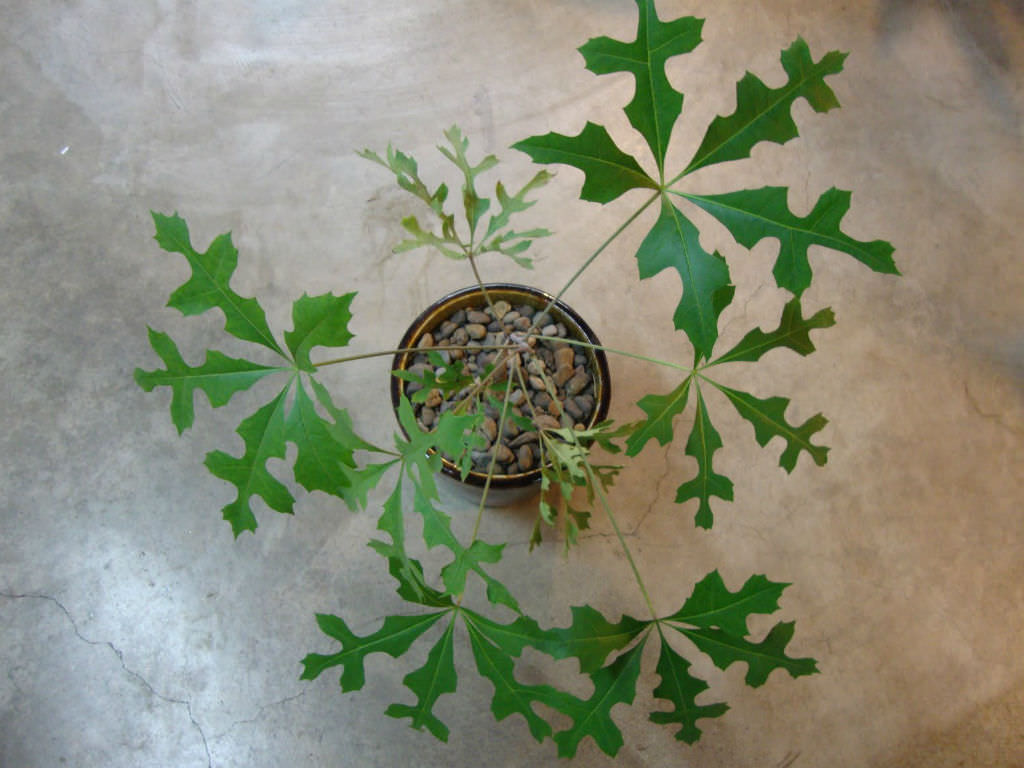
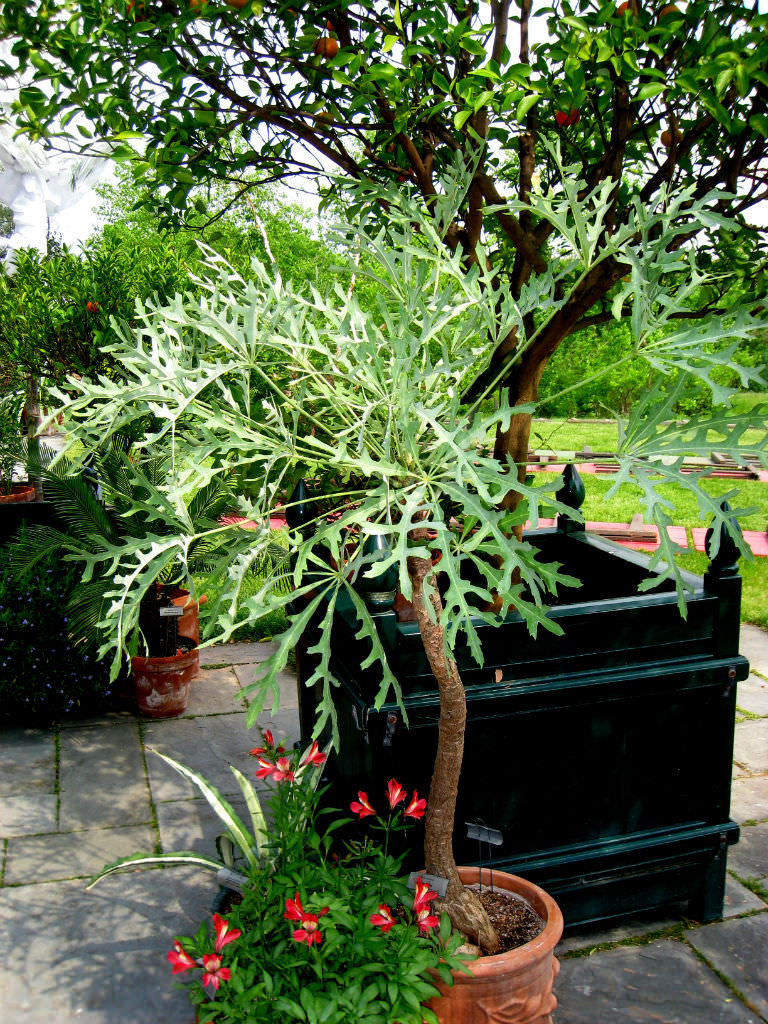
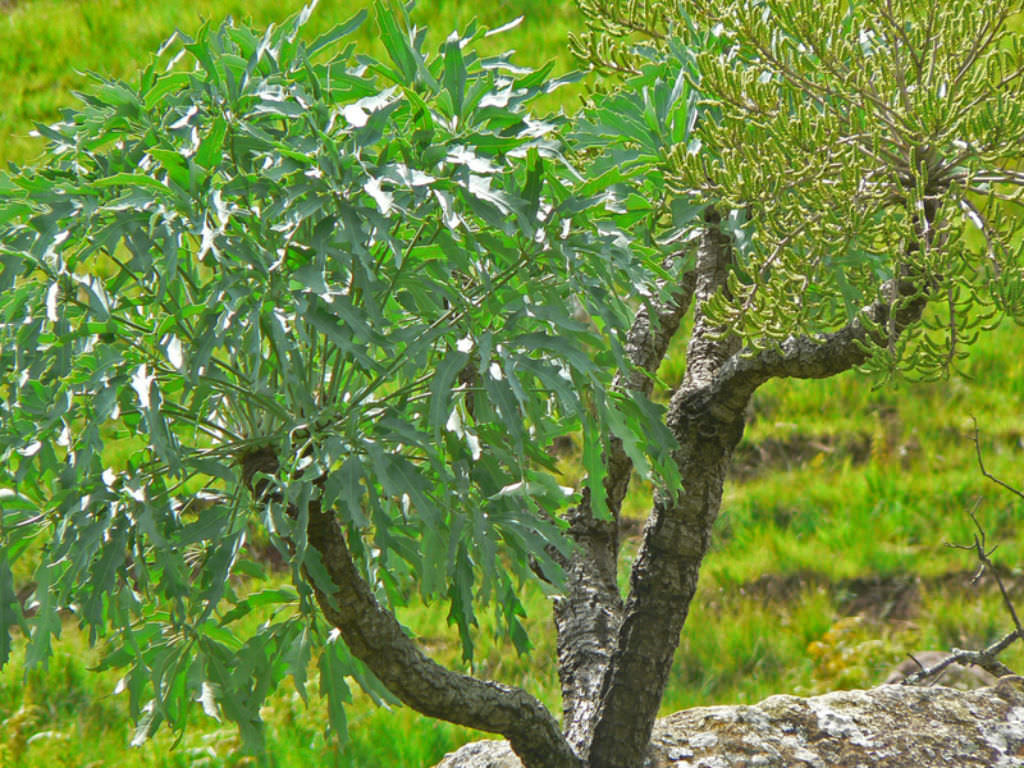
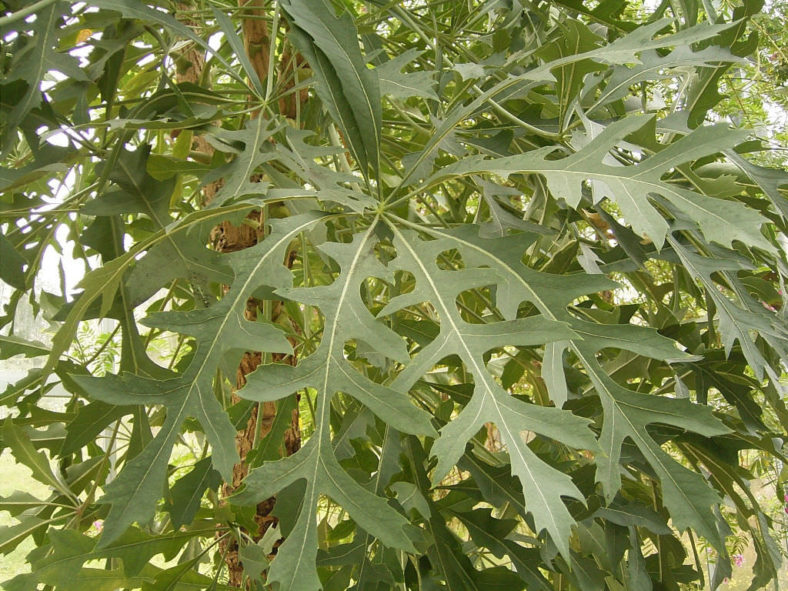
Cussonia paniculata is a small, sparsely branched tree with a swollen stem base and stubby branches that bear distinctive palmately compound leaves with 7 to 9, sometimes up to 13, leaflets arising from the end of a long stalk. The plant can grow up to 16.4 feet (5 m) tall, and the swollen stem base forms only in plants grown from seed. The stem and branches are grey, with deeply fissured, corky bark. The leaves are attached to the stem with petioles that can reach up to 20 inches (50 cm) in length, forming a rounded crown at the end of the branches. They are initially brighter green and emerge in a spring flush. The leaflets are variable in shape, usually simple or sometimes toothed or lobed above.
The small flowers are green and appear in branched inflorescences with short, dense spikes at the end of the trunk or branches in summer. The fruits are pea-like, purple-maroon, distinctly fleshy, and ripen in fall.
Origin
Cussonia paniculata is native to South Africa. It grows on dry, rocky slopes from the Swartberg mountains in the Western Cape to Mpumalanga.
How to Grow and Care for Cussonia paniculata
Hardiness: USDA hardiness zones 9a to 11b: from 20°F (-6.7°C) to 50°F (10°C).
Cussonia is easy to grow from seed and requires little care. Most species are drought-tolerant and prefer a sunny spot. Protect them from frost. These plants can handle an occasional mild frost, but a chill will make the leaves fall off. Grow them in well-drained and slightly rich soil. Water regularly.
All the members of this genus form a swollen stem base beneath the ground, and care must be taken not to damage this when planting out.
The best propagation method is using seeds harvested from fresh, ripe fruits. Sow seed as soon as possible, as it loses much of its viability within three months. However, seeds sown in the summer months will germinate faster (about 4 weeks) than in winter (about 7 weeks). Make sure seed trays are at least 6 inches (15 cm) in depth to allow the small tubers to form. Do not allow the seed to become waterlogged or dry out. Keep seeds and seedlings in a semi-shaded area. Seedlings can be transplanted at about four months, but be careful not to damage the fleshy roots.
See more at How to Grow and Care for Cussonia.
Links
- Back to genus Cussonia
- Succupedia: Browse succulents by Scientific Name, Common Name, Genus, Family, USDA Hardiness Zone, Origin, or cacti by Genus
Photo Gallery
Click on a photo to see a larger version.