Scientific Name
Curio rowleyanus (variegated) – an informal descriptive name
This plant is not found in the wild and therefore cannot be classified as a distinct form. Its variegation is unstable, and it does not meet the criteria for recognition as a distinct cultivar under the ICNCP🡕.
Accepted Scientific Name
Curio rowleyanus (H. Jacobsen) P.V. Heath
Synonym(s)
Senecio rowleyanus (variegated)
Common Name(s)
Rosary Vine, String of Beads, String of Pearls, String of Peas
Scientific Classification
Family: Asteraceae
Subfamily: Asteroideae
Tribe: Senecioneae
Subtribe: Senecioninae
Genus: Curio
Etymology
The specific epithet "rowleyanus" (pronounced "ro-lee-AH-nus") honors Gordon Douglas Rowley🡕 (1921–2019), a British botanist and writer specializing in cacti and succulents.
Description of Curio rowleyanus (variegated)
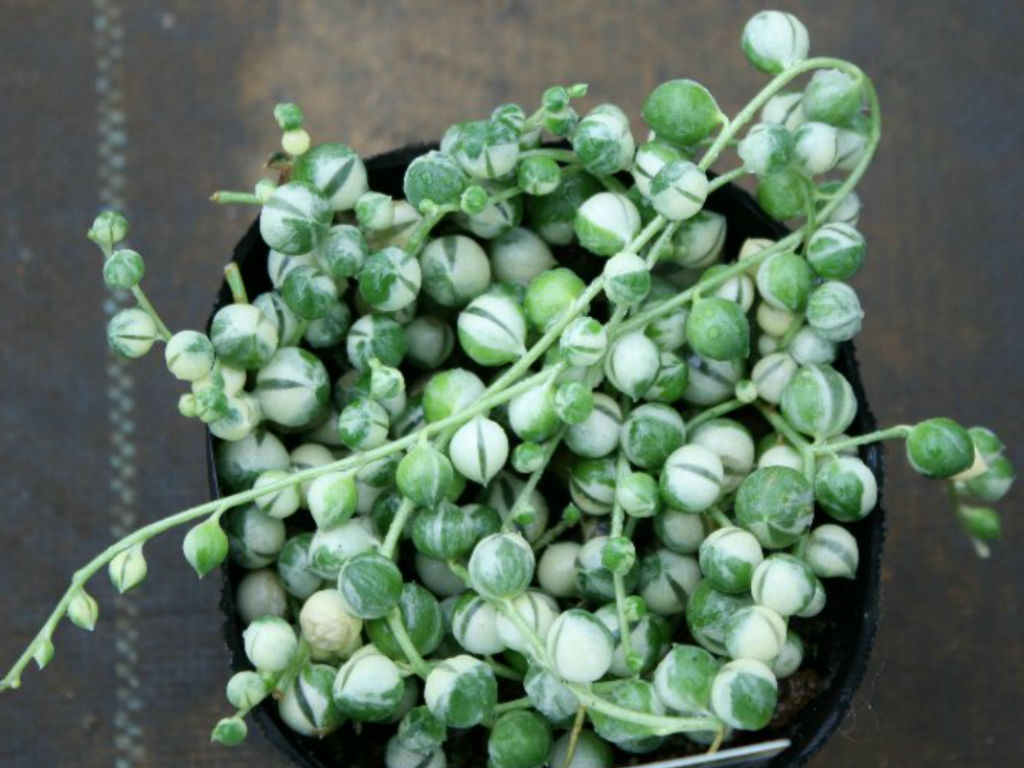
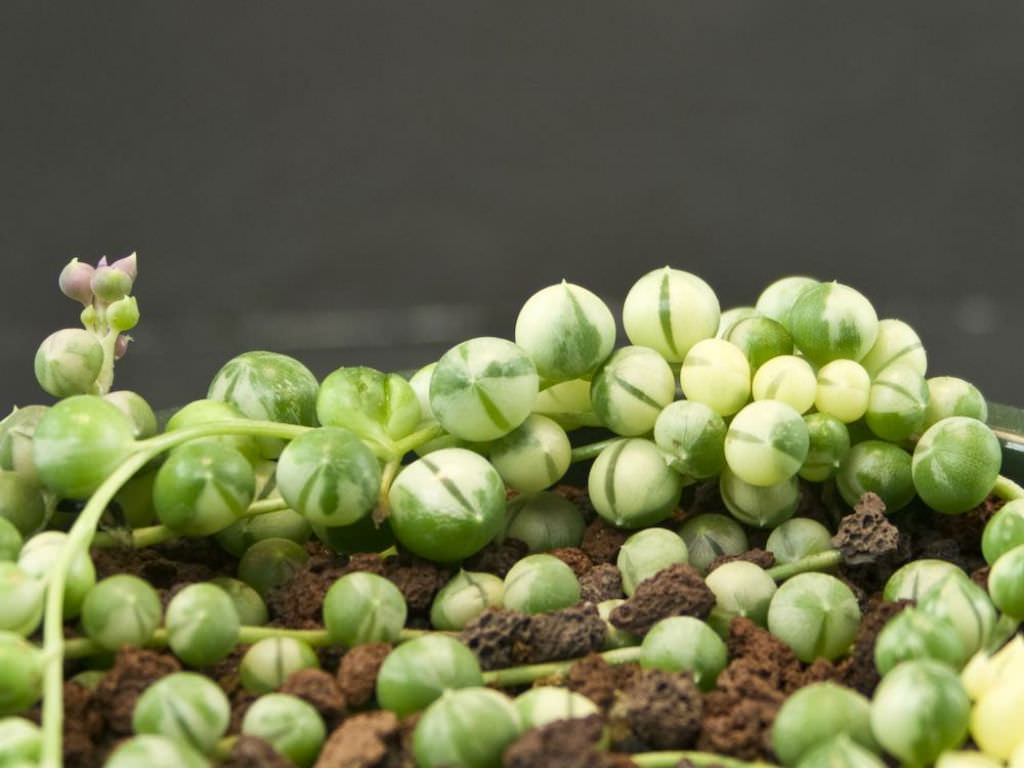
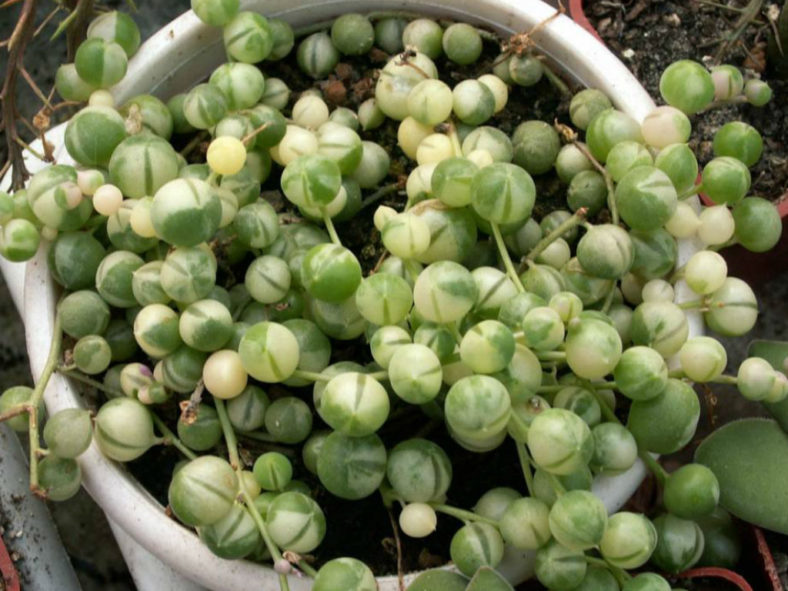
Curio rowleyanus (variegated), formerly known as Senecio rowleyanus (variegated), is a beautiful succulent with trailing stems adorned with small, variegated leaves that are almost spherical in shape. The leaves are irregularly marked with cream and often display slight pink hues. The stems can grow up to 3 feet (90 cm) long and root at the nodes.
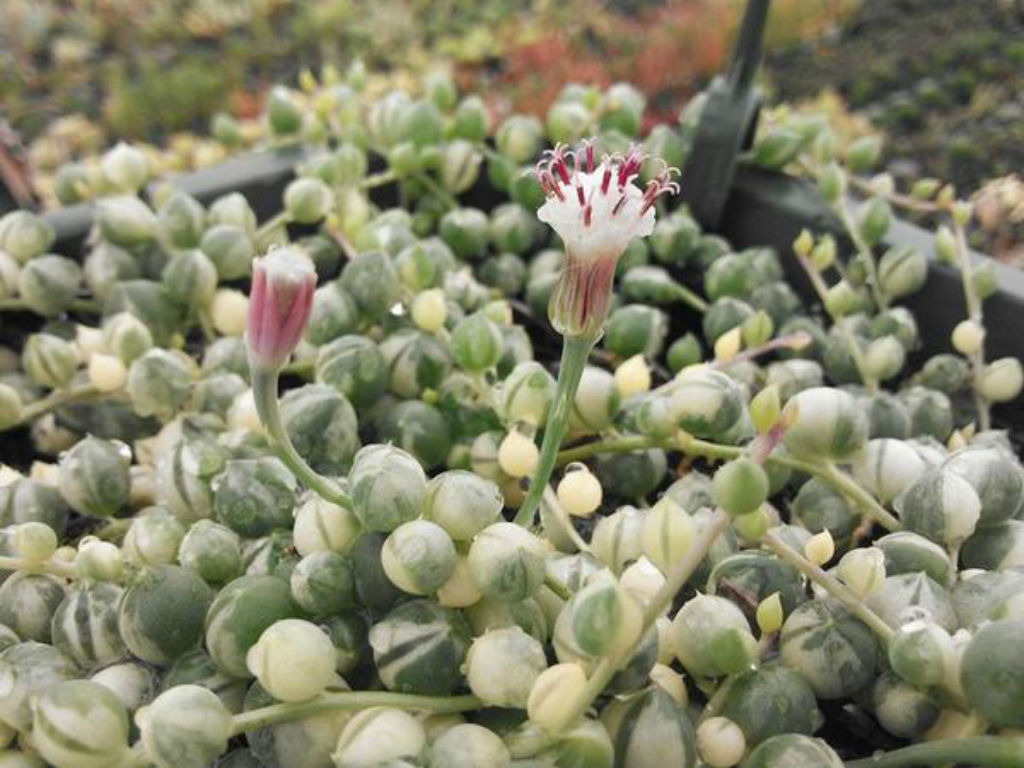
In the summer, Curio rowleyanus (variegated) produces brush-like flowers on long stalks, ranging from white to nearly white.
Origin of Curio rowleyanus (variegated)
Curio rowleyanus (variegated) is a sport of Curio rowleyanus selected in cultivation for its variegated foliage.
How to Grow and Care for Curio rowleyanus (variegated)
Light: Outdoors, they prefer partial shade, and bright sunlight is recommended if grown indoors. They will grow in full shade but will become lanky and leggy.
Soil: These plants prefer well-draining soil. For growing Curio indoors, using a container with at least one drainage hole at the bottom is essential.
Hardiness: Curio rowleyanus (variegated) can withstand temperatures from 25°F to 50°F (-3.9°C to 10°C) and is hardy in USDA hardiness zones 9b to 11b.
Watering: Curio plants are drought-tolerant, but the soil should never be left dry for an extended period. They require some water during the growing season, but be cautious not to leave the soil wet for extended periods.
Fertilizing: The members of this genus can take a bit more fertilizer than other succulents if you want them to grow fast.
Repotting: You do not need to repot Curio plants often. You can do it when the container becomes too small or shallow.
Propagation: These plants can be grown from seeds or cuttings.
Learn more at How to Grow and Care for Curio.
Toxicity of Curio rowleyanus (variegated)
Curio plants are toxic. Grow them with great care if you have children, pets, or livestock.
Links
- Back to genus Curio
- Succupedia: Browse succulents by Scientific Name, Common Name, Genus, Family, USDA Hardiness Zone, Origin, or cacti by Genus
Photo Gallery
Click on a photo to see a larger version.