

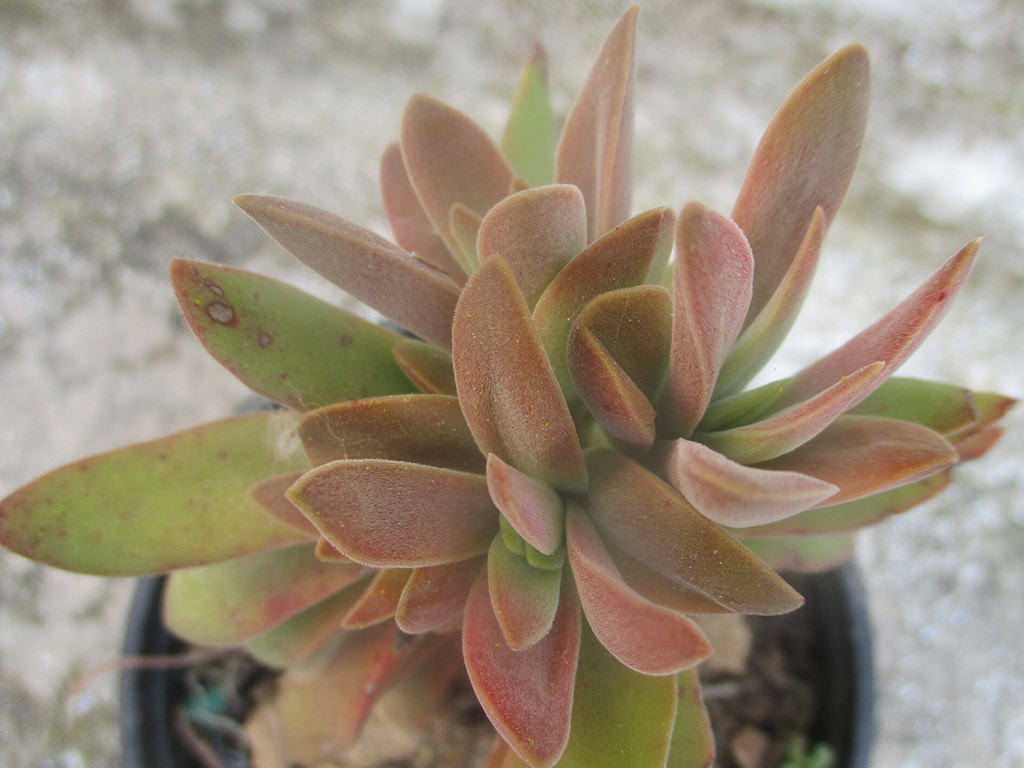
Crassula pubescens subsp. rattrayi, commonly known as Bear Paw Jade, is a small, low-growing succulent native to the Eastern Cape province of South Africa. This subspecies is distinguished from Crassula pubescens subsp. pubescens by its characteristic basal rosettes. The latter type typically has erect or spreading branches and rarely has basal rosettes.
Taxonomy of Crassula pubescens subsp. rattrayi
Scientific Name
Crassula pubescens subsp. rattrayi (Schönl. & Baker f.) Toelken
Synonym(s)
Crassula rattrayi, Globulea pubescens var. rattrayi
Common Name(s)
Bear Paw Jade, Red Carpet
Scientific Classification
Family: Crassulaceae
Subfamily: Crassuloideae
Genus: Crassula
Etymology
The generic name "Crassula" (pronounced "KRASS-oo-la") means "somewhat thick" and refers to the thick, fleshy, and succulent nature of the leaves and stems that are characteristic of nearly every species in this genus.
The specific epithet "pubescens" (pronounced "pew-BES-senz") means "hairy" or "downy" and refers to the hairy foliage of this species.
The subspecific epithet "rattrayi" (pronounced "RAT-tray") honors George Rattray (1872–1941), a Scottish-born South African teacher and naturalist, and collector of the species.
Origin of Crassula pubescens subsp. rattrayi
Crassula pubescens subsp. rattrayi is native to South Africa. It occurs between Graaff-Reinet and Tarkastad in the Eastern Cape province, often growing on cliffs or under rock faces.
Description of Crassula pubescens subsp. rattrayi
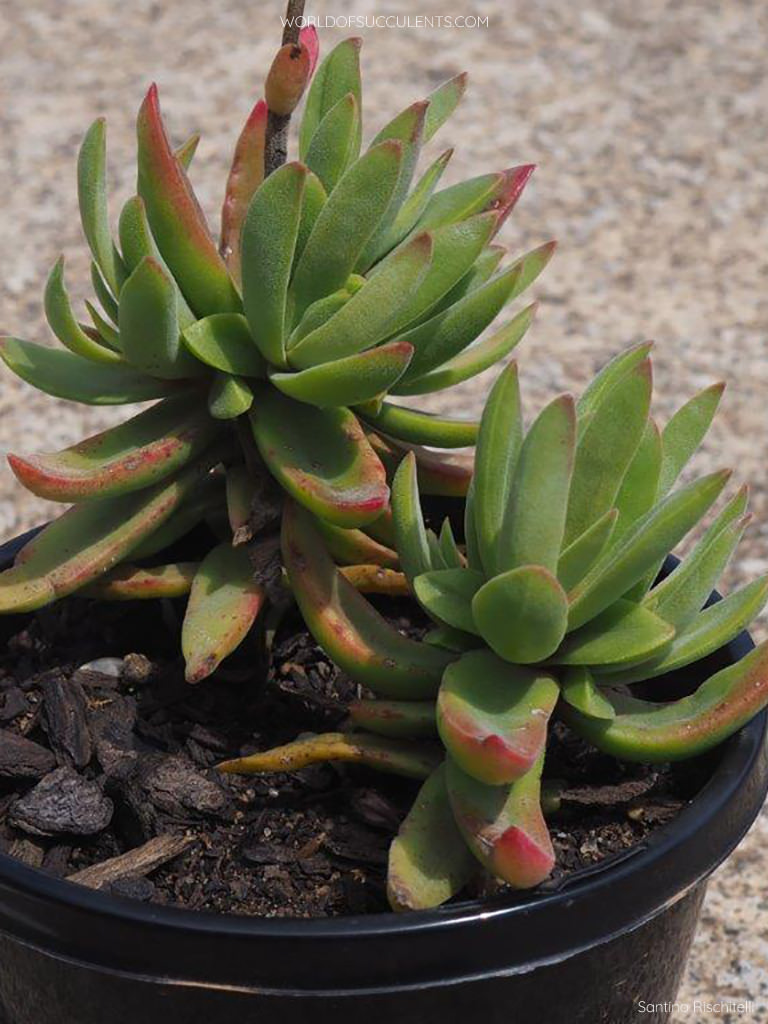
Crassula pubescens subsp. rattrayi is a small succulent with fleshy, finely pubescent to velvety leaves arranged in more or less dense basal rosettes with few short lateral branches. The leaves are obovate to oblanceolate, measuring up to 1.6 inches (4 cm) long and 0.8 inches (2 cm) wide. They are green but turn red when exposed to intense sunlight.
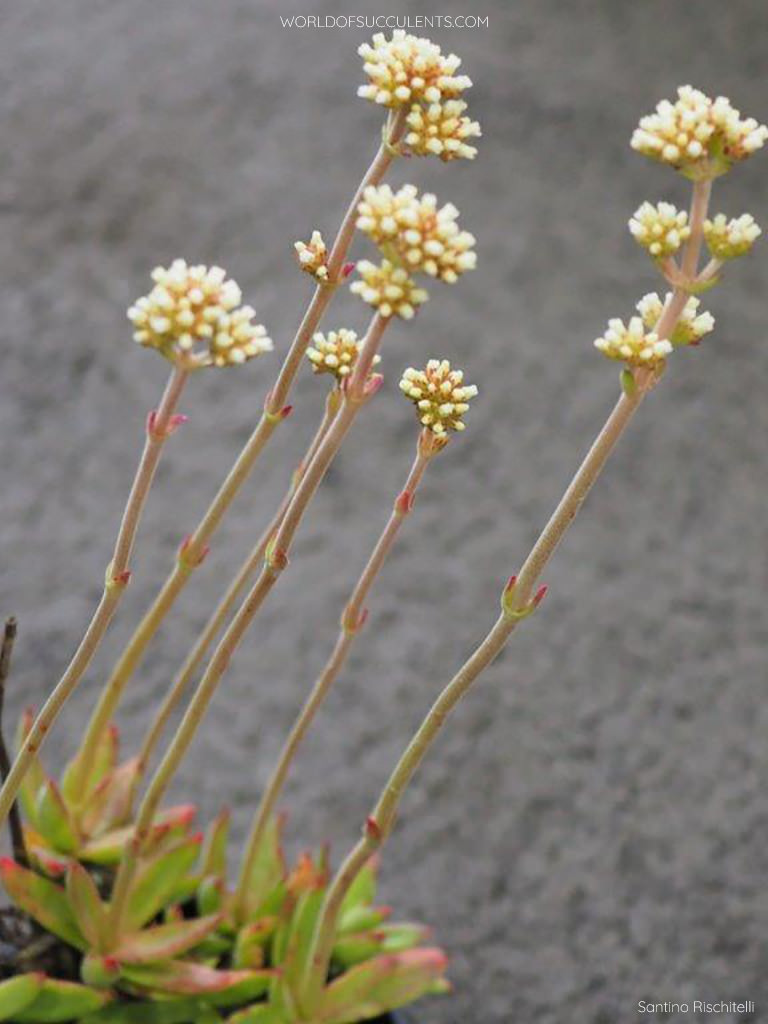
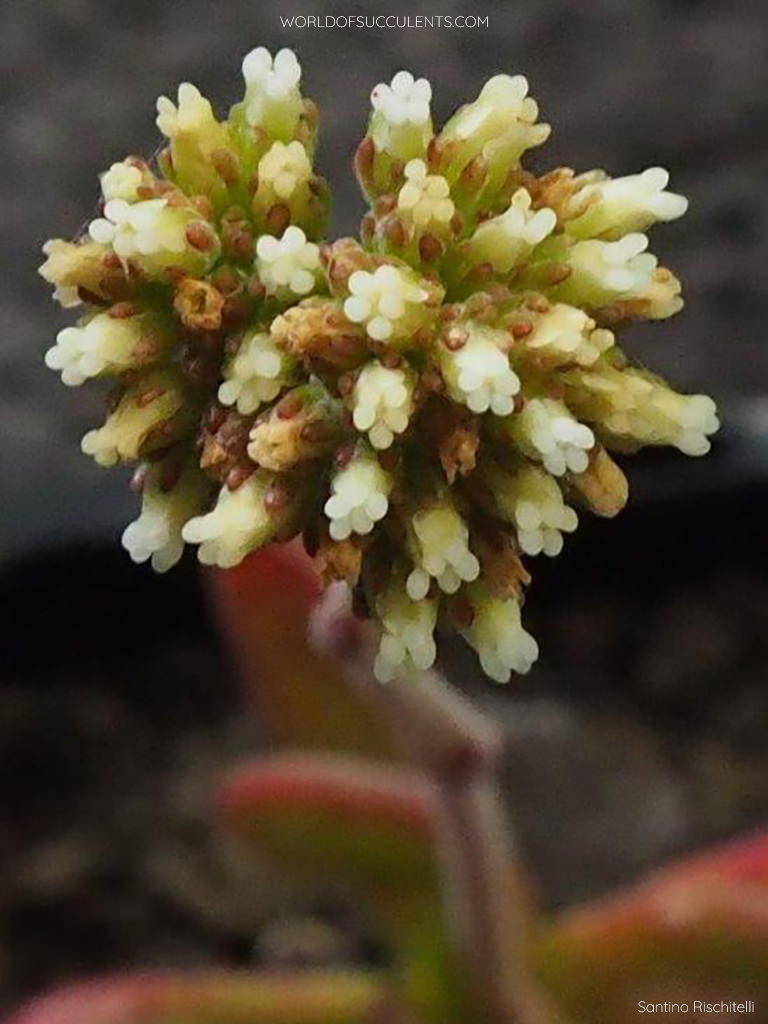
During spring and summer, Crassula pubescens subsp. rattrayi produces small, white flowers in dense, rounded clusters on slender stalks with 3 to 7 pairs of bracts.
How to Grow and Care for Crassula pubescens subsp. rattrayi
Light: Crassula pubescens subsp. rattrayi prefers full sun to partial shade. However, avoid intense afternoon sun during the hot summer days, as it can burn the leaves. If growing the plant indoors, place it in a window with at least 6 hours of direct sunlight.
Soil: This plant is not particular about soil pH, but it does require very porous soil with excellent drainage. You can use commercial soil mix for succulents or create your own.
Temperature: While this succulent can tolerate average summer temperatures and short-term freezing, extreme cold or heat can cause it to lose leaves and even die. Crassula pubescens subsp. rattrayi grows best in USDA Plant Hardiness Zones 9b to 11b, with average minimum winter temperatures ranging from 25 to 50 °F (-3.9 to 10 °C).
Watering: Avoid overwatering by the "soak and dry" method to keep the plant healthy. Water deeply, then let the soil dry out completely before watering again. Reduce watering in winter. The potted plants require more frequent watering than those in the ground.
Fertilizing: While Crassula pubescens subsp. rattrayi does not require high levels of nutrients; it will benefit from a small amount of organic fertilizer in mid-spring, when it starts to grow actively.
Repotting: Repot the plant as needed, preferably in spring, at the beginning of the growing season. Make sure the soil is dry before beginning to repot.
Propagation: This plant is usually propagated by leaves and stem cuttings. Using leaves is the easiest method, but stem cuttings produce larger plants more quickly. It can also be grown from seeds. The best time for propagation by cuttings is at the beginning of the growing season, while spring and summer are ideal for sowing the seeds.
Learn more at How to Grow and Care for Crassula.
Toxicity of Crassula pubescens subsp. rattrayi
Crassula pubescens subsp. rattrayi is considered non-toxic and safe to grow around children and pets.
Photo Gallery
Click on a photo to see a larger version.
Internal Links
- Explore all plants within the genus Crassula.
- Explore all plants within the family Crassulaceae.