Scientific Name
Crassula pellucida subsp. marginalis (Dryand.) Toelken
Synonym(s)
Crassula lineolata, Crassula marginalis, Crassula profusa
Scientific Classification
Family: Crassulaceae
Subfamily: Crassuloideae
Genus: Crassula
Etymology
The generic name "Crassula" (pronounced "KRASS-oo-la") means "somewhat thick" and refers to the thick, fleshy, and succulent nature of the leaves and stems that are characteristic of nearly every species in this genus.
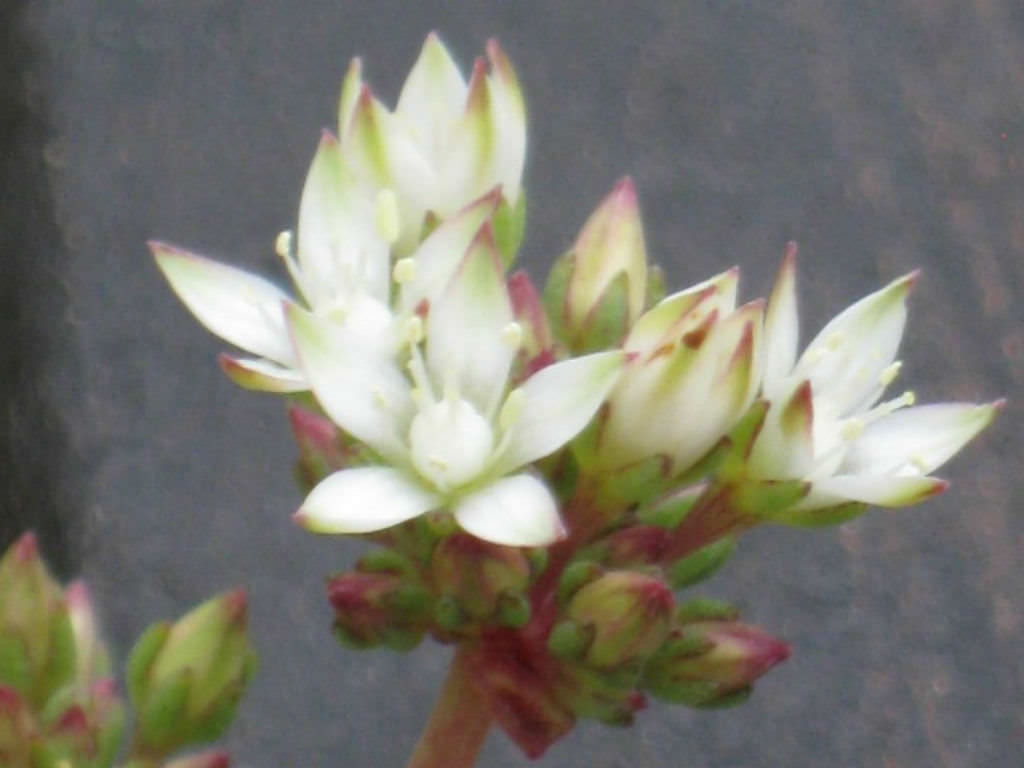
The specific epithet "pellucida" (pronounced "pel-LOO-sid-a") means "pellucid; transparent or translucent" and may refer to the calyx of the flowers of this species, which usually has a membranous margin and can be nearly colorless, or to the carpels and receptacle, which become soft and transparent when the fruit is mature.
The subspecific epithet "marginalis" (pronounced "mar-gin-AH-lis") means "marginal" and refers to the horny margin without papillae of the leaves of this species.
Description
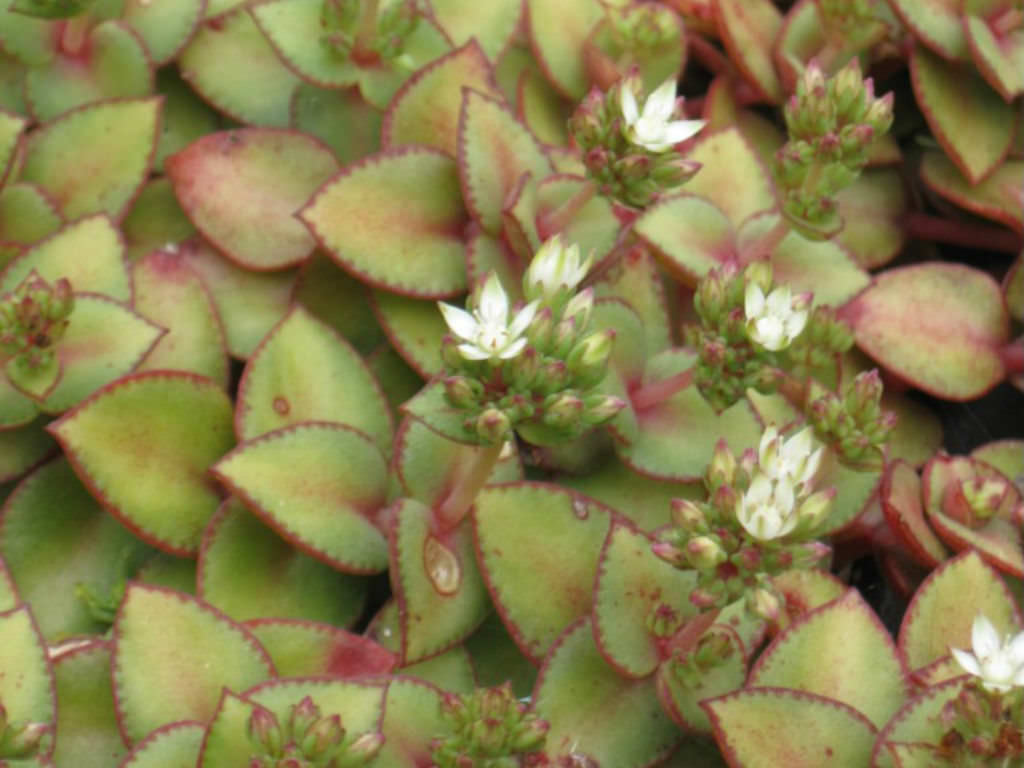
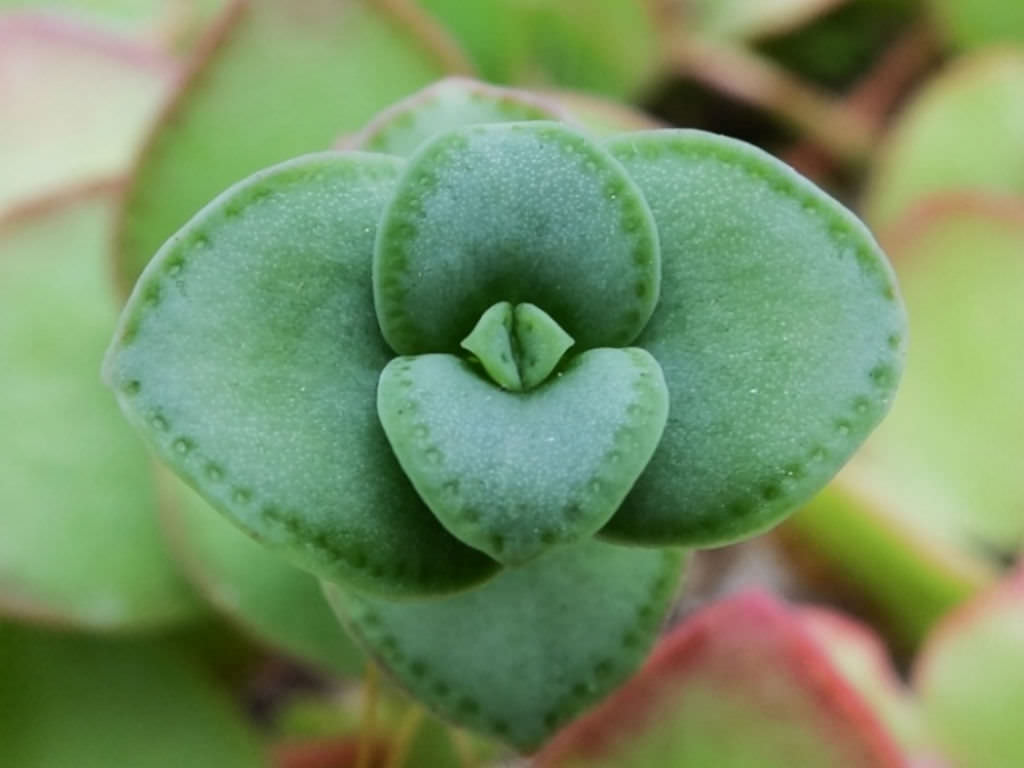
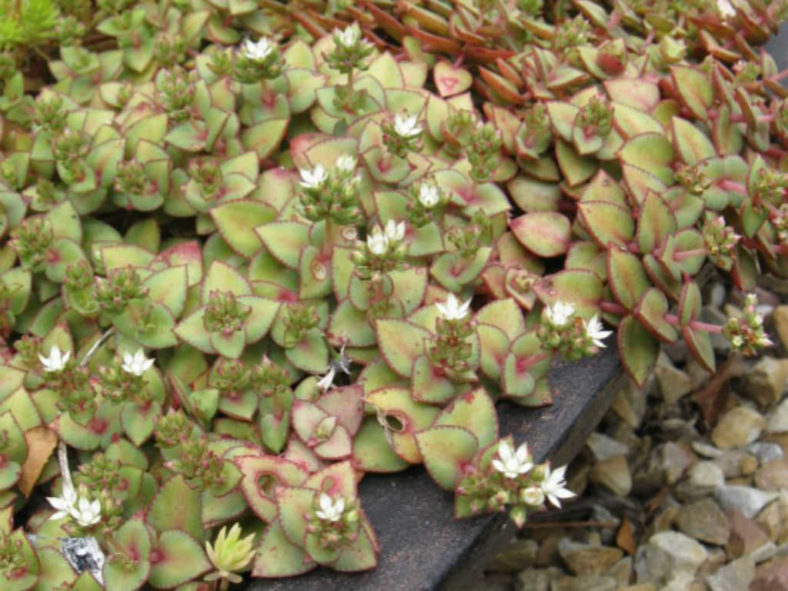
Crassula pellucida subsp. marginalis is a low-growing succulent with smooth, prostrate or scrambling branches and small, fleshy, green leaves with a horny, epapillate margin. It can grow up to 6 inches (15 cm) tall. The leaves are heart-shaped and more or less fused in pairs, forming a disc that can reach a diameter of 0.4 inches (1 cm).
The white or near-white flowers appear in late spring to early summer.
Origin
Crassula pellucida subsp. marginalis is native to South Africa. It occurs from near George to East London in the Western Cape province.
Cultivars of Crassula pellucida subsp. marginalis
- Crassula pellucida subsp. marginalis 'Rubra'
- Crassula pellucida subsp. marginalis 'Variegata'
- Crassula pellucida subsp. marginalis 'Petite Bicolor'
How to Grow and Care for Crassula pellucida subsp. marginalis
Hardiness: USDA hardiness zones 9b to 11b: from 25°F (-3.9°C) to 50°F (10°C).
Crassulas are easy to grow but susceptible to mealybugs and fungal diseases. As with all succulents, overwatering is fatal, so err on the side of too dry rather than too wet. Never let your plant sit in water. If you water from beneath by allowing the plant to sit in a saucer, ensure you pour off any excess water after a few minutes.
These succulents are generally started by division, offsets, or leaf cuttings. Crassulas can be easily propagated from a single leaf. Place leaves into a potting mix for succulents and cover the pot until they sprout.
Repot as needed, preferably during the warm season. To repot your Crassula, ensure the soil is dry, then gently remove the plant from its pot. Gently remove the old soil from the roots, being careful to remove any rotted or dead roots. Treat any cuts with a fungicide. Place the plant in its new pot and backfill it with potting soil, spreading the roots as you repot. Leave the plant dry for a week or so, then begin to water lightly to reduce the risk of root rot.
Learn more at How to Grow and Care for Crassula.
Links
- Back to genus Crassula
- Succupedia: Browse succulents by Scientific Name, Common Name, Genus, Family, USDA Hardiness Zone, Origin, or cacti by Genus
Photo Gallery
Click on a photo to see a larger version.