Scientific Name
Cotyledon orbiculata var. oblonga (Haw.) DC.
Common Name(s)
Finger Aloe
Synonym(s)
Cotyledon oblonga
Scientific Classification
Family: Crassulaceae
Subfamily: Kalanchoideae
Genus: Cotyledon
Etymology
The varietal epithet "oblonga" (pronounced "ob-LON-guh") means "oblong" and refers to the shape of the leaves of this variety.
Origin
Cotyledon orbiculata var. oblonga is native to South Africa. It occurs in the Eastern Cape, KwaZulu-Natal, Mpumalanga, and adjacent areas of the Free State, North West, Gauteng, and Limpopo, usually growing in grassland or open bushveld and often associated with rock outcrops.
Description
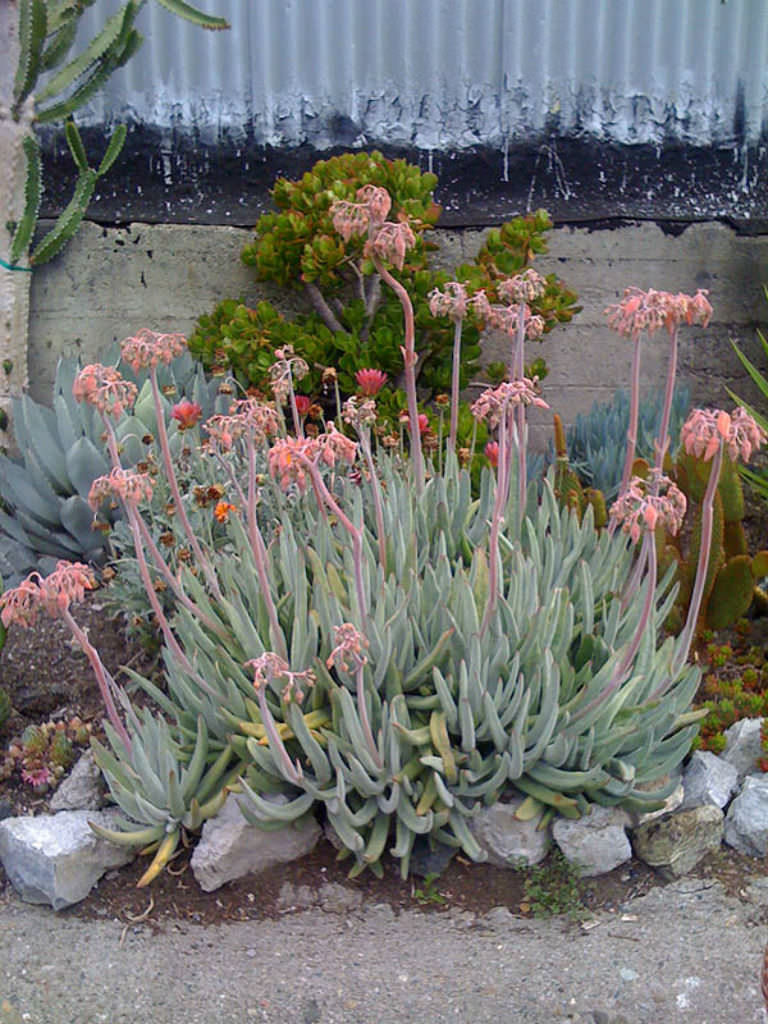
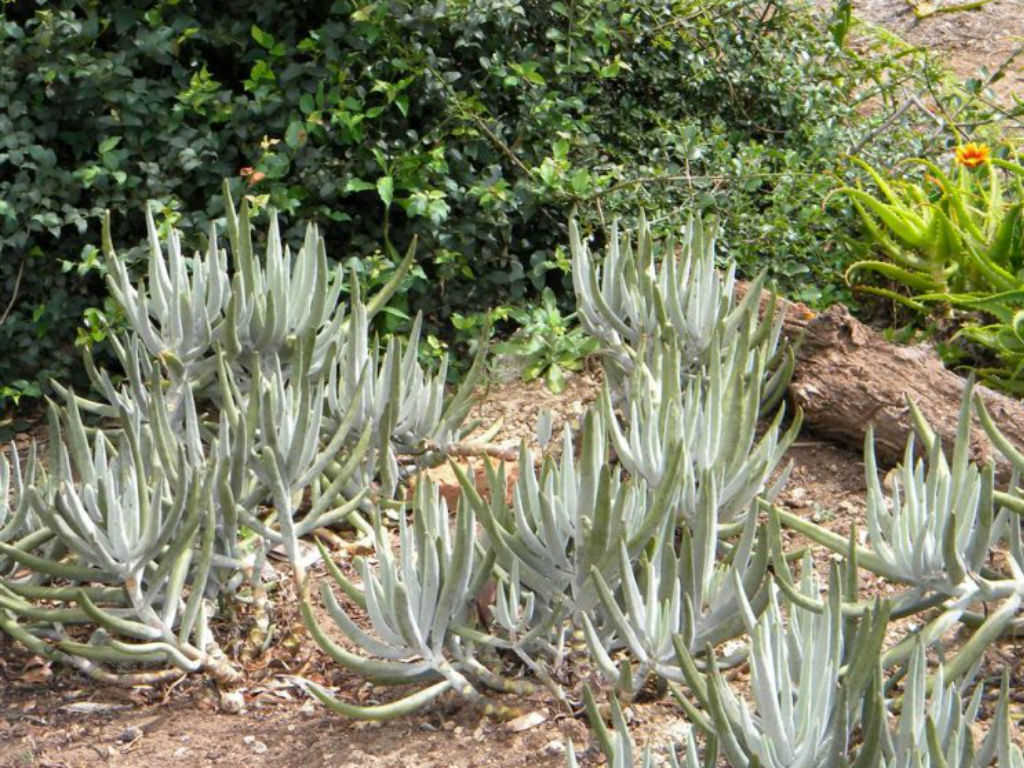
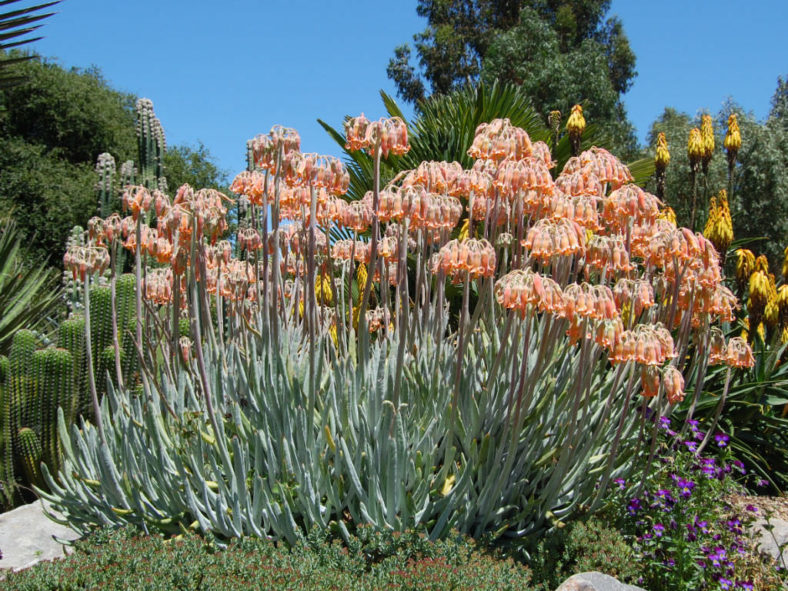
Cotyledon orbiculata var. oblonga is a succulent shrub with closely packed leaves along decumbent branches that are usually not visible. It can grow up to 32 inches (80 cm) tall, branching mainly from the base. The leaves are green to glaucous, sometimes with a thick bloom, and usually with red margins at the apex. They are smooth or hairy, very variable in shape, mainly obovate to oblanceolate, rarely narrowly oblong, measuring up to 5.6 inches (14 cm) long and 3.2 inches (8 cm) wide.
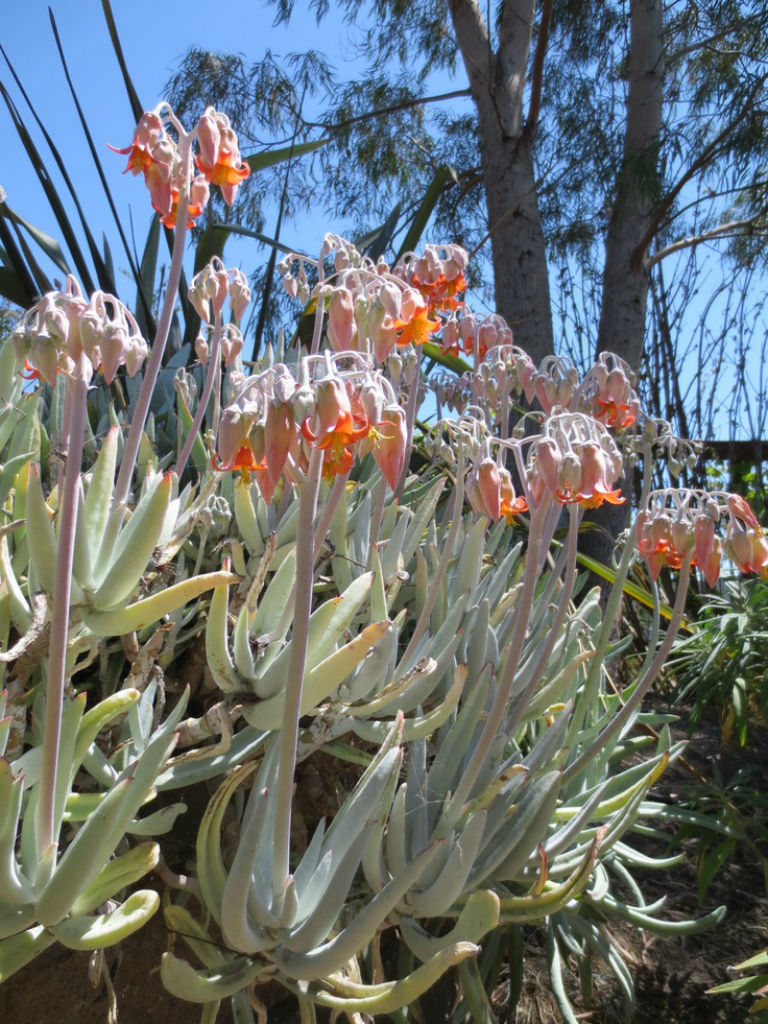
The flowers appear from winter to spring, arranged in clusters on stalks that can grow up to 18 inches (45 cm) tall. They are red to pinkish-orange, rarely yellow, tubular, and can reach 1.4 inches (3.5 cm) in length and 0.6 inches (1.5 cm) in diameter.
Cultivars of Cotyledon orbiculata var. oblonga
- Cotyledon orbiculata var. oblonga 'Flavida'
- Cotyledon orbiculata var. oblonga 'Macrantha'
- Cotyledon orbiculata var. oblonga 'Octopus'
- Cotyledon orbiculata var. oblonga 'Takbok'
How to Grow and Care for Cotyledon orbiculata var. oblonga
Hardiness: USDA hardiness zone 9b to 11b: from 25°F (-3.9°C) to 50°F (10°C).
Cotyledons can be divided into two groups. One group consists of evergreen plants that grow in summer. The other group comprises deciduous plants, splendidly magnificent with large, solid, fleshy stems. The second group grows during the winter and sheds its leaves during the summer.
Cotyledons require a free-draining, gritty mix and plenty of sunlight. They tolerate cool, frost-free conditions during the winter if kept dry. Some require pruning to maintain an attractive shape.
Cotyledons should be kept in a sunny position. Follow general succulent watering procedures. Be careful not to overwater when they are deciduous.
As succulents go, Cotyledons are a rewarding garden and indoor subject, practically independent of irrigation in all but full desert conditions. However, they cannot survive in poor light or with poor drainage.
See more at How to Grow and Care for Cotyledon.
Links
- Back to genus Cotyledon
- Succupedia: Browse succulents by Scientific Name, Common Name, Genus, Family, USDA Hardiness Zone, Origin, or cacti by Genus
Photo Gallery
Click on a photo to see a larger version.